Pediculosis, commonly known as head lice infestation, is a very common condition, especially among school-going children. Although lice do not spread any serious disease, they cause significant itching, discomfort, and embarrassment. Understanding the causes, symptoms, diagnosis, and treatment can help control this condition effectively.
What Are Head Lice?
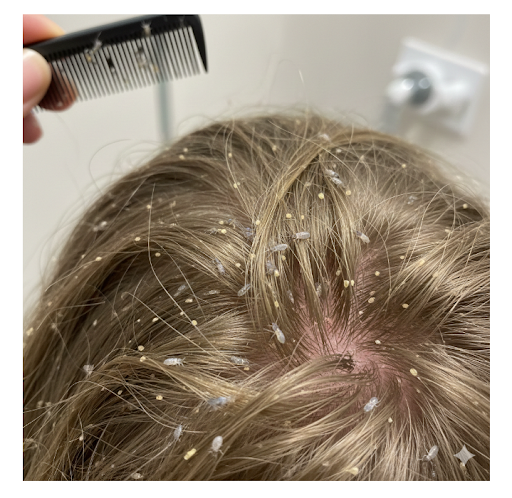
Head lice (Pediculus humanus capitis) are small, wingless insects that live on the human scalp and feed on blood. They lay eggs (nits), which stick firmly to the hair shaft.
- Size: Seseme seed-like
- Color: Brownish/grey
- Cannot fly or jump
- Spread only by direct contact or sharing personal items.
Causes of Pediculosis
Head lice spread mainly through:
1. Direct Head-to-Head Contact
- Most common cause
- Children at school, playgroups, or family gatherings
2. Sharing Personal Items
- Combs
- Hats, scarves
- Pillows, hair accessories
- Towels
3. Poor Hygiene Is NOT the Cause
Lice infestation does not mean someone is dirty. They occur in clean as well as unwashed hair.
Signs & Symptoms
1. Intense Itching
Caused by lice bites and allergic reaction to saliva.
2. Tickling Sensation
Movement of lice on scalp.
3. Visible Nits
Tiny white or yellowish eggs stuck on hair shafts near the scalp.
4. Sores on Scalp
Due to constant scratching, may lead to bacterial infection.
5. Irritability & Poor Sleep
Because lice are more active at night.
Who Is at Risk?
- Children (3–12 years)
- Students in schools or hostels
- Family members of infested children
- Caregivers, teachers, daycare workers
Is Pediculosis Contagious?
Yes.
Head lice spread easily but only through close contact or sharing personal items. They DO NOT spread from pets or through the air.
Diagnosis
You can diagnose lice at home by:
- Using a fine-toothed comb
- Checking behind ears and at nape of neck
- Looking for moving lice or attached nits
Doctors may confirm using magnifying light or dermatoscope.
Treatment of Pediculosis
1. Medicated Lotions & Shampoos
Common options (use as per doctor’s advice):
- Permethrin 1% lotion/shampoo
- Malathion 0.5% lotion
- Ivermectin 0.5% lotion
- Lindane (rarely used due to side effects)
Apply only on scalp, not full body.
Repeat treatment after 7–10 days to kill newly hatched lice.
2. Oral Medications
For severe or repeated infestation:
- Oral Ivermectin (only under medical guidance)
3. Wet Combing
- Use a fine-metallic lice comb
- Condition the hair
- Comb section by section
- Repeat every 3–4 days for 2 weeks
4. Home Remedies (Optional & Supportive Only)
These may help but are not substitutes for medicated treatments:
- Tea tree oil (few drops mixed with oil)
- Neem oil
- Vinegar rinse (to loosen nits)
Note –
Always patch-test for allergies before
Applying .
Prevention
For Children
- Avoid head-to-head contact
- Don’t share combs, clips, or hats
- Tie long hair into braids or buns
For Home
- Wash pillow covers & towels in hot water
- Vacuum sofas, carpets
- Soak combs in hot water for 10 minutes
- Check family members regularly
Complications (If Untreated)
- Secondary skin infections
- Sleep disturbances
- Anxiety or embarrassment
- Scalp dermatitis
FAQs About Pediculosis
1. Can adults get head lice?
Yes, but children get them more frequently.
2. Do lice spread diseases?
No, head lice do not transmit any serious illness.
3. Can lice live on pillows or sofas?
Only for 24–48 hours, as they need human blood to survive.
4. Can cutting hair short prevent lice?
Not necessarily, but easier to treat.
5. How long to get rid of lice?
Usually 7–14 days with proper treatment.