INTRODUCTION
Tinea versicolor, also known as pityriasis versicolor, is a common superficial fungal infection of the skin caused by Malassezia yeast. This fungus normally lives on everyone’s skin, but in certain conditions, it grows excessively and causes discoloration patches.
It is not dangerous but can be cosmetically troubling, especially in hot and humid climates.
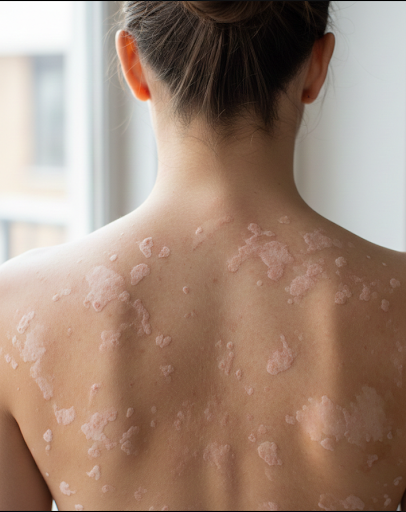
TINEA VERSICOLOR ( PITYRIASIS VERSICOLOR)
What Is Tinea Versicolor?
Tinea versicolor is a skin infection where a natural skin yeast overgrows and interferes with the normal pigmentation of the skin. This results in lighter or darker patches, usually on the chest, back, shoulders, neck, or upper arms.
NOTE:-
This condition is not contagious and does not spread from person to person.
Causes
Tinea versicolor occurs when the Malassezia fungus multiplies more than usual.
RISK FACTOR
- Hot and humid weather
- Excessive sweating
- Oily skin
- Weak immunity
- Hormonal changes
- Wearing tight, synthetic clothing
- Poor hygiene or irregular bathing
- Use of oily creams or lotions
Signs & Symptoms
1. Discolored Patches
- Light (hypopigmented)
- Dark (hyperpigmented)
- Pink, tan, or brown in some cases
2. Fine Scaling
The patches may have a very fine, powder-like scale on rubbing.
3. Mild Itching
Itching increases after sweating, exercise, or heat exposure.
4. Common Sites
- Upper chest
- Back
- Neck
- Shoulders
- Upper arms
The patches often become more noticeable after sun exposure because the affected skin does not tan normally.
Diagnosis
Doctors usually diagnose tinea versicolor simply by examining the skin.
If needed:
- Wood’s lamp test – patches appear yellowish fluorescence
- KOH scraping – shows fungus under microscope
Treatment
1. Topical Antifungal Creams/Lotions
Commonly prescribed:
- Ketoconazole 2% cream/shampoo
- Clotrimazole lotion
- Terbinafine cream
- Ciclopirox cream
- Selenium sulfide lotion/shampoo
Apply once or twice daily for 2–4 weeks.
2. Antifungal Shampoos
Used on affected skin for 5–10 minutes daily:
- Ketoconazole shampoo
- Selenium sulfide shampoo
- Zinc pyrithione shampoo
3. Oral Antifungal Medicines
For widespread or recurrent cases:
- Itraconazole
- Fluconazole
(Should be taken only under medical supervision.)
Important Note:
Even after complete cure, skin color takes 4–12 weeks to return to normal. This is normal and not a sign of treatment failure.
Prevention
- Maintain good hygiene, especially during summer.
- Take bath after sweating or gym.
- Use antifungal shampoo once weekly on chest & back during humid months.
- Wear loose, cotton clothes.
- Avoid oily lotions and heavy creams.
- Keep skin dry.
- Change clothes after sweating.
Complications
Tinea versicolor is harmless and does not cause any serious health problems, but:
- Discoloration may persist for months.
- It may recur, especially in humid environments.
When to See a Doctor
- If patches spread rapidly
- If itching becomes severe
- If over-the-counter treatments don’t work
- If the condition keeps coming back
FAQs on Tinea Versicolor
1. Is tinea versicolor contagious?
No. It does not spread from person to person.
2. Can it come back after treatment?
Yes, recurrence is common, especially in humid weather.
3. How long does it take to cure?
Fungal infection clears in 2–4 weeks, but skin color may take 1–3 months to normalize.
4. Can home remedies work?
Some mild cases improve with:
Tea tree oil
Apple cider vinegar diluted
Aloe vera
But medical treatment works best and fastest.
5. Does diet affect tinea versicolor?
No strong link, but reducing sugar and oily foods may help overall skin health.