Introduction
Tinea pedis, commonly known as Athlete’s Foot, is a contagious fungal infection of the skin of the feet. It is caused by dermatophyte fungi that thrive in warm, moist environments. The condition is very common and can affect people of all ages, especially those who sweat excessively or wear tight, closed footwear for long hours.
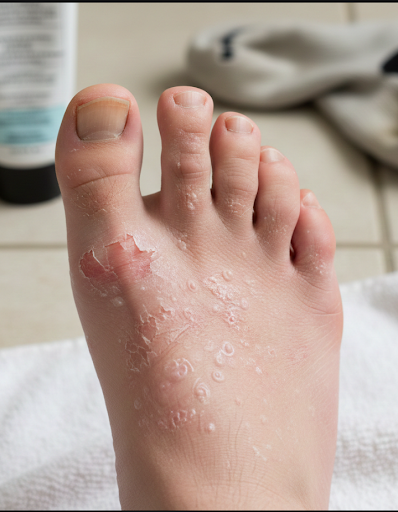
TINEA PEDIS
Causes of Tinea Pedis
The infection is mainly caused by fungi such as Trichophyton rubrum, Trichophyton interdigitale, and Epidermophyton floccosum. These fungi multiply in:
- Humid and sweaty feet
- Damp socks and shoes
- Public places like swimming pools, locker rooms, and bathrooms
Risk Factors
People at higher risk include:
- Individuals wearing tight shoes for long periods
- Athletes and sports persons
- Diabetic patients
- People with weak immunity
- Those who walk barefoot in public areas
Types of Tinea Pedis
- Interdigital Type
Affects skin between toes, especially between the 4th and 5th toes. - Moccasin Type
Causes dryness and scaling on soles and sides of feet. - Vesicular Type
Characterized by fluid-filled blisters, mainly on the arch of the foot.
Signs and Symptoms
Common symptoms include:
- Intense itching and burning sensation
- Redness and inflammation
- Peeling, cracking, or scaling of skin
- Foul smell from feet
- Blisters or sores in severe cases
- White, soggy skin between toes
NOTE :-
If untreated, the infection can spread to nails (onychomycosis) or other parts of the body.
Is Tinea Pedis Contagious?
Yes. Tinea pedis is highly contagious and spreads by:
- Direct skin-to-skin contact
- Sharing towels, socks, or shoes
- Walking barefoot in contaminated areas
Diagnosis
Usually diagnosis is based on clinical appearance. In doubtful cases, doctors may advise:
- KOH (potassium hydroxide) mount test
- Fungal culture
Treatment of Tinea Pedis
1. Allopathic Treatment
- Topical antifungal creams such as:
- Clotrimazole
- Miconazole
- Terbinafine
- Ketoconazole
- Oral antifungals in severe or chronic cases:
- Terbinafine tablets
- Itraconazole
- Fluconazole
💡 NOTE :-
Treatment should be continued for at least 2–4 weeks, even if symptoms improve early.
2. Ayurvedic Treatment
Helpful herbs include:
- Neem (Azadirachta indica)
- Haridra (Turmeric)
- Gandhak Rasayan
- Khadirarishta
Application of neem oil or turmeric paste may give relief.
Home Remedies
- Keep feet clean and dry
- Change socks daily
- Use antifungal powder
- Soak feet in warm water with a pinch of salt
- Apply tea tree oil (diluted)
⚠️ NOTE :-
Avoid scratching as it can spread the infection.
Prevention Tips
- Wash feet daily with soap and water
- Dry properly, especially between toes
- Wear breathable footwear
- Avoid sharing personal items like towels and socks
- Use slippers in public bathrooms and pools.
Complications
If left untreated, it may cause:
- Secondary bacterial infections
- Spread to toenails or hands
- Chronic recurrent fungal infection
Frequently Asked Questions (FAQ)
Q1. How long does tinea pedis take to heal?
Usually 2–4 weeks with proper treatment. Chronic cases may take longer.
Q2. Can I use steroid creams?
No. Steroid creams can worsen fungal infections if used alone.
Q3. Can tinea pedis occur in children?
Yes, it can affect all age groups.
Q4. Is tinea pedis dangerous?
It is not life-threatening but can cause severe discomfort and complications if untreated.
Q5. Can it come back after treatment?
Yes, recurrence is common if preventive measures are not followed.
Conclusion
Tinea pedis is a common but preventable fungal infection. Early diagnosis, proper treatment, and good hygiene can completely cure the condition and prevent the recurrence.