Introduction
Leprosy, also known as Hansen’s disease, is a chronic infectious disease caused by Mycobacterium leprae. It mainly affects the skin, peripheral nerves, upper respiratory tract, and eyes. Despite common myths, leprosy is completely curable if diagnosed early.
India has made significant progress in leprosy control, but early awareness and treatment are still very important to prevent disability.
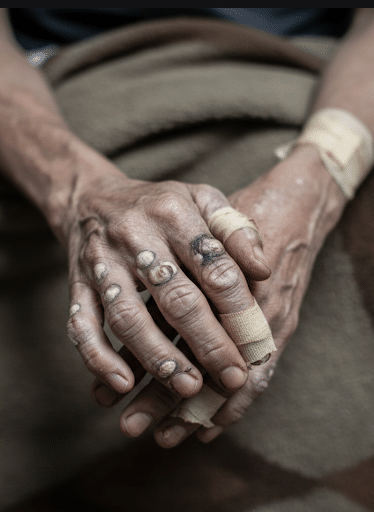
LEPROSY
Causes of Leprosy
Leprosy is caused by the bacterium Mycobacterium leprae.
- Spread occurs through prolonged close contact
- Mainly via nasal droplets from untreated patients
- It is not highly contagious
- Casual contact like handshakes, sharing food, or sitting together does not spread leprosy
Types of Leprosy
⭐Leprosy is classified based on clinical features and bacterial load:
- Tuberculoid leprosy
- Lepromatous leprosy
- Borderline leprosy
- Indeterminate leprosy
- TUBERCULOID LEPROSY
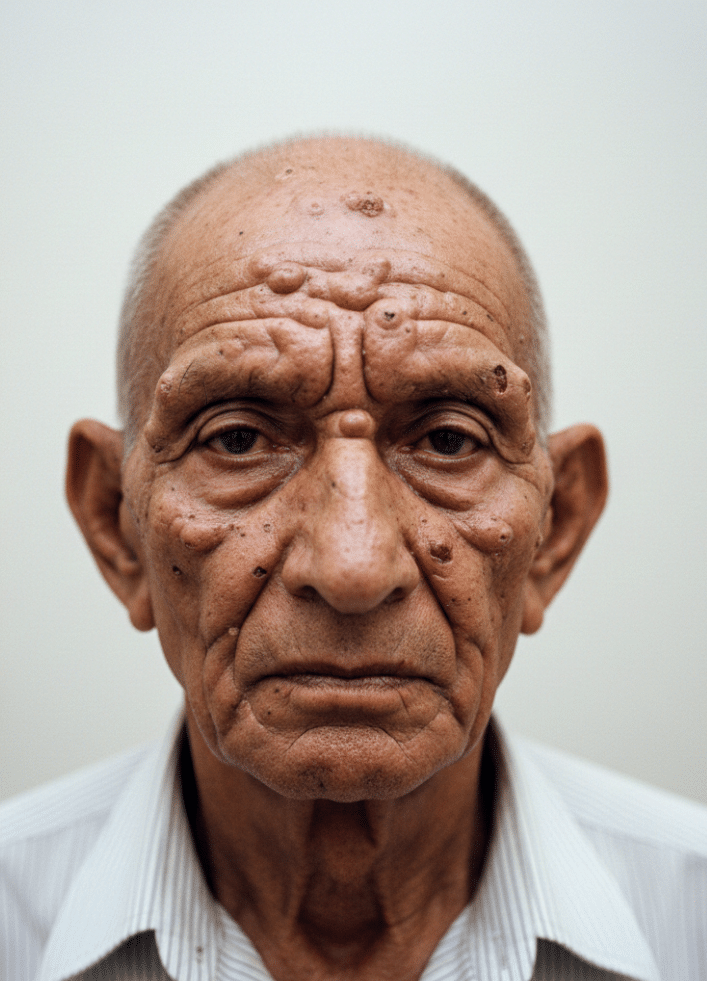
2) LEPROMATOUS LEPROSY
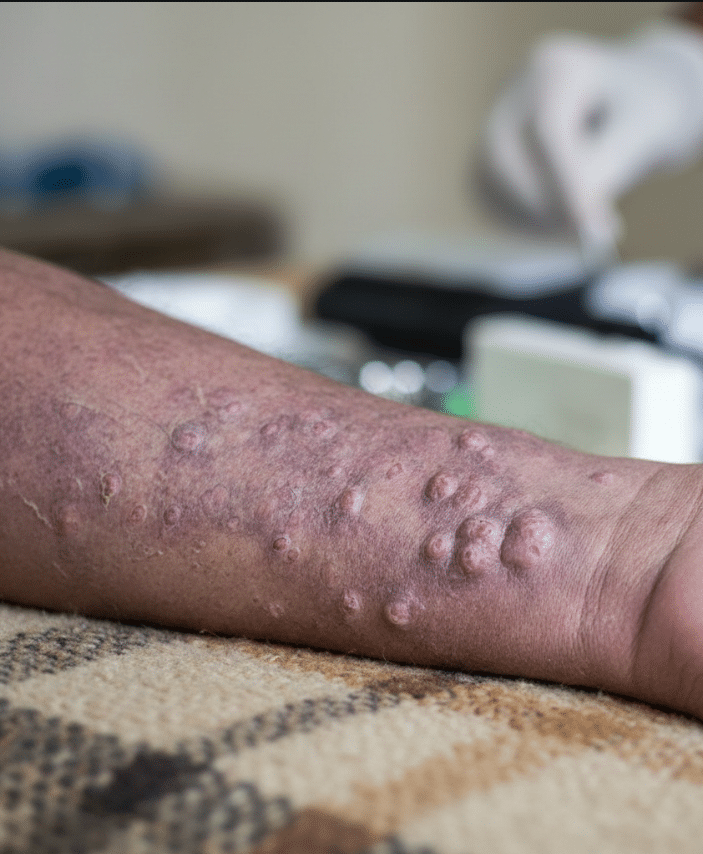
3) BORDERLINE LEPROSY
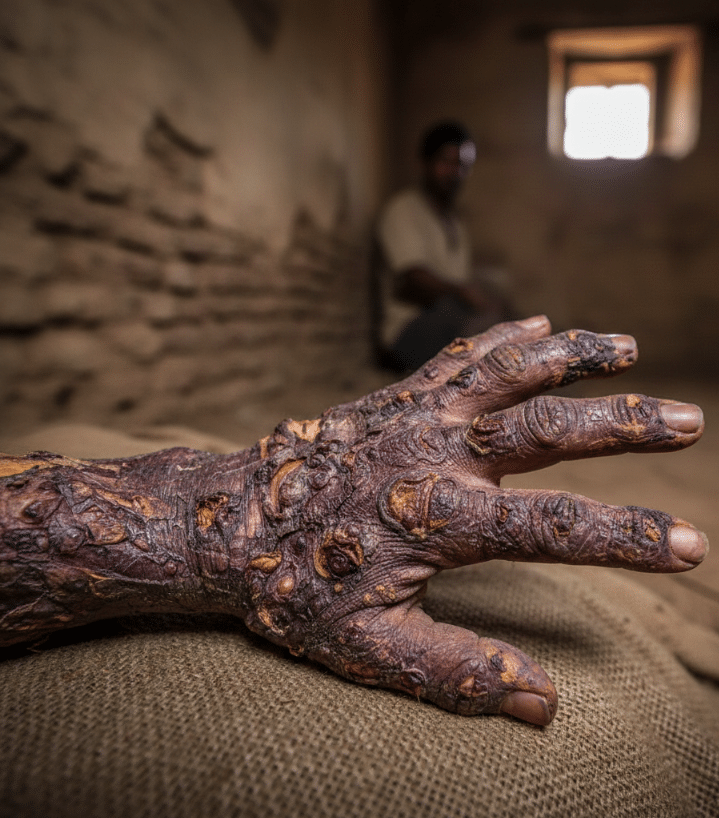
4) INTERMINATE LEPROSY
⭐Operational classification (used for treatment):
- Paucibacillary (PB) – ≤5 skin lesions
- Multibacillary (MB) – >5 skin lesions or nerve involvement
Symptoms of Leprosy
Common signs and symptoms include:
Skin Symptoms
- Light-colored or reddish patches on skin
- Loss of sensation over skin lesions
- Dry, hairless patches
- Non-itchy lesions
Nerve Symptoms
- Numbness or tingling in hands and feet
- Thickened peripheral nerves
- Weakness of muscles
- Clawing of fingers or toes in advanced cases
Other Symptoms
- Nose blockage or nosebleeds
- Eye dryness or vision problems
- Non-healing wounds due to loss of sensation
Diagnosis of Leprosy
Leprosy is diagnosed by:
- Clinical examination
- Skin smear for acid-fast bacilli
- Skin biopsy
- Nerve examination
Causes of Leprosy
Leprosy is caused by the bacterium Mycobacterium leprae.
- Spread occurs through prolonged close contact
- Mainly via nasal droplets from untreated patients
- It is not highly contagious
- Casual contact like handshakes, sharing food, or sitting together does not spread leprosy
Types of Leprosy
⭐Leprosy is classified based on clinical features and bacterial load:
- Tuberculoid leprosy
- Lepromatous leprosy
- Borderline leprosy
- Indeterminate leprosy
NOTE :-
Early diagnosis is key to preventing complications.
Treatment of Leprosy
Leprosy is treated with Multidrug Therapy (MDT) provided free of cost under national programs.
A ) MDT Regimen
- Paucibacillary leprosy:
Rifampicin + Dapsone for 6 months - Multibacillary leprosy:
Rifampicin + Dapsone + Clofazimine for 12 months
✔ Treatment is safe and effective
✔ Patients become non-infectious after starting MDT
B) Other treatment plan
- For TUberculoid leprosy
- Tab. Dapson 100mg OD…. 1 years
- Tab. Rifampicin (R-cin) 600 mg if wt. >50kg and 450mg if wt. <50 kg. Once a month at least one year.
- For Lepromatous leprosy
- Tab. Dapson 100 mg OD ….3 years
- Tab. Rifampicin ( R – cin ) 600mg if Wt. > 50 kg. And 450 mg if Wt. < 50 kg. For 3 years
- Cap. Clofezimine ( Hansepran ) 50 mg daily and 300 mg once a month For 3 years
C) For lepra reaction
- Tab. Prednisolone 10 mg qid daily for 8 – 10 days. Then gradually taper it till reaction subsides.
- Cap. Clofezimine 100 mg tds × 1 month.
Note:-
- Do not stop tab. Dapson or rifampicin.
- Once the reaction has subsided, start the original doses.
- In case of a lepra reaction, where the patches suddenly increase in size and number and the nerves become more painful.
Complications of Leprosy
If untreated, leprosy may lead to:
- Permanent nerve damage
- Deformities of hands and feet
- Vision loss
- Chronic ulcers
Prevention of Leprosy
- Early detection and treatment
- Screening of close contacts
- Good hygiene and nutrition
- Health education to reduce stigma
Leprosy and Stigma
Leprosy is not a curse or hereditary disease. Stigma causes delay in treatment and increases disability. With proper treatment, patients can live a normal life.
Frequently Asked Questions (FAQ)
Q1. Is leprosy contagious?
Leprosy spreads only after long-term close contact with an untreated patient. It is not easily contagious.
Q2. Is leprosy curable?
Yes, leprosy is 100% curable with MDT.
Q3. Can leprosy come back after treatment?
Relapse is very rare if full treatment is completed.
Q4. Can children get leprosy?
Yes, children can get leprosy, especially if living with untreated patients.
Q5. Is leprosy painful?
Most lesions are painless due to loss of sensation.
Q6. Can leprosy cause deformity?
Yes, if untreated, nerve damage can cause deformities.
Q7. Can a treated patient spread leprosy?
No, once treatment starts, the patient does not spread the disease.
Q8. Is leprosy related to poor hygiene?
No, leprosy can affect anyone regardless of cleanliness.
Q9. Where can leprosy be treated?
Leprosy treatment is available free of cost at government health centers.
Q10. Should leprosy patients be isolated?
No isolation is required once treatment has started.
Conclusion
Leprosy is a curable disease with early diagnosis and proper treatment. Awareness, timely medical care, and removal of stigma are essential steps toward eliminating leprosy.