Introduction
Sexually Transmitted Diseases (STDs), also known as Sexually Transmitted Infections (STIs), are infections that spread mainly through sexual contact. These diseases are common but often ignored due to fear, shame, or lack of awareness. Early diagnosis and proper treatment can prevent serious health complications.
How Do STDs Spread?
STDs are transmitted through:
- Vaginal, anal, or oral sex
- Skin-to-skin contact (e.g., genital warts, herpes)
- Blood exposure (shared needles, transfusion)
- From mother to child during pregnancy or childbirth
Common Types of STDs
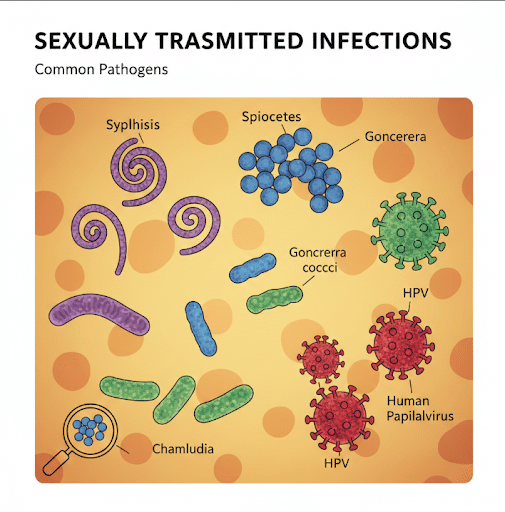
1. Bacterial STDs
- Gonorrhea
- Syphilis
- Chlamydia
✔️ NOTE :-
Usually curable with antibiotics if treated early.
2. Viral STDs
- HIV/AIDS
- Herpes Simplex Virus (HSV-1 & HSV-2)
- Human Papillomavirus (HPV)
- Hepatitis B
❌ NOTE:-
Not completely curable, but symptoms can be controlled.
3. Parasitic STDs
- Trichomoniasis
- Pubic lice (crabs)
Common Symptoms of STDs
Symptoms may vary or be absent, but common signs include:
- Abnormal vaginal or penile discharge
- Burning or pain during urination
- Genital sores, blisters, or ulcers
- Itching in genital area
- Lower abdominal pain
- Pain during sexual intercourse
⚠️ NOTE :-
Many STDs show no symptoms, so regular testing is important.
Diagnosis of STDs
Doctors may recommend:
- Blood tests
- Urine tests
- Swab tests from genital area
- PCR or antibody tests
Treatment of STDs
- Bacterial STDs: Antibiotics (complete the full course)
- Viral STDs: Antiviral medicines to control infection
- Partner treatment: Essential to prevent reinfection
⚠️ NOTE :-
Self-medication should be avoided.
Complications If Untreated
- Infertility in men and women
- Pelvic inflammatory disease (PID)
- Ectopic pregnancy
- Cancer (HPV-related)
- Increased risk of HIV
- Pregnancy complications
Prevention of STDs
- Use condoms correctly every time
- Limit number of sexual partners
- Get regular STD screening
- Avoid sharing needles
- Vaccination (HPV, Hepatitis B)
- Open communication with partner
When to See a Doctor?
- After unprotected sex
- If you notice genital sores or discharge
- If your partner is diagnosed with an STD
- For routine screening
Frequently Asked Questions (FAQs)
Q1. Can STDs spread without sex?
Yes, some STDs spread through blood, needles, or from mother to baby.
Q2. Are STDs curable?
Bacterial STDs are curable; viral STDs are manageable but not fully curable.
Q3. Can condoms fully prevent STDs?
Condoms greatly reduce risk but may not prevent skin-to-skin STDs completely.
Q4. Can STDs affect fertility?
Yes, untreated STDs can cause infertility in both men and women.
Q5. Should both partners take treatment?
Yes, treating both partners is essential.
Conclusion
Sexually Transmitted Diseases are common but preventable and treatable. Awareness, early testing, and safe sexual practices are the keys to maintaining sexual health. There is no shame in getting tested—your health comes first.