
Introduction
Human Papilloma Virus (HPV) is a very common viral infection that mainly affects the skin and mucous membranes. There are more than 200 types of HPV, many of which cause skin warts. HPV-related skin diseases are usually benign, but some types can cause persistent lesions and cosmetic or functional problems.
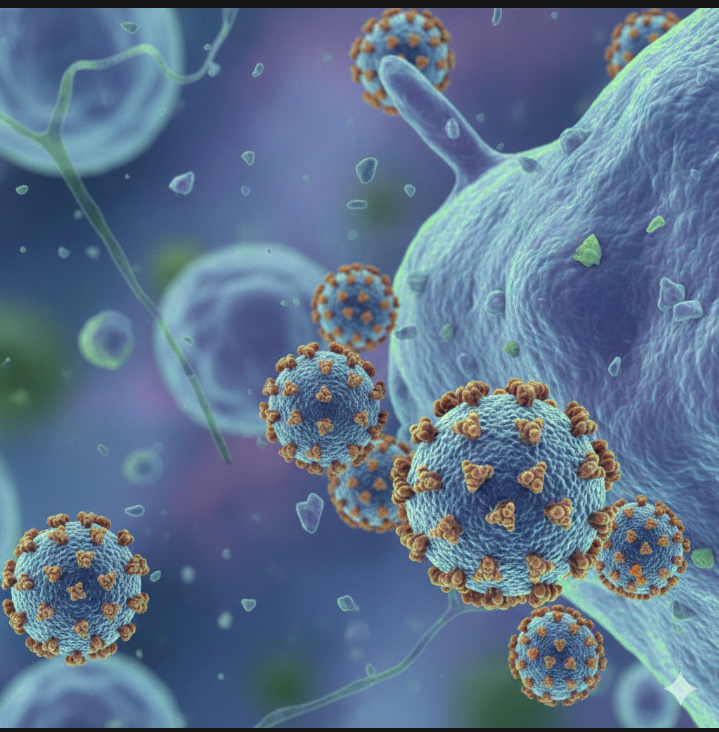
HUMAN PAPILOMA VIRUS UNDER MICROSCOPE
What is Human Papilloma Virus (HPV)?
HPV is a DNA virus that infects the top layer of skin (epidermis). It enters the body through small cuts or abrasions in the skin and causes abnormal growth of skin cells, leading to warts.
How HPV Affects the Skin
HPV causes excessive multiplication of skin cells, resulting in localized thickened lesions called warts (verrucae). These lesions vary in appearance depending on the HPV type and location.
Types of HPV-Related Skin Warts
1. Common Warts (Verruca Vulgaris)
- Rough, raised, skin-colored or grey lesions
- Commonly seen on hands, fingers, elbows, knees
- More common in children
2. Plantar Warts
- Occur on soles of feet
- Hard, painful, often mistaken for corns
- Pain increases while walking
3. Palmar Warts
- Seen on palms
- Can be painful and multiple
4. Flat Warts (Verruca Plana)
- Small, smooth, flat-topped lesions
- Common on face, neck, arms
- Often seen in children and young adults
5. Filiform Warts
- Long, thread-like growths
- Common around eyes, lips, neck
Mode of Transmission
- Direct skin-to-skin contact
- Autoinoculation (spreading from one site to another)
- Walking barefoot in public places (swimming pools, gyms)
- Sharing towels, razors, nail cutters
Risk Factors
- Weak immune system
- Children and adolescents
- Frequent skin trauma
- Excessive sweating
- Poor hygiene
Diagnosis
- Usually diagnosed by clinical examination
- Dermoscopy may help
- Biopsy is rarely needed (only in doubtful cases)
Treatment of HPV Skin Lesions
Treatment depends on age, location, number, and size of warts.
Medical Treatments
- Topical Salicylic acid
- Topical Tretinoin (for flat warts)
- Immunomodulators
Procedural Treatments
- Cryotherapy (liquid nitrogen)
- Electrocautery
- Radiofrequency ablation
- Laser therapy
⚠️ NOTE :-
Some warts may resolve spontaneously, especially in children.
Prevention
- Avoid direct contact with warts
- Do not scratch or shave over warts
- Keep skin dry and clean
- Use slippers in public bathrooms
- HPV vaccination helps prevent genital HPV, not routine skin warts
Frequently Asked Questions (FAQ)
Q1. Is HPV skin infection contagious?
Yes, HPV skin infection is contagious and spreads through direct contact or contaminated objects.
Q2. Are skin warts caused by HPV dangerous?
Most HPV-related skin warts are benign and harmless. They do not turn into cancer.
Q3. Can skin warts spread on the same body?
Yes, warts can spread from one part of the body to another by scratching or shaving.
Q4. Do skin warts go away on their own?
Yes, many warts disappear spontaneously within 1–2 years, especially in children.
Q5. Is HPV skin infection related to sexually transmitted HPV?
No, skin HPV types are different from genital HPV types. Skin warts are not sexually transmitted.
Q6. Can HPV skin warts recur after treatment?
Yes, recurrence is possible because the virus may remain dormant in the skin.
Q7. When should I see a doctor?
- Painful warts
- Rapidly increasing size or number
- Bleeding or color change
- Warts on face or genitals
- Immunocompromised patients
Conclusion
Human Papilloma Virus is a common cause of skin warts. Although usually harmless, HPV skin infections can be persistent and recurrent. Early diagnosis and proper treatment help prevent spread and complications. Maintaining hygiene and avoiding direct contact with warts are key preventive measures.




🙏🙏
🙏🙏💞