
Introduction
Trichomoniasis is a common sexually transmitted infection (STI) caused by a microscopic parasite called Trichomonas vaginalis. It affects both men and women, but symptoms are more common and severe in women. Many infected people may not show any symptoms, which increases the risk of unknowingly spreading the infection.
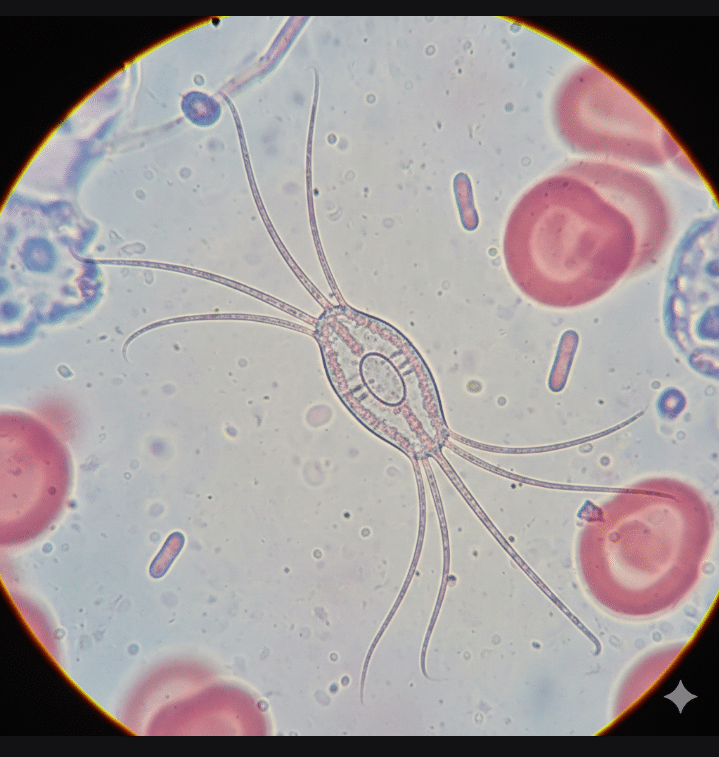
TRICHOMONIASIS PARASIT UNDER MICROSCOPE
Cause of Trichomoniasis
Trichomoniasis is caused by the protozoan parasite Trichomonas vaginalis. It spreads mainly through unprotected sexual contact, including vaginal intercourse. The parasite survives in the urogenital tract.
Who is at Risk?
- People with multiple sexual partners
- Those who practice unprotected sex
- Individuals with a history of STDs
- Sexually active women, especially of reproductive age
Symptoms of Trichomoniasis
In Women
- Foul-smelling, greenish-yellow or frothy vaginal discharge
- Vaginal itching and burning
- Pain during urination or sexual intercourse
- Lower abdominal discomfort
- Vaginal redness or inflammation
In Men
- Mild discharge from the penis
- Burning sensation during urination or ejaculation
- Itching or irritation inside the penis
(Many men remain asymptomatic)
Complications
If left untreated, trichomoniasis can:
- Increase the risk of HIV infection
- Cause pelvic inflammatory disease (PID)
- Lead to preterm delivery in pregnant women
- Increase risk of other STDs
Diagnosis
- Microscopic examination of vaginal or urethral discharge
- Rapid antigen tests
- NAAT (Nucleic Acid Amplification Test) – most accurate
- Urine test (especially in men)
Treatment
- Metronidazole or Tinidazole (single dose or 7-day course)
- Sexual partners must be treated simultaneously
- Avoid alcohol during treatment and for 24–72 hours after
- Abstain from sexual activity until treatment is completed
Prevention
- Use condoms consistently
- Avoid multiple sexual partners
- Regular STD screening
- Early treatment of infected individuals and partners
Frequently Asked Questions (FAQ)
1. Is trichomoniasis curable?
Yes, trichomoniasis is completely curable with proper antibiotic treatment.
2. Can trichomoniasis occur without symptoms?
Yes. Many people, especially men, may have no symptoms but can still spread the infection.
3. Is trichomoniasis dangerous?
It can cause complications if untreated, especially in pregnant women and those with HIV risk.
4. Can trichomoniasis recur?
Yes. Reinfection can occur if sexual partners are not treated.
5. Is trichomoniasis only sexually transmitted?
It is primarily sexually transmitted. Transmission through towels or toilets is extremely rare.
6. Can pregnant women take treatment?
Yes, metronidazole is considered safe during pregnancy under medical supervision.
7. How long after treatment can sex be resumed?
Sex should be avoided for 7 days after completion of treatment and until all partners are treated.
8. Does trichomoniasis affect fertility?
Untreated infection may affect reproductive health, especially in women.
Conclusion
Trichomoniasis is a common yet often overlooked STI. Early diagnosis, complete treatment, and partner management are essential to prevent complications and reinfection. Awareness and safe sexual practices remain the cornerstone of prevention.




💐💐