
Introduction
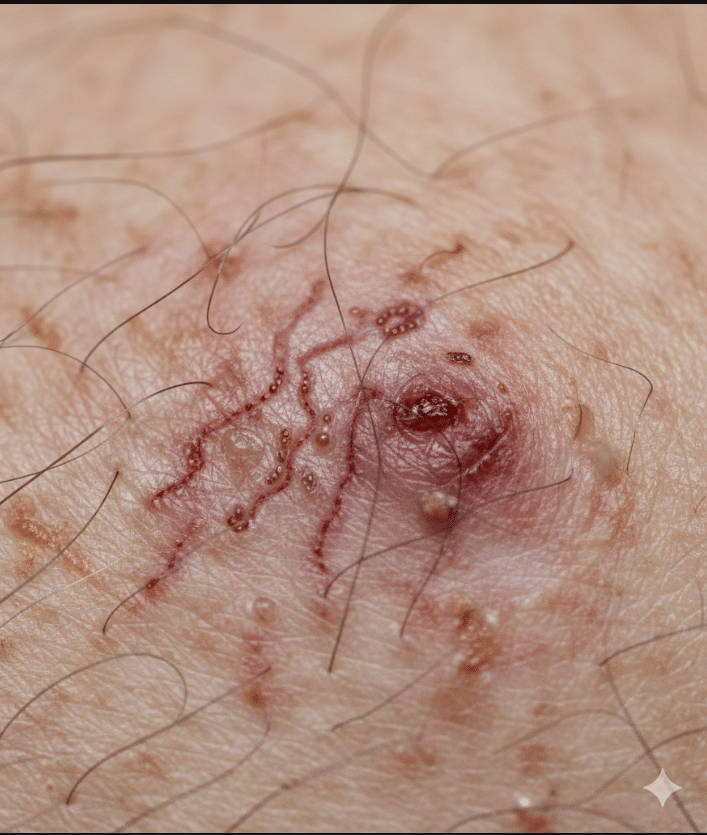
Scabies is a contagious skin infestation caused by a microscopic mite called Sarcoptes scabiei. When scabies spreads through sexual or intimate skin-to-skin contact, it is commonly referred to as sexually transmitted scabies. It is not a sexually transmitted disease (STD) in the traditional sense, but it spreads very easily during sexual contact due to prolonged skin contact.
Sexually transmitted scabies commonly affects the genital area, inner thighs, buttocks, abdomen, breasts, and wrists.
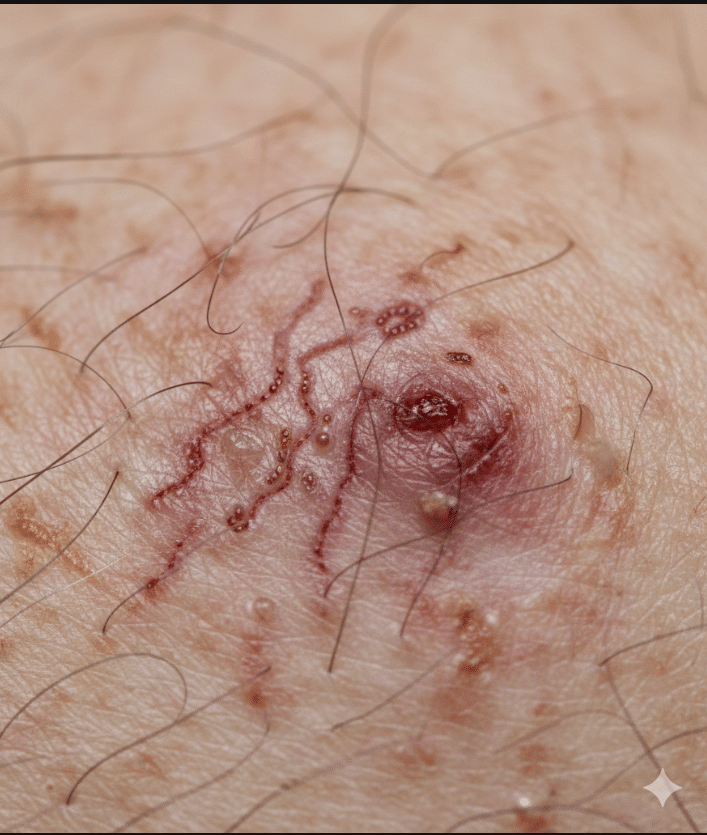
SCABIES IN GENITAL PART
Cause of Sexually Transmitted Scabies
- Caused by female scabies mites burrowing into the skin
- Spread through close physical or sexual contact
- Prolonged contact is needed; casual touch usually does not spread it
- Sharing clothes, towels, or bedding can also transmit infection
Symptoms of Sexually Transmitted Scabies
Symptoms usually appear 2–6 weeks after first exposure.
Common symptoms include:
- Severe itching, especially at night
- Red bumps, papules, or nodules on genital skin
- Thin burrow lines on skin
- Rash on penis, scrotum, vulva, labia, nipples, waistline
- Secondary infection due to scratching
Common Sites Involved
- Penis and scrotum
- Vulva and labia
- Inner thighs
- Buttocks
- Lower abdomen
- Breasts (especially around nipples)
- Wrist webs and finger spaces
Diagnosis
Diagnosis is usually clinical and based on:
- History of itching and sexual contact
- Typical skin lesions and burrows
- Skin scraping (if needed) to identify mites or eggs
Treatment of Sexually Transmitted Scabies
Treatment must include the patient and all sexual partners.
Medical treatment:
- Permethrin 5% cream – applied from neck to toe for 8–12 hours
- Ivermectin tablets – used in resistant or widespread cases
- Antihistamines for itching
- Antibiotics if secondary infection is present
🔴 NOTE :-
Repeat treatment after 7 days is often required
Prevention
- Treat all sexual partners simultaneously
- Avoid sexual contact until treatment is completed
- Wash clothes, towels, and bedding in hot water
- Trim nails and avoid scratching
- Maintain personal hygiene
Complications
- Secondary bacterial infection
- Post-scabetic itching
- Nodular scabies
- Psychological stress due to genital involvement
When to See a Doctor
- Persistent itching despite treatment
- Genital rash with severe itching
- Symptoms spreading to family members
- History of sexual exposure with rash
Frequently Asked Questions (FAQ)
Q1. Is sexually transmitted scabies an STD?
No. It is not a true STD, but it spreads through close skin contact during sex.
Q2. Can scabies spread through intercourse?
Yes. Prolonged skin-to-skin contact during intercourse can easily spread scabies.
Q3. Can scabies affect private parts?
Yes. Genitals are commonly affected in sexually transmitted scabies.
Q4. How long does itching last after treatment?
Itching may continue for 2–4 weeks due to allergic reaction, even after mites are killed.
Q5. Should my partner also take treatment?
Yes. All sexual partners must be treated, even if they have no symptoms.
Q6. Can scabies come back after treatment?
Yes, reinfection can occur if:
- Partners are untreated
- Treatment is incomplete
- Clothes and bedding are not cleaned properly
Q7. Is scabies dangerous?
No, but untreated scabies can cause infection, severe itching, and sleep disturbance.
Q8. Can condoms prevent scabies?
No. Scabies spreads through skin contact, not body fluids.
Q9. Can scabies be cured completely?
Yes. With proper treatment and hygiene, scabies is completely curable.
Q10. Is scabies common?
Yes. Scabies is very common worldwide and affects all age groups.
Conclusion
Sexually transmitted scabies is a curable and manageable skin infestation. Early diagnosis, proper treatment, and treating all sexual partners are essential to prevent recurrence. If you experience genital itching or rash, consult a healthcare provider promptly.




🙏🙏