
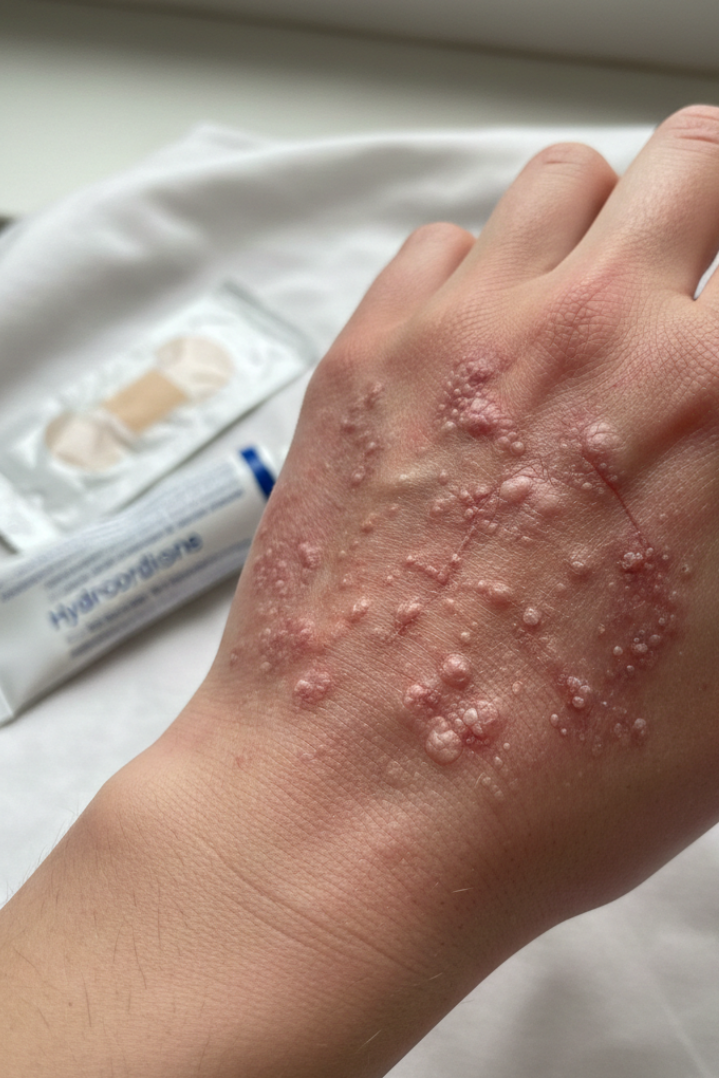
What is Contact Dermatitis?
Contact dermatitis is a skin condition caused by direct contact with an irritating or allergenic substance. It leads to redness, itching, rashes, and sometimes blisters on the skin. The reaction occurs only in the area that comes into contact with the offending substance.
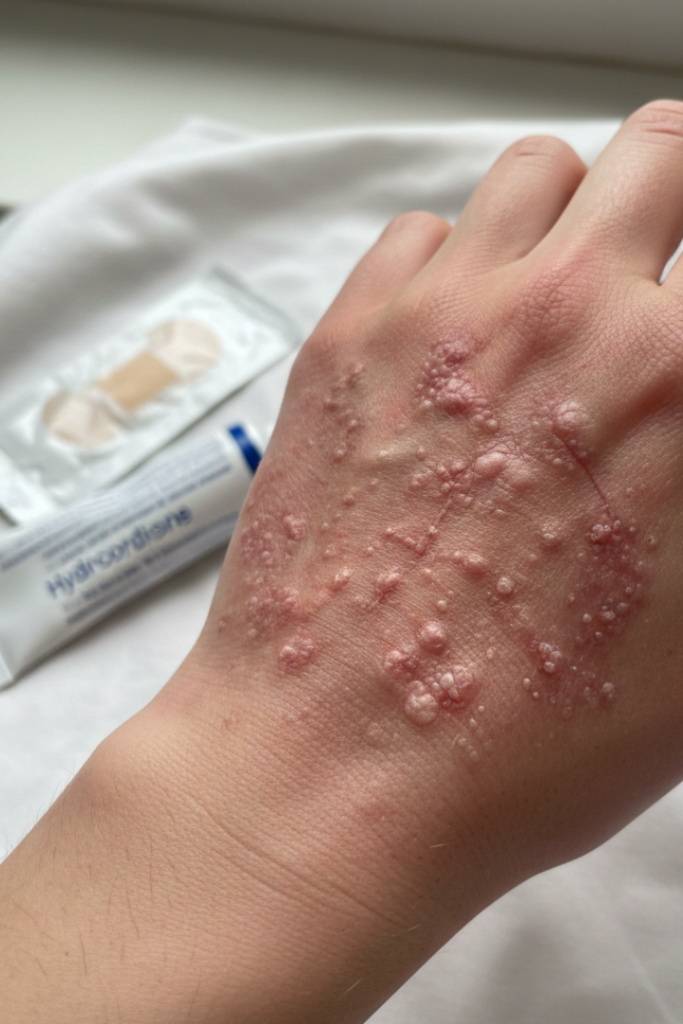
CONTACT DERMATITIS
Types of Contact Dermatitis
1. Irritant Contact Dermatitis
- Caused by chemical or physical damage to the skin
- Common triggers: soaps, detergents, acids, cement, frequent hand washing
- More common than allergic type
2. Allergic Contact Dermatitis
- Caused by an immune reaction after skin contact with an allergen
- Common allergens: nickel, cosmetics, hair dyes, rubber, fragrances, plants (poison ivy)
Common Symptoms
- Redness and swelling
- Intense itching
- Dry, cracked, or scaly skin
- Blisters or oozing (in severe cases)
- Burning or stinging sensation
NOTE :-
Symptoms may appear within hours or days after exposure.
Common Causes & Triggers
- Soaps and detergents
- Cosmetics and perfumes
- Jewelry (nickel)
- Hair dyes (PPD)
- Rubber gloves (latex)
- Cement and chemicals
- Plants like poison ivy
- Occupational exposure (cleaners, healthcare workers, mechanics)
Diagnosis
- Clinical examination by a dermatologist
- Patch test to identify allergic causes (especially in chronic cases)
Treatment of Contact Dermatitis
Medical Treatment
- Topical corticosteroids to reduce inflammation
- Antihistamines for itching
- Moisturizers to repair skin barrier
- Antibiotics if secondary infection is present
- Severe cases may need oral medications
Ayurvedic & Natural Care
- Avoid the triggering substance
- Apply coconut oil or aloe vera
- Use mild herbal soaps
- Panchakarma therapy in chronic cases (under expert guidance)
Prevention Tips
- Identify and avoid triggers
- Use gloves while handling chemicals
- Choose fragrance-free skincare products
- Moisturize regularly
- Perform patch test before using new products
When to See a Doctor
- If rash is severe or spreading
- If symptoms persist beyond 1–2 weeks
- If there is pain, pus, or fever
- If condition keeps recurring
Frequently Asked Questions (FAQ)
Q1. Is contact dermatitis contagious?
No, contact dermatitis is not contagious.
Q2. How long does contact dermatitis last?
Mild cases improve in 7–14 days after avoiding the trigger and proper treatment.
Q3. Can contact dermatitis become chronic?
Yes, repeated exposure can cause chronic eczema-like skin changes.
Q4. Can children get contact dermatitis?
Yes, especially from soaps, diapers, metals, and cosmetics.
Q5. Is patch testing painful?
No, it is a safe and painless test done to identify allergens.
Q6. Can home remedies cure contact dermatitis?
Mild cases may improve, but medical treatment is necessary for moderate to severe cases.
Q7. Can contact dermatitis leave scars?
Usually no, but severe scratching may cause pigmentation changes.
Q8. Is contact dermatitis related to eczema?
Yes, it is a type of eczema triggered by external substances.




😱😱