Introduction
Dyshidrotic eczema, also known as pompholyx, is a chronic skin condition characterized by small, itchy, fluid-filled blisters on the hands, fingers, palms, and soles of the feet. It often appears suddenly and can be recurrent, causing discomfort and difficulty in daily activities.
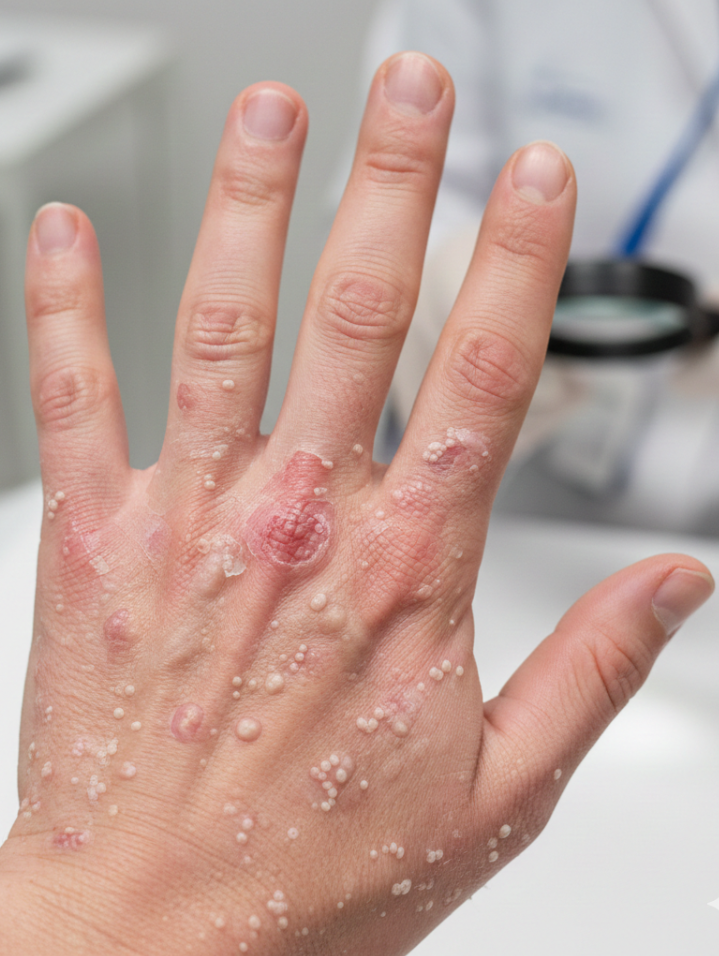
DYSTIDROTIC ECZEMA
What is Dyshidrotic Eczema?
Dyshidrotic eczema is a type of eczema that primarily affects:
- Palms of the hands
- Sides of the fingers
- Soles of the feet
NOTE :-
The blisters may last for weeks and are usually followed by dry, cracked, and peeling skin.
Causes & Risk Factors
The exact cause is not fully known, but several factors may trigger or worsen the condition:
- Stress and anxiety
- Excessive sweating (hyperhidrosis)
- Allergic reactions (nickel, cobalt, detergents)
- Atopic dermatitis history
- Hot and humid weather
- Smoking
- Fungal infections of feet
- Frequent hand washing or chemical exposure
Symptoms
Common signs include:
- Sudden onset of tiny fluid-filled blisters
- Intense itching or burning sensation
- Pain or tenderness
- Dryness and skin cracking after blisters heal
- Thickened skin in chronic cases
Diagnosis
Diagnosis is usually clinical, based on appearance and history. In some cases, doctors may advise:
- Patch testing (to detect allergies)
- KOH test (to rule out fungal infection)
- Skin biopsy (rarely needed)
Treatment Options
Treatment aims to relieve symptoms and prevent recurrence.
Medical Treatment
- Topical corticosteroids
- Antihistamines for itching
- Moisturizers/emollients
- Antibiotics if secondary infection occurs
- Topical calcineurin inhibitors (tacrolimus, pimecrolimus)
- Oral steroids in severe cases
Lifestyle & Home Care
- Avoid irritants and harsh soaps
- Use cotton gloves during wet work
- Keep hands dry and moisturized
- Manage stress with yoga or meditation
- Avoid metal jewelry if allergic
Prevention Tips
- Identify and avoid triggers
- Use fragrance-free skincare products
- Moisturize regularly
- Protect hands while cleaning
- Treat fungal infections promptly
Frequently Asked Questions (FAQ)
1. Is dyshidrotic eczema contagious?
No, it is not contagious and cannot spread from person to person.
2. Is dyshidrotic eczema due to sweat?
Sweat does not cause it directly, but excessive sweating can trigger flare-ups.
3. How long does dyshidrotic eczema last?
A flare usually lasts 2–4 weeks, but recurrence is common.
4. Can stress worsen dyshidrotic eczema?
Yes, stress is a major trigger and can worsen symptoms.
5. Is dyshidrotic eczema curable?
There is no permanent cure, but it can be well-controlled with proper treatment and lifestyle changes.
6. Can diet affect dyshidrotic eczema?
In some people, nickel-rich foods (nuts, chocolate, soy) may worsen symptoms.
7. When should I see a doctor?
If blisters are painful, infected, or recurrent, or if daily activities are affected, consult a dermatologist.
Conclusion
Dyshidrotic eczema is a recurrent but manageable skin condition. Early diagnosis, proper treatment, trigger avoidance, and consistent skincare can significantly reduce flare-ups and improve quality of life. If symptoms persist or worsen, professional dermatological care is essential for long-term control.