Introduction
Seborrheic dermatitis is a common, chronic inflammatory skin condition that mainly affects areas rich in oil (sebaceous) glands such as the scalp, face, eyebrows, sides of the nose, ears, chest, and back. It causes redness, itching, and flaky scales, often mistaken for simple dandruff.
Although it is not dangerous or contagious, seborrheic dermatitis can be recurrent and uncomfortable, impacting quality of life if not managed properly.
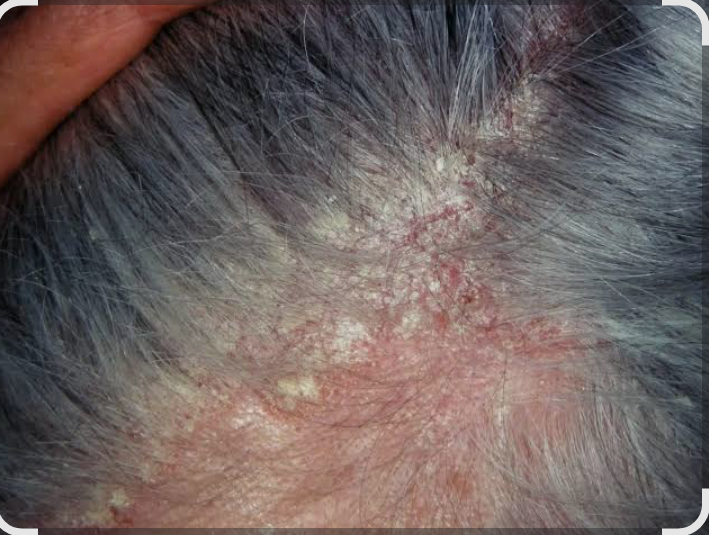
SEBORRHEIC DERMATITIS
What is Seborrheic Dermatitis?
Seborrheic dermatitis is a long-term skin condition characterized by greasy or dry flakes, redness, and mild to intense itching. On the scalp, it appears as dandruff, while on the face or body it causes yellowish or white scales over red skin.
Causes of Seborrheic Dermatitis
The exact cause is not fully known, but contributing factors include:
- Overgrowth of Malassezia yeast (naturally present on skin)
- Excess oil production
- Hormonal changes
- Stress and fatigue
- Cold and dry weather
- Weak immune system
- Neurological conditions (e.g., Parkinson’s disease)
- Genetic predisposition
Common Symptoms
- White or yellowish flaky scales
- Red, inflamed patches
- Itching or burning sensation
- Greasy appearance of skin
- Dandruff on scalp, eyebrows, beard, or chest
- In infants, it appears as cradle cap
Commonly Affected Areas
- Scalp
- Eyebrows
- Sides of the nose
- Behind the ears
- Eyelids
- Chest and upper back
- Beard area
Diagnosis
Seborrheic dermatitis is usually diagnosed by:
- Clinical examination
- Patient history No laboratory tests are usually required unless the diagnosis is unclear.
Treatment Options
Seborrheic dermatitis cannot be permanently cured, but it can be effectively controlled.
1. Medicated Shampoos
- Ketoconazole
- Selenium sulfide
- Zinc pyrithione
- Coal tar (short-term use)
2. Topical Treatments
- Antifungal creams or lotions
- Mild corticosteroids (short-term)
- Calcineurin inhibitors (for face)
3. Lifestyle & Home Care
- Wash affected areas regularly
- Avoid harsh soaps
- Manage stress
- Maintain proper scalp hygiene
- Avoid oily or heavy cosmetic products
Prevention Tips
- Keep skin clean and dry
- Use gentle skincare products
- Avoid scratching
- Reduce stress
- Follow maintenance treatment as advised by a doctor
Frequently Asked Questions (FAQ)
Q1. Is seborrheic dermatitis contagious?
No, it is not contagious and cannot spread from person to person.
Q2. Is seborrheic dermatitis the same as dandruff?
Dandruff is a mild form of seborrheic dermatitis limited to the scalp.
Q3. Can seborrheic dermatitis be cured permanently?
There is no permanent cure, but it can be well controlled with proper treatment and care.
Q4. Does diet affect seborrheic dermatitis?
An unhealthy diet may worsen symptoms. A balanced diet helps maintain overall skin health.
Q5. Can stress worsen seborrheic dermatitis?
Yes, stress is a major trigger and can cause flare-ups.
Q6. Is seborrheic dermatitis common in infants?
Yes, infants can develop it as cradle cap, which usually resolves on its own.
Q7. Can seborrheic dermatitis affect the face?
Yes, it commonly affects eyebrows, nose sides, eyelids, and beard area.
Conclusion
Seborrheic dermatitis is a chronic but manageable skin condition. While it may recur from time to time, proper medical treatment, regular skincare, and lifestyle modifications can significantly reduce symptoms and improve comfort. Early diagnosis and consistent care play a key role in controlling flare-ups and maintaining healthy skin.
NOTE :-
If symptoms are persistent or severe, consulting a dermatologist is strongly recommended for personalized treatment.