Introduction
Acanthoma fissuratum, also known as granuloma fissuratum, is a benign (non-cancerous) skin condition caused by chronic mechanical irritation or pressure on the skin. It most commonly occurs behind the ears, on the nose, or around areas where spectacles, masks, hearing aids, or tight headgear continuously rub against the skin.
Although harmless, it can cause discomfort, cosmetic concern, and anxiety due to its tumor-like appearance.
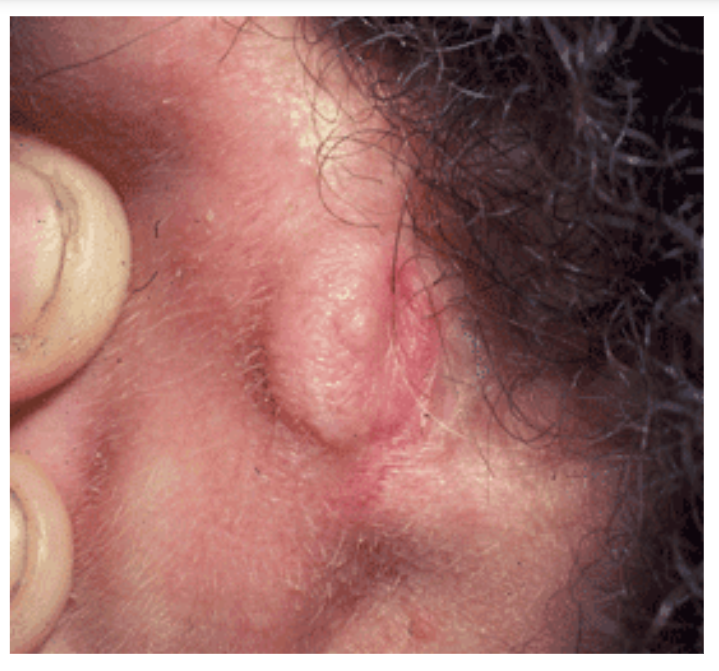
ACANTHOMA ( GRANULOMA ) FISSURATUM
What is Acanthoma (Granuloma) Fissuratum?
Acanthoma fissuratum is a reactive skin growth that develops due to prolonged friction or pressure.
- Acanthoma refers to thickening of the epidermis
- Fissuratum indicates a groove or cleft formed by constant irritation
It is not an infection and not a true tumor.
Causes
The most common cause is repeated mechanical trauma, such as:
- Tight or ill-fitting spectacle frames
- Continuous use of face masks
- Hearing aids
- Tight helmets, caps, or headbands
- Poorly fitting dentures (around mouth)
Common Sites
- Behind the ears (most common)
- Sides of the nose
- Nasal bridge
- Around mouth or jawline
Clinical Features
- Firm, skin-colored or reddish swelling
- Folded or fissured appearance
- May look like a small tumor or polyp
- Usually painless, but can become tender
- Skin may thicken over time
- Bleeding is rare unless traumatized
Diagnosis
Diagnosis is mainly clinical, based on:
- History of chronic pressure or irritation
- Typical location and appearance
In doubtful cases, a skin biopsy may be done to rule out:
- Skin cancer
- Keloid
- Neurofibroma
- Pyogenic granuloma
Treatment
Treatment focuses on removing the cause and managing the lesion:
1. Elimination of Pressure
- Adjust or change spectacle frames
- Use soft, well-fitting masks
- Modify or pad hearing aids
2. Medical Treatment
- Topical corticosteroids (early cases)
- Emollients to reduce friction
3. Surgical Treatment
- Simple surgical excision (most effective)
- Radiofrequency or laser removal
Recurrence is rare if the source of irritation is corrected.
Prevention
- Ensure proper fitting of spectacles and masks
- Avoid tight accessories
- Take breaks from prolonged pressure on skin
- Early consultation if thickening appears
Frequently Asked Questions (FAQ)
Q1. Is acanthoma fissuratum cancerous?
No. It is a benign condition and does not turn into cancer.
Q2. Does it spread to other parts of the body?
No. It remains localized to the area of irritation.
Q3. Can it heal on its own?
Early lesions may regress if pressure is removed. Long-standing lesions usually need treatment.
Q4. Is surgery compulsory?
Not always. Mild cases may improve with conservative measures, but surgery gives permanent results.
Q5. Is it painful?
Usually painless, but may become uncomfortable if inflamed or repeatedly traumatized.
Q6. Can it recur after removal?
Recurrence is uncommon if the irritating factor is eliminated.
Conclusion
Acanthoma (granuloma) fissuratum is a harmless yet preventable skin condition caused by chronic friction or pressure. Early recognition and correction of the triggering factor can prevent progression. When required, simple surgical removal offers excellent cosmetic and functional outcomes. Consulting a dermatologist ensures accurate diagnosis and appropriate management, relieving both physical discomfort and patient anxiety.