
⭐INTRODUCTION
Natarajasana, also known as the Lord Shiva Dance Pose, is a beautiful standing yoga posture inspired by in his cosmic dancer form, .
This asana symbolizes the balance between movement and stillness, strength and flexibility, and effort and surrender.
In this pose, the body takes the shape of a dancing figure, requiring focus, stability, and inner awareness. Practicing Natarajasana not only improves physical health but also connects the practitioner to a deeper sense of rhythm and harmony within.
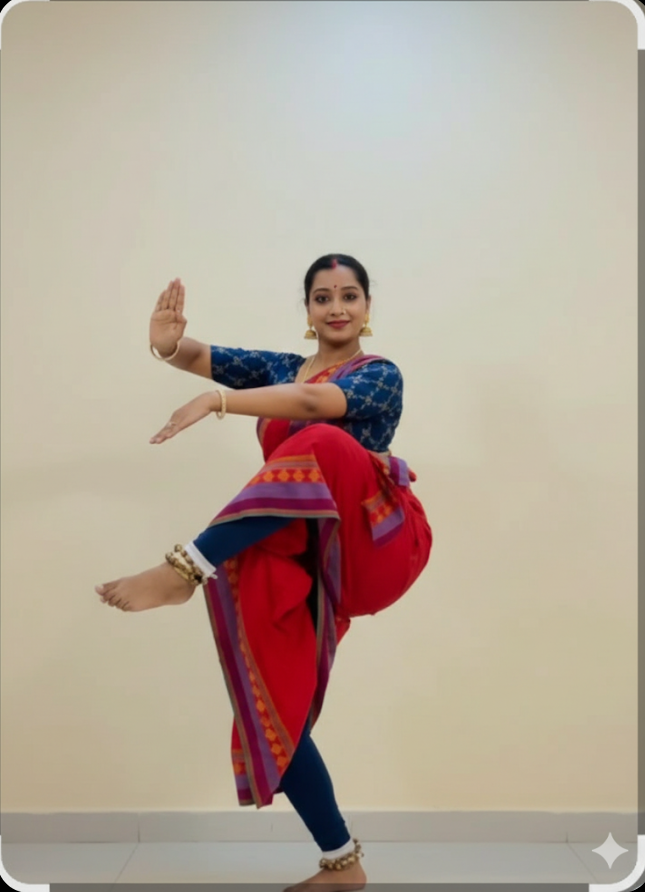
LORD SHIVA DANCE POSE
🌿 How to Practice Natarajasana
- Stand straight in Tadasana with your weight evenly balanced.
- Shift weight onto your left foot and bend your right knee.
- Hold your right ankle from the inside with your right hand.
- Extend your left arm forward or upward for balance.
- Gently kick the right foot back and up, opening the chest.
- Keep your gaze steady and spine elongated.
- Hold for 15–30 seconds, breathing calmly.
- Slowly release and repeat on the other side.
✨ Benefits of Natarajasana
- Improves balance and concentration
- Strengthens legs, ankles, and core muscles
- Increases flexibility of spine, shoulders, and hips
- Opens the chest and improves posture
- Enhances mind-body coordination
- Encourages mental calmness and emotional stability
⚠️ Precautions
- Avoid this pose if you have severe knee, ankle, or lower-back injuries
- Practice near a wall if balance is challenging
- Beginners should perform under guidance
- Stop immediately if you feel pain or dizziness
❓ Frequently Asked Questions (FAQ)
Q1. What does Natarajasana symbolize?
Natarajasana represents cosmic rhythm and balance, inspired by Lord Shiva’s dance that symbolizes creation, preservation, and transformation.
Q2. Is Natarajasana suitable for beginners?
Yes, beginners can practice it with modifications such as using a wall or yoga strap for support.
Q3. How long should Natarajasana be held?
Hold the pose for 15–30 seconds initially. With practice, it can be extended to 45–60 seconds.
Q4. Does Natarajasana help with mental focus?
Absolutely. The pose requires intense concentration, which improves mindfulness and mental clarity.
Q5. Can Natarajasana help with posture?
Yes, it strengthens the back and opens the chest, helping correct poor posture over time.
Q6. When is the best time to practice Natarajasana?
It is best practiced in the morning on an empty stomach or in the evening after a gap of 4–5 hours after meals.
🌸 Conclusion
Natarajasana is more than just a physical yoga pose—it is a graceful expression of inner balance, devotion, and awareness. Just as Lord Shiva dances in perfect harmony with the universe, this asana teaches us to remain steady and calm even while life is constantly moving.
With regular practice, patience, and mindful breathing, Natarajasana can transform both body and mind, bringing strength, flexibility, and spiritual connection into your daily life.
🕉️ Practice with balance, move with grace, and dance with awareness.




👍👍