Introduction
Acne Keloidalis Nuchae (AKN) is a chronic inflammatory skin condition that mainly affects the back of the neck and scalp, especially near the hairline. Despite the name, it is not true acne. Over time, it can lead to thick scars and keloid-like bumps, causing cosmetic concern and discomfort.
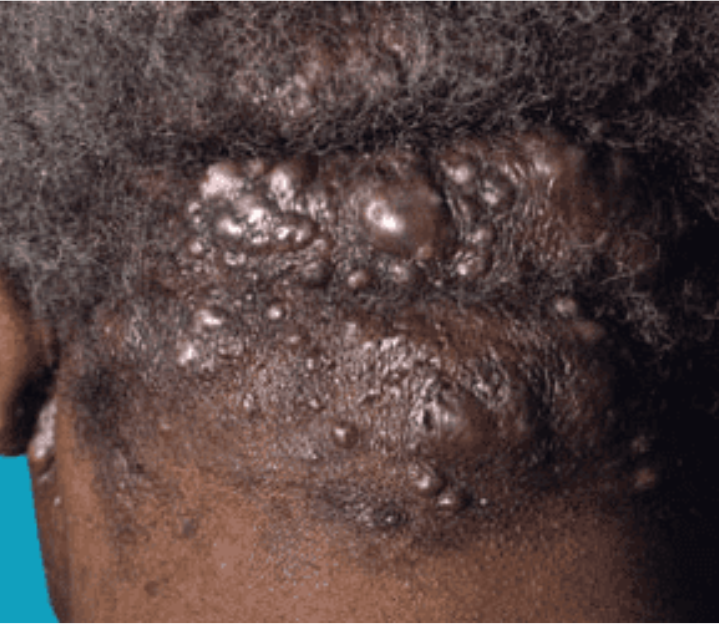
ACNE KELOIDALIS NUCHAE
NOTE :-
AKN is more common in men, particularly those with curly or coarse hair, but it can affect anyone.
What is Acne Keloidalis Nuchae?
Acne Keloidalis Nuchae is a condition where hair follicles become inflamed, leading to small itchy bumps that may grow, merge, and eventually form hard, raised scars. If untreated, permanent hair loss and scarring can occur.
Causes and Risk Factors
The exact cause is not fully known, but several factors contribute:
- Repeated irritation from tight collars, helmets, or uniforms
- Close shaving or frequent haircuts, especially with clippers
- Curly hair, which is more prone to ingrown hairs
- Heat and sweating
- Genetic predisposition
- Chronic bacterial infection in inflamed follicles
Signs and Symptoms
AKN usually develops gradually and may include:
- Small itchy or painful bumps on the back of the neck
- Red or dark-colored papules and pustules
- Thickened, raised scar tissue over time
- Hair loss in affected areas
- Occasional oozing or infection in severe cases
Stages of Acne Keloidalis Nuchae
- Early stage – Small, firm bumps with mild itching
- Moderate stage – Enlarged lesions and inflammation
- Severe stage – Large keloid-like scars and permanent hair loss
Treatment Options
Early treatment gives the best results. Options include:
Medical Treatments
- Topical antibiotics (to control infection)
- Topical or oral corticosteroids (to reduce inflammation)
- Retinoids (to prevent follicle blockage)
- Oral antibiotics in active, infected cases
Procedural Treatments
- Intralesional steroid injections
- Laser hair removal (reduces recurrence)
- Surgical excision for large scars
- Cryotherapy in selected cases
Prevention Tips
- Avoid close shaving; use trimmers instead
- Keep the neck clean and dry
- Avoid tight collars, helmets, and friction
- Do not scratch or pick the bumps
- Seek early dermatological care
Frequently Asked Questions (FAQs)
Q1. Is Acne Keloidalis Nuchae contagious?
No, AKN is not contagious and cannot spread from person to person.
Q2. Is AKN the same as keloid scars?
No. It may look similar, but AKN starts from inflamed hair follicles, not from skin injury alone.
Q3. Can AKN be cured completely?
There is no permanent cure, but early and proper treatment can control symptoms and prevent scarring.
Q4. Does shaving make AKN worse?
Yes. Close shaving and frequent haircuts often worsen the condition.
Q5. Can women get Acne Keloidalis Nuchae?
Yes, but it is much more common in men.
Conclusion
Acne Keloidalis Nuchae is a chronic but manageable condition. Early diagnosis, lifestyle changes, and appropriate medical treatment can significantly reduce symptoms and prevent permanent scarring. If you notice persistent bumps or scarring on the back of your neck, consulting a dermatologist is the best step toward long-term control and healthier skin.