

⭐Introduction
Chronic constipation is a common digestive problem that affects people of all ages. It is more than just occasional difficulty in passing stools—it is a long-term condition that can significantly impact quality of life. Understanding its causes, symptoms, and management can help you take control of your digestive health.
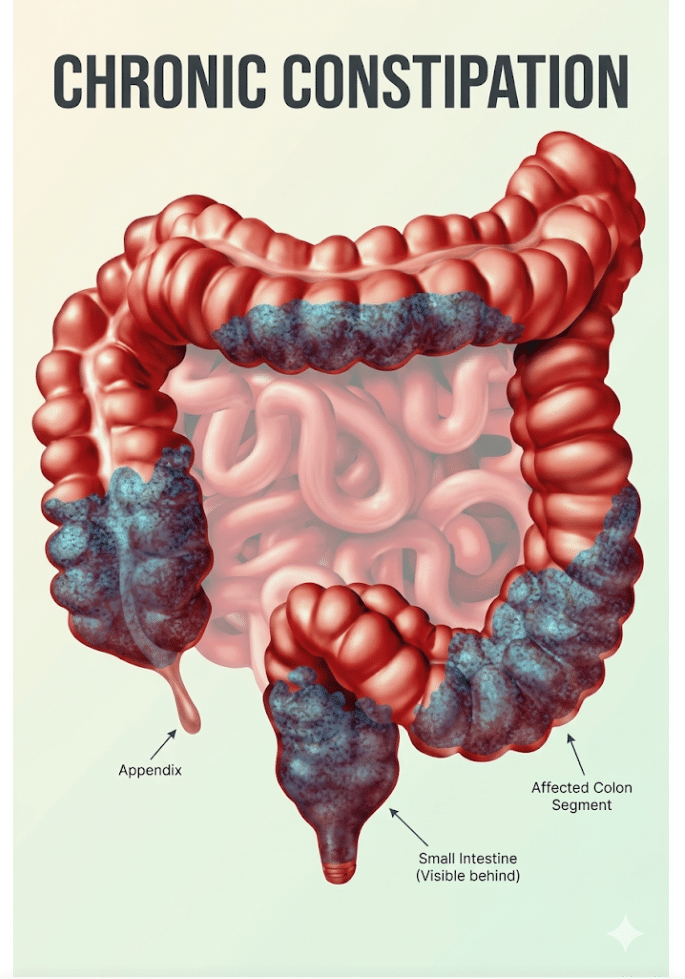
⭐What is Chronic Constipation?
Chronic constipation is typically defined as having fewer than three bowel movements per week, along with symptoms such as hard stools, excessive straining, or a feeling of incomplete evacuation that persists for several weeks or longer.
⭐Common Causes of Chronic Constipation
- Low Fiber Diet
Lack of fruits, vegetables, and whole grains slows digestion. - Dehydration
Insufficient water intake leads to hard, dry stools. - Sedentary Lifestyle
Lack of physical activity reduces bowel movement efficiency. - Ignoring the Urge
Regularly delaying bowel movements can worsen constipation. - Medications
Certain drugs like painkillers, antidepressants, and antacids can cause constipation. - Medical Conditions
Conditions like hypothyroidism, diabetes, or irritable bowel syndrome (IBS). - Hormonal Changes
Especially common during pregnancy or aging.
⭐Symptoms of Chronic Constipation
- Infrequent bowel movements (less than 3 per week)
- Hard or lumpy stools
- Straining during bowel movements
- Feeling of incomplete evacuation
- Abdominal bloating or discomfort
- Dependence on laxatives
⭐Diagnosis
Doctors may diagnose chronic constipation based on:
- Medical history and physical examination
- Blood tests
- Colonoscopy (if needed)
- Imaging tests to check bowel function
🌺Treatment Options
1. Lifestyle Changes
- Increase fiber intake (20–35 grams/day)
- Drink plenty of water (8–10 glasses daily)
- Exercise regularly (walking, yoga)
2. Dietary Modifications
- Include foods like oats, flaxseeds, fruits, leafy greens
- Avoid processed and junk food
3. Medications
- Bulk-forming laxatives
- Stool softeners
- Osmotic laxatives
(Use only under medical supervision)
4. Behavioral Therapy
- Establish a regular toilet routine
- Respond promptly to the urge to defecate
5. Medical Procedures
In severe cases, procedures or surgery may be recommended.
⭐Home Remedies for Chronic Constipation
- Warm water in the morning
- Lemon water or honey water
- Isabgol (psyllium husk)
- Soaked raisins or figs
- Triphala powder (Ayurvedic remedy)
⭐Prevention Tips
- Maintain a balanced diet rich in fiber
- Stay hydrated
- Exercise daily
- Avoid stress
- Do not ignore bowel urges
👍Frequently Asked Questions (FAQs)
1. How long does constipation become “chronic”?
If symptoms persist for more than 3 months, it is considered chronic.
2. Is chronic constipation dangerous?
It can lead to complications like hemorrhoids, fissures, or rectal prolapse if untreated.
3. Can stress cause constipation?
Yes, stress affects gut function and can slow bowel movements.
4. Are laxatives safe for long-term use?
Not always. Long-term use should be under medical supervision.
5. Which foods help relieve constipation quickly?
Fiber-rich foods like papaya, prunes, oats, and leafy greens help.
6. When should I see a doctor?
If constipation is persistent, painful, or associated with blood in stool or weight loss.
🌺Conclusion
Chronic constipation is a manageable condition with the right combination of diet, lifestyle changes, and medical care. Early intervention and healthy habits can prevent complications and improve overall digestive health. If symptoms persist, it’s important to consult a healthcare professional for proper evaluation and treatment. 👍