⭐Introduction
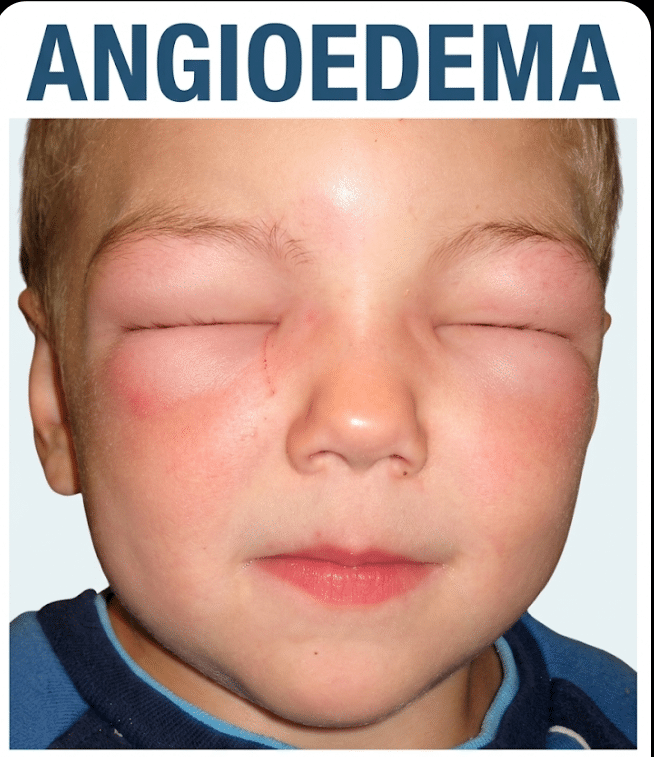
Angioedema is a medical condition characterized by sudden swelling beneath the skin or mucous membranes. It commonly affects areas like the face, lips, tongue, throat, hands, feet, and sometimes the genitals. While it may look similar to hives, angioedema occurs deeper in the skin and can sometimes become life-threatening, especially if it affects breathing.
⭐What is Angioedema?
Angioedema is a localized swelling caused by fluid leakage from blood vessels into surrounding tissues. It may occur alone or alongside urticaria (hives). The swelling can develop rapidly and may last from a few hours to several days.
⭐Causes of Angioedema
Angioedema can occur due to various reasons, including:
1. Allergic Reactions
- Food (nuts, shellfish, milk)
- Medications (antibiotics, painkillers)
- Insect stings or bites
2. Drug-Induced
- Commonly caused by ACE inhibitors (used for high blood pressure)
3. Hereditary Angioedema (HAE)
- A rare genetic condition caused by a deficiency of C1 inhibitor protein
4. Infections or Illness
- Viral or bacterial infections can trigger swelling
5. Idiopathic
- In some cases, the cause remains unknown
⭐Symptoms of Angioedema
- Sudden swelling under the skin
- Puffiness around eyes and lips
- Swelling of tongue or throat (dangerous)
- Difficulty breathing or swallowing
- Abdominal pain (in hereditary cases)
- Non-itchy swelling (unlike hives)
⭐When is Angioedema Dangerous?
Seek immediate medical help if:
- There is swelling of the throat or tongue
- Difficulty breathing occurs
- Voice becomes hoarse
- Dizziness or fainting develops
These signs may indicate a severe allergic reaction (anaphylaxis).
⭐Diagnosis
Doctors diagnose angioedema based on:
- Medical history
- Physical examination
- Blood tests (especially for hereditary cases)
- Allergy testing
⭐Treatment Options
1. For Allergic Angioedema
- Antihistamines
- Corticosteroids
- Epinephrine (in severe cases)
2. For Drug-Induced
- Discontinuation of the triggering medication
3. For Hereditary Angioedema
- C1 inhibitor replacement therapy
- Bradykinin receptor antagonists
4. Home Care
- Cold compress
- Avoid known triggers
- Rest and hydration
⭐Prevention Tips
- Identify and avoid triggers
- Carry emergency medication if prescribed
- Inform doctors about past reactions
- Maintain a medical alert card
🌹Frequently Asked Questions (FAQs)
Q1. Is angioedema the same as hives?
No, angioedema affects deeper layers of the skin, while hives affect the surface.
Q2. Can angioedema go away on its own?
Yes, mild cases often resolve within 24–72 hours without treatment.
Q3. Is angioedema life-threatening?
It can be, especially if it affects the airway and causes breathing difficulty.
Q4. What foods can trigger angioedema?
Common triggers include nuts, eggs, seafood, and dairy products.
Q5. Can stress cause angioedema?
Yes, stress can sometimes trigger or worsen symptoms in certain individuals.
Q6. How is hereditary angioedema different?
It is genetic, recurrent, and not caused by allergies.
Q7. Should I go to the hospital for angioedema?
Yes, if you have breathing difficulty, throat swelling, or severe symptoms.
🌺Conclusion
Angioedema is a condition that ranges from mild and harmless to severe and life-threatening. Early recognition of symptoms and identification of triggers play a crucial role in effective management. While many cases resolve on their own, some require urgent medical attention. If you experience recurrent episodes, consult a healthcare professional for proper diagnosis and long-term management.👍