Introduction
Polymorphous Light Eruption (PMLE) is one of the most common sun-related skin conditions. It is a type of photosensitivity reaction that occurs when the skin reacts abnormally to sunlight, especially ultraviolet (UV) rays. PMLE is not dangerous, but it can cause discomfort, itching, and rashes that may affect daily life. The good news is that it can be managed with proper care and prevention.
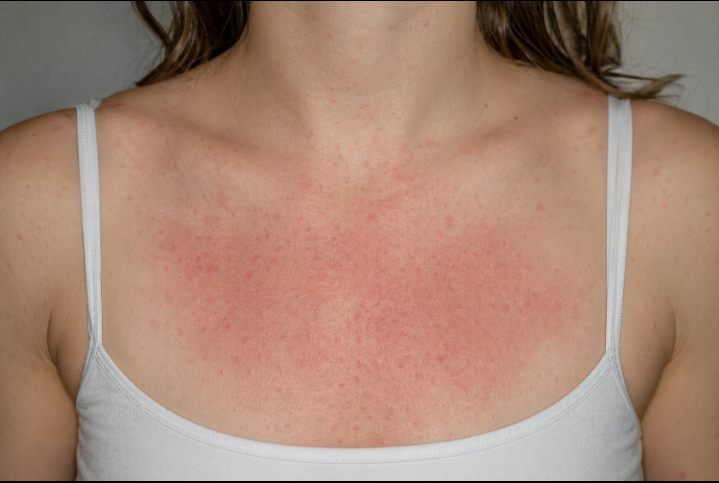
POLYMORPHOUS LIGHT ERUPTION
What is Polymorphous Light Eruption?
Polymorphous Light Eruption, also known as “sun allergy,” is a skin rash that appears after exposure to sunlight. The word polymorphous means the rash can appear in different forms such as bumps, patches, blisters, or redness.
It usually develops in spring or early summer when the skin is exposed to sunlight after a long period of reduced sun exposure.
Causes of PMLE
The exact cause of PMLE is not fully understood, but it is believed to be an immune system reaction triggered by UV radiation.
Common Triggers:
- Sun exposure after winter or staying indoors for long periods
- Strong sunlight during summer
- Sudden increase in outdoor activities
- Tanning beds or artificial UV exposure
Risk Factors:
- Fair or sensitive skin
- Family history of PMLE
- Women are more commonly affected than men
- Living in regions with changing seasons
Symptoms of PMLE
Symptoms usually appear within hours to a few days after sun exposure.
Common Symptoms:
- Itchy rash
- Redness
- Small bumps or blisters
- Burning sensation
- Dry patches
- Swelling in some cases
Commonly Affected Areas:
- Neck
- Chest
- Arms
- Hands
- Legs
The face is less commonly affected because it is often regularly exposed to sunlight and becomes more tolerant.
Diagnosis
A doctor usually diagnoses PMLE based on:
- Medical history
- Skin examination
- Pattern of rash after sun exposure
- Sometimes blood tests or skin biopsy to rule out other conditions
Treatment of PMLE
1. Sun Protection
The most important step is avoiding excessive sunlight.
- Wear protective clothing
- Use wide-brim hats
- Stay in shade during peak sunlight hours
- Apply broad-spectrum sunscreen (SPF 30 or higher)
2. Medications
Doctors may recommend:
- Antihistamines for itching
- Topical corticosteroid creams for inflammation
- Oral steroids in severe cases
3. Gradual Sun Exposure
Slowly increasing sun exposure in spring may help the skin adapt.
4. Phototherapy
In recurrent cases, controlled UV therapy under medical supervision may be used.
Prevention Tips
- Use sunscreen daily
- Reapply sunscreen every 2–3 hours
- Avoid sudden intense sun exposure
- Cover exposed skin
- Start with short outdoor exposure and increase gradually
- Maintain skin hydration
Frequently Asked Questions (FAQ)
1. Is PMLE contagious?
No, PMLE is not contagious. It cannot spread from one person to another.
2. Is PMLE dangerous?
PMLE is usually harmless, but it can be uncomfortable and irritating.
3. Can PMLE be cured permanently?
There is no permanent cure, but symptoms can be effectively managed with prevention and treatment.
4. Does PMLE happen every summer?
Some people experience it seasonally, especially during the first strong sun exposures.
5. Can sunscreen prevent PMLE?
Yes, sunscreen can significantly reduce the risk, especially broad-spectrum sunscreen.
6. Should I avoid all sunlight?
No, complete avoidance is not necessary. Controlled and protected sun exposure is usually recommended.
7. Can children get PMLE?
Yes, PMLE can occur in children, though it is more common in young adults.
Conclusion
Polymorphous Light Eruption is a common sunlight-related skin condition that causes itchy rashes after sun exposure. While it may be frustrating, it is manageable with proper sun protection, skincare, and medical advice. If you notice repeated rashes after sunlight exposure, consult a dermatologist for accurate diagnosis and treatment. Early prevention and awareness can help you enjoy outdoor activities safely.