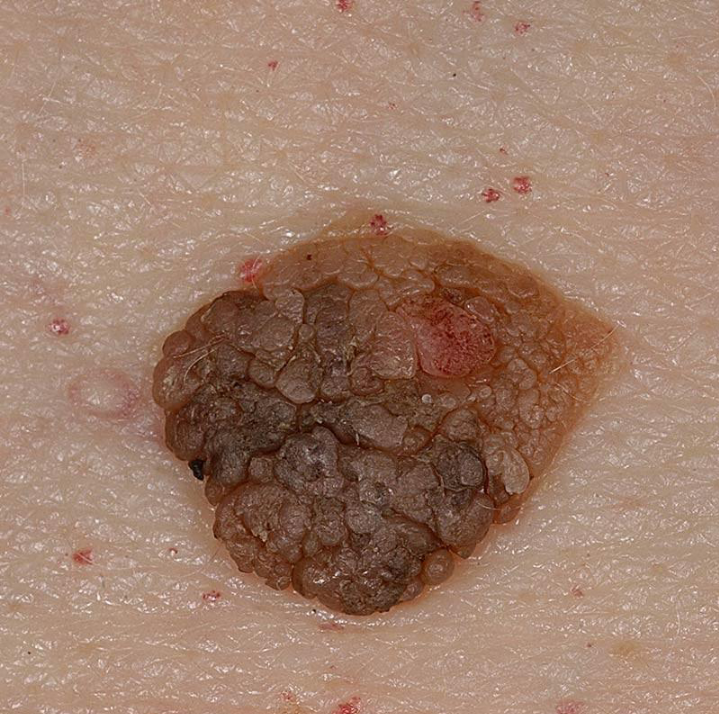
What Is Seborrheic Keratosis?
Seborrheic keratosis is a common, non-cancerous (benign) skin growth that usually appears in adults, especially after the age of 40. These growths can develop anywhere on the body except the palms and soles. They often have a waxy, rough, or “stuck-on” appearance and vary in color from light tan to dark brown or black.
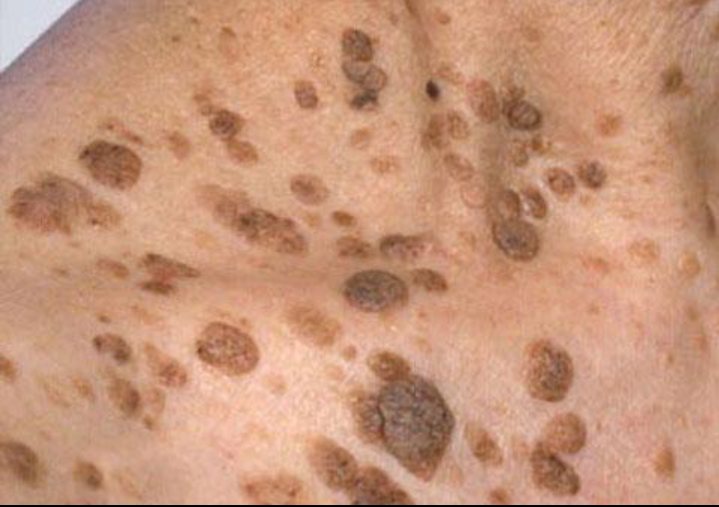
Seborrheic Keratosis
Causes of Seborrheic Keratosis
The exact cause is unknown, but several factors may contribute:
- Aging
- Genetic predisposition (family history)
- Sun exposure
- Skin friction in certain areas
Seborrheic keratoses are not contagious and cannot spread from person to person.
Symptoms
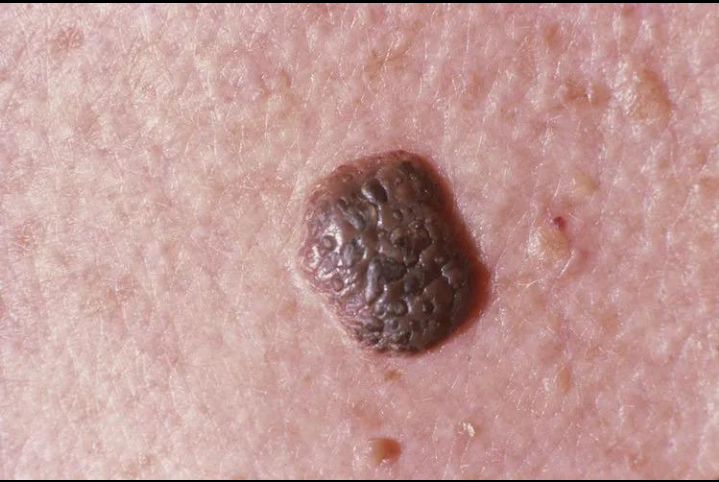
Common features include:
- Round or oval-shaped growths
- Waxy, rough, or wart-like texture
- “Stuck-on” appearance
- Colors ranging from tan to black
- Usually painless
- Mild itching or irritation may occur
Common Locations
- Face
- Chest
- Back
- Neck
- Shoulders
- Scalp
Types of Seborrheic Keratosis
1. Flat Seborrheic Keratosis
Appears as slightly raised, brown patches.
2. Raised Seborrheic Keratosis
Thicker growths with a rough surface.
3. Irritated Seborrheic Keratosis
Can become red, itchy, or inflamed due to friction.
4. Dermatosis Papulosa Nigra
A variant commonly seen in people with darker skin tones, especially on the face.
Diagnosis
A dermatologist usually diagnoses seborrheic keratosis through:
- Physical examination
- Dermoscopy (skin magnification)
- Skin biopsy (if the lesion appears unusual or cancer is suspected)
Treatment Options
Treatment is not usually necessary unless the growth causes discomfort or cosmetic concerns.
Cryotherapy
- Freezing with liquid nitrogen
- Common and effective
Curettage
- Scraping off the lesion after numbing the skin
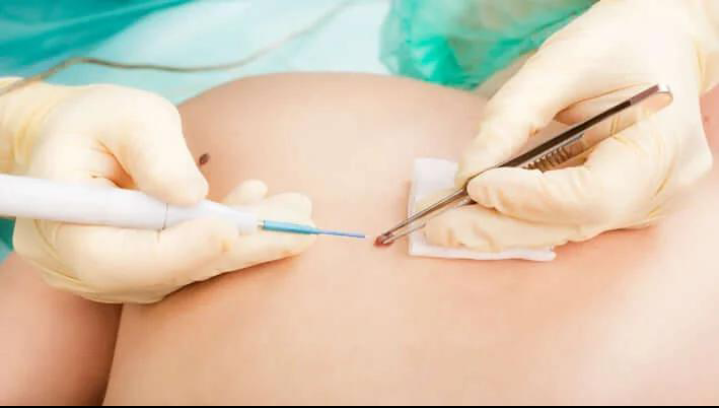
Electrocautery
- Burning the lesion using electric current
Laser Therapy
- Useful for cosmetic removal
Hydrogen Peroxide Solution
- Sometimes used for selected lesions under medical supervision
When to See a Doctor
Consult a dermatologist if:
- A new growth appears suddenly
- The lesion changes color, shape, or size
- It bleeds frequently
- It becomes painful
- You are unsure whether it is benign or skin cancer
Prevention
Although prevention is not always possible:
- Protect skin from excessive sun exposure
- Use sunscreen regularly
- Perform routine skin self-examinations
- Schedule regular dermatology checkups
Frequently Asked Questions (FAQ)
1. Is seborrheic keratosis cancerous?
No. Seborrheic keratosis is a benign skin growth and does not become skin cancer.
2. Can seborrheic keratosis go away on its own?
Usually no. Most lesions remain stable unless removed.
3. Is seborrheic keratosis contagious?
No. It cannot spread through physical contact.
4. Does removal leave a scar?
Minor scarring is possible, but modern treatments generally leave minimal marks.
5. Can younger people develop seborrheic keratosis?
Yes, but it is more common in middle-aged and older adults.
6. Can seborrheic keratosis return after treatment?
The treated lesion usually does not return, but new lesions may develop elsewhere.
7. Is treatment necessary?
No, unless the lesion causes irritation, discomfort, or cosmetic concerns.
8. Can I remove it at home?
Home removal is not recommended because it may cause infection, scarring, or misdiagnosis of a more serious condition.
Conclusion
Seborrheic keratosis is one of the most common benign skin growths seen in adults. While these lesions may look concerning, they are generally harmless and do not require treatment unless they cause discomfort or cosmetic concerns. Regular skin examinations and consultation with a dermatologist can help ensure accurate diagnosis and appropriate management. Early evaluation of any changing or unusual skin lesion is important to rule out skin cancer and maintain healthy skin.