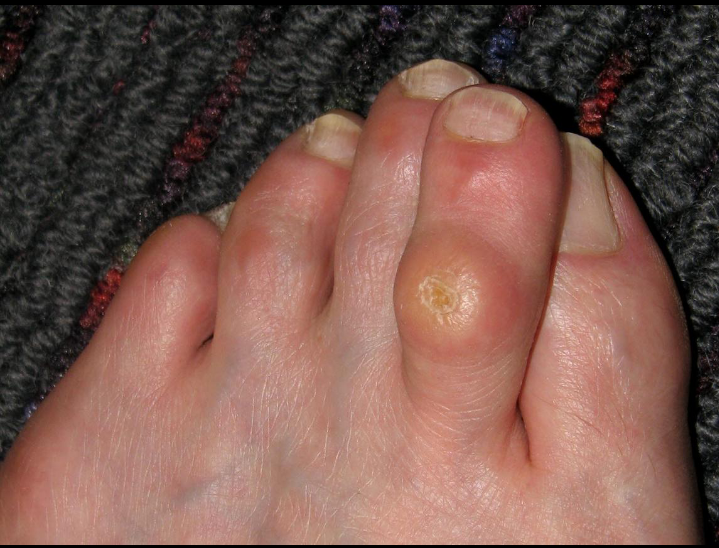
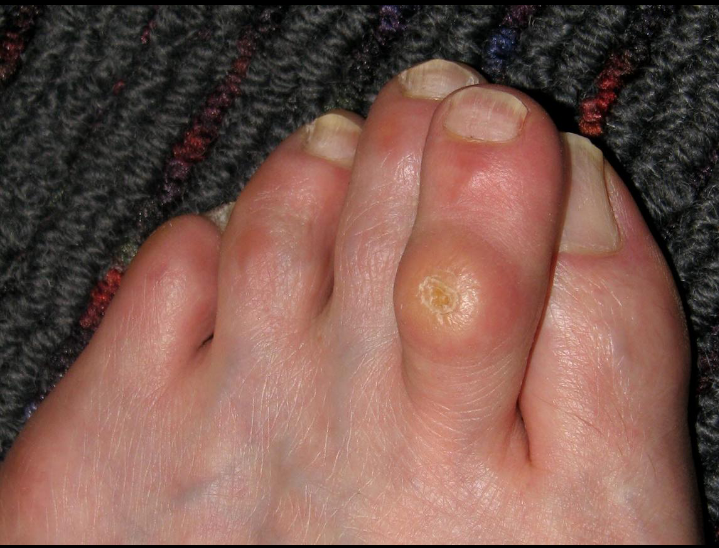
What is a Clavus (Corn)?
A Clavus, commonly known as a corn, is a small, thickened area of skin that develops due to repeated pressure or friction. Corns most often appear on the toes, soles of the feet, or other pressure-bearing areas. They protect the skin but can become painful if the pressure continues.
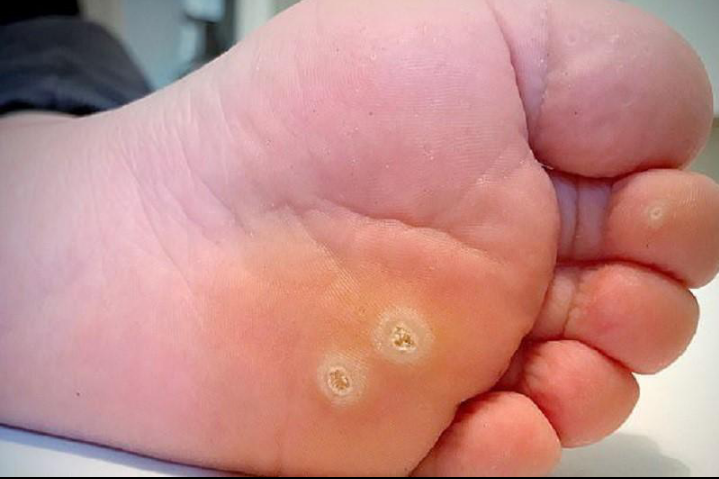
CLAVUS ( CORN )
Causes of Corns
- Wearing tight or ill-fitting shoes
- Walking barefoot frequently
- High heels or footwear with excessive pressure
- Foot deformities such as bunions or hammer toes
- Abnormal walking pattern (gait)
- Repeated friction from sports or physical work
Symptoms
- Thick, hard, rough skin
- Pain while walking or standing
- A small, raised, hardened bump
- Tenderness when pressed
- Dry or flaky skin around the affected area
Types of Corns
- Hard Corn – Commonly found on the tops or sides of the toes.
- Soft Corn – Develops between the toes due to moisture.
- Seed Corn – Small corns that usually occur on the sole of the foot.
Diagnosis
A healthcare professional usually diagnoses a corn by examining the foot and assessing areas of pressure or friction.
Treatment
- Wear properly fitting, comfortable footwear.
- Use protective corn pads or cushioning.
- Soak the feet in warm water and gently remove dead skin with a pumice stone.
- Apply moisturizing creams regularly.
- Use medicated salicylic acid products only under medical guidance, especially if you have diabetes or poor circulation.
- Persistent or painful corns may require removal by a healthcare professional.
Prevention
- Wear shoes with adequate toe space.
- Use soft socks and cushioned insoles.
- Keep feet clean and moisturized.
- Avoid walking barefoot on hard surfaces.
- Trim toenails regularly.
- Treat foot deformities early if present.
Frequently Asked Questions (FAQ)
1. Is a corn the same as a wart?
No. Corns develop from pressure and friction, while warts are caused by a viral infection.
2. Can I remove a corn at home?
Small corns may improve with proper foot care, but cutting or digging them out yourself can lead to infection.
3. Are corns dangerous?
Most are harmless, but they can become painful or infected if neglected.
4. Who is at higher risk?
People with diabetes, foot deformities, ill-fitting shoes, or occupations involving prolonged standing.
5. When should I see a doctor?
Seek medical advice if the corn is very painful, shows signs of infection, keeps returning, or if you have diabetes or poor circulation.
Conclusion
Clavus (corn) is a common foot condition caused by repeated pressure and friction. With proper footwear, good foot hygiene, and early treatment, most corns can be managed successfully. If pain persists or the corn repeatedly returns, consult a healthcare professional for appropriate evaluation and treatment.
Take care of your feet—they support you every step of the way! 👣