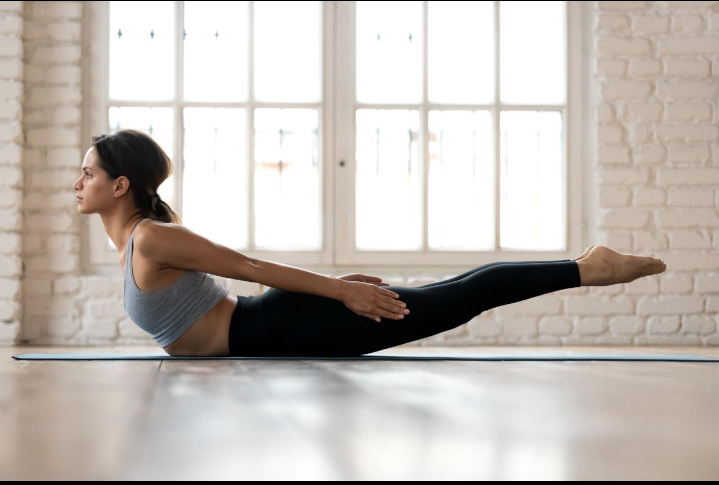
Shalabhasana, also known as Locust Pose, is a prone yoga posture performed while lying on the stomach. The pose involves lifting the legs and/or upper body from the floor while engaging the back, hips and abdominal muscles.
It is a useful posture for improving back strength, body awareness and overall flexibility when practiced correctly.
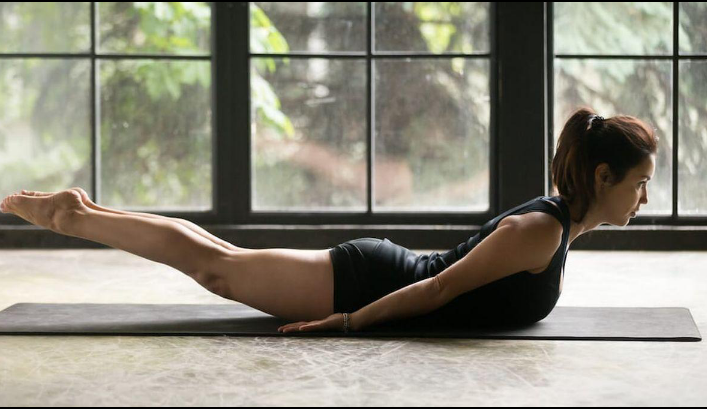
Shalabhasana ( Locust Pose )
🧘 How to Perform Shalabhasana
- Lie on your stomach with your legs stretched straight behind you.
- Keep your arms alongside your body or place your hands under your thighs, depending on your variation.
- Keep your forehead or chin gently on the floor.
- Take a deep breath and engage your abdominal and back muscles.
- Slowly lift your legs and, if comfortable, your chest and arms.
- Keep your neck relaxed and avoid straining.
- Hold the position for a few seconds while breathing normally.
- Slowly lower your body back to the floor.
- Relax and repeat 2–3 times according to your ability.
🌿 Benefits of Shalabhasana
- Helps strengthen the lower and upper back muscles.
- Engages the glutes, hips and abdominal muscles.
- May improve spinal mobility and posture.
- Helps develop better body awareness and balance.
- Can improve flexibility around the hips and legs.
- Strengthens the muscles involved in maintaining good posture.
- May help improve overall physical stamina when included in a regular yoga routine.
⚠️ Precautions
Shalabhasana should be practiced gently and without forcing the body. Avoid or seek professional guidance before practicing if you have a recent abdominal or spinal injury, severe back pain, recent surgery, pregnancy, or another condition that makes prone exercises uncomfortable.
Stop if you experience sharp pain, dizziness, numbness or unusual discomfort.
❓ Frequently Asked Questions
1. What is Shalabhasana?
Shalabhasana is a yoga posture in which the practitioner lies on the stomach and lifts the legs and/or upper body. It is commonly called Locust Pose.
2. How long should I hold Shalabhasana?
Beginners can start with about 5–10 seconds and gradually increase the duration as their strength and comfort improve.
3. Can beginners practice Shalabhasana?
Yes. Beginners can start with a gentle variation, such as lifting one leg at a time, and gradually progress to the full pose.
4. Does Shalabhasana strengthen the back?
Yes. It activates several muscles of the back and hips and can contribute to better back strength when practiced with proper technique.
5. How many times can I practice Shalabhasana?
Generally, 2–3 repetitions are sufficient for beginners. Focus on controlled movement rather than the number of repetitions.
6. Can Shalabhasana improve posture?
It may help support better posture by strengthening muscles involved in spinal and hip stability.
🧘 Final Thoughts
Shalabhasana is a simple but effective yoga posture for developing strength in the back, hips and legs. Start slowly, maintain proper alignment and never force the movement. Consistent practice, combined with a balanced yoga routine, can help improve strength, flexibility and body awareness.
Practice mindfully, breathe naturally and listen to your body. ❤️