Introduction
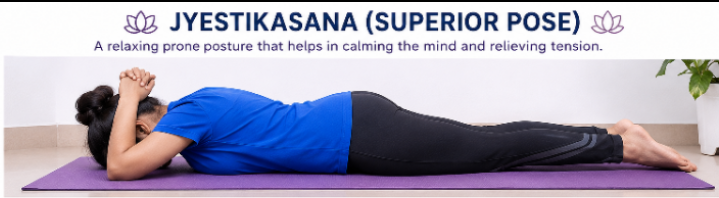
Jyestikasana, also known as Superior Pose, is a simple restorative yoga posture performed while lying on the abdomen. The Sanskrit word Jyeshta means “elder,” “superior,” or “most excellent.” It is primarily used as a relaxation pose and can help the practitioner settle the body and mind through comfortable positioning and natural breathing.
Unlike many active yoga postures, Jyestikasana requires very little muscular effort. It can be included in a relaxation or meditation-oriented yoga routine.
How to Perform Jyestikasana
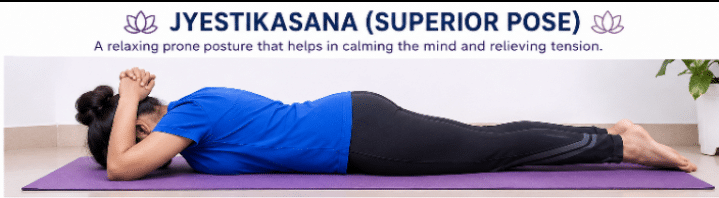
1. Lie comfortably on your stomach on a yoga mat.
2. Keep both legs straight and relaxed.
3. Rest your forehead gently on the floor. A folded towel or blanket can be used for additional comfort.
4. Interlock the fingers of both hands.
5. Place the interlocked hands behind the head or upper neck.
6. Allow the elbows to rest comfortably on the floor.
7. Relax your shoulders, back, legs and facial muscles.
8. Breathe slowly and naturally.
9. Stay in the position for a few minutes, or for as long as it remains comfortable.
10. To come out, gently release the hands and slowly return to a comfortable resting position.
Breathing and Awareness
Keep the breathing natural, slow and rhythmic rather than forcing deep breaths. Bring your attention to the movement of the breath and consciously relax areas where you notice tension.
Potential Benefits of Jyestikasana
Regular, comfortable practice may:
– Promote physical relaxation.
– Help calm the mind.
– Encourage awareness of natural breathing.
– Reduce feelings of muscular tension around the neck and upper back.
– Provide a gentle resting position for the spine.
– Serve as a useful relaxation posture between more active asanas.
Some traditional yoga sources describe Jyestikasana as particularly useful for stiffness around the neck and upper back and for certain spinal complaints. It should not, however, be considered a treatment or cure for cervical spondylitis or other spinal disorders.
Variations
If placing the hands behind the head is uncomfortable, try a gentler variation:
– Interlock the fingers and place the hands underneath the forehead.
– Allow the forehead to rest comfortably on the hands.
– Keep the shoulders relaxed and breathe normally.
Precautions
Jyestikasana is generally gentle, but comfort and individual limitations should be respected.
– Do not force the neck into extension.
– Stop if you experience pain, numbness, dizziness or unusual discomfort.
– People with significant neck, shoulder or back problems should seek guidance from a qualified yoga professional or healthcare practitioner before practising.
– Pregnant individuals should avoid prone positions unless specifically advised by their healthcare professional.
– Use a folded towel or blanket under the forehead if the floor position feels uncomfortable.
Frequently Asked Questions (FAQ)
1. What is Jyestikasana?
Jyestikasana is a restorative yoga posture also called Superior Pose. It is performed lying on the stomach with the forehead and elbows supported on the floor and the hands generally interlocked behind the head.
2. Is Jyestikasana suitable for beginners?
Yes. It is considered a beginner-level, restorative posture, provided it is comfortable and performed without forcing the neck or shoulders.
3. How long should I hold Jyestikasana?
Beginners can start with 2–5 minutes and gradually increase the duration according to comfort. There is no need to remain in the pose if discomfort develops.
4. Can Jyestikasana help with stress?
It may promote relaxation and help settle the mind because the posture encourages stillness and slow, rhythmic breathing.
5. Can it cure cervical spondylitis?
No. Although traditional yoga sources describe it as helpful for neck stiffness and cervical spondylitis, Jyestikasana should not be regarded as a cure. Anyone with cervical spine disease should seek appropriate professional advice.
6. What should I do if my forehead cannot comfortably reach the floor?
Place a folded towel, blanket or suitable cushion under the forehead to reduce strain and make the posture more comfortable.
7. Can I practise Jyestikasana every day?
For many healthy individuals, a gentle relaxation posture can be included regularly. Practise according to your comfort and stop if it causes pain or other symptoms.
Conclusion
Jyestikasana (Superior Pose) is a simple and calming posture that can be incorporated into a relaxation-focused yoga routine. Its emphasis is on stillness, comfortable positioning and natural breathing rather than physical exertion. Practised mindfully and without forcing the neck or back, it can be a useful way to relax the body and prepare the mind for meditation or rest.
Remember: Yoga should complement—not replace—appropriate medical care for persistent pain or diagnosed spinal conditions.