Introduction
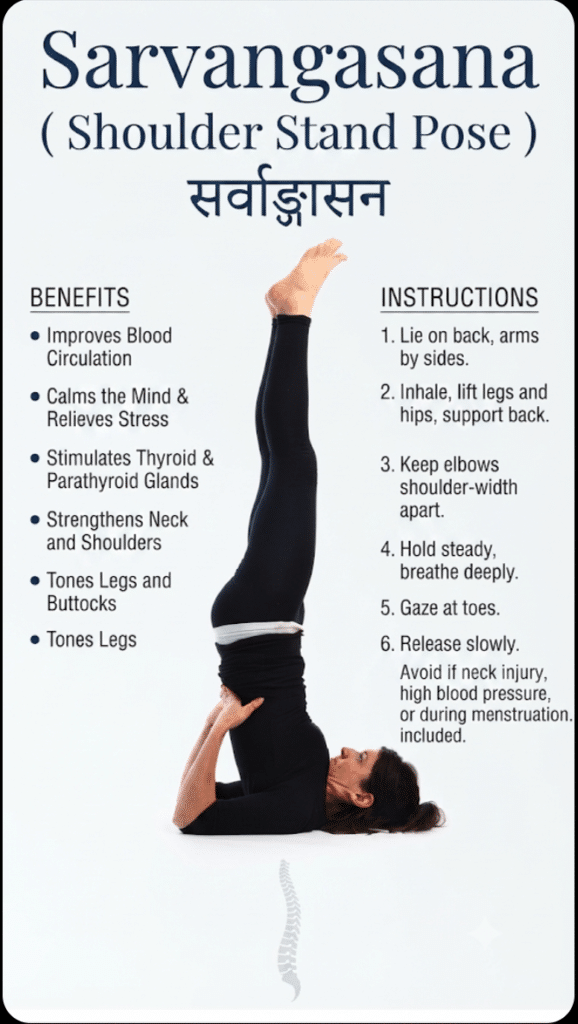
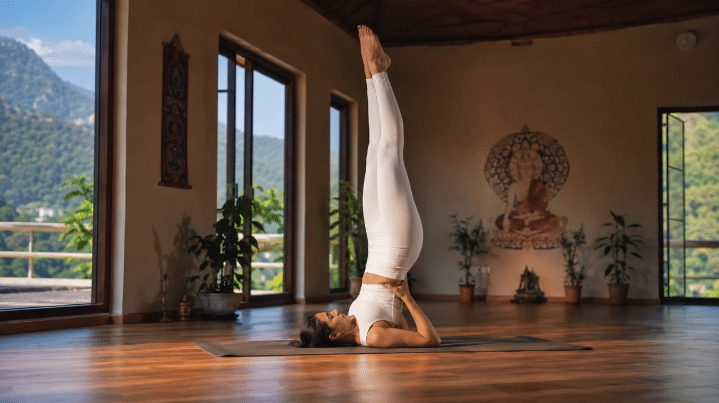
Sarvangasana, commonly known as the Shoulder Stand Pose, is a classical yoga inversion in which the body is supported mainly by the shoulders and upper arms while the legs extend upward. The name comes from Sanskrit: Sarva means all, Anga means body parts, and Asana means pose. It is traditionally called the “Queen of Asanas.”
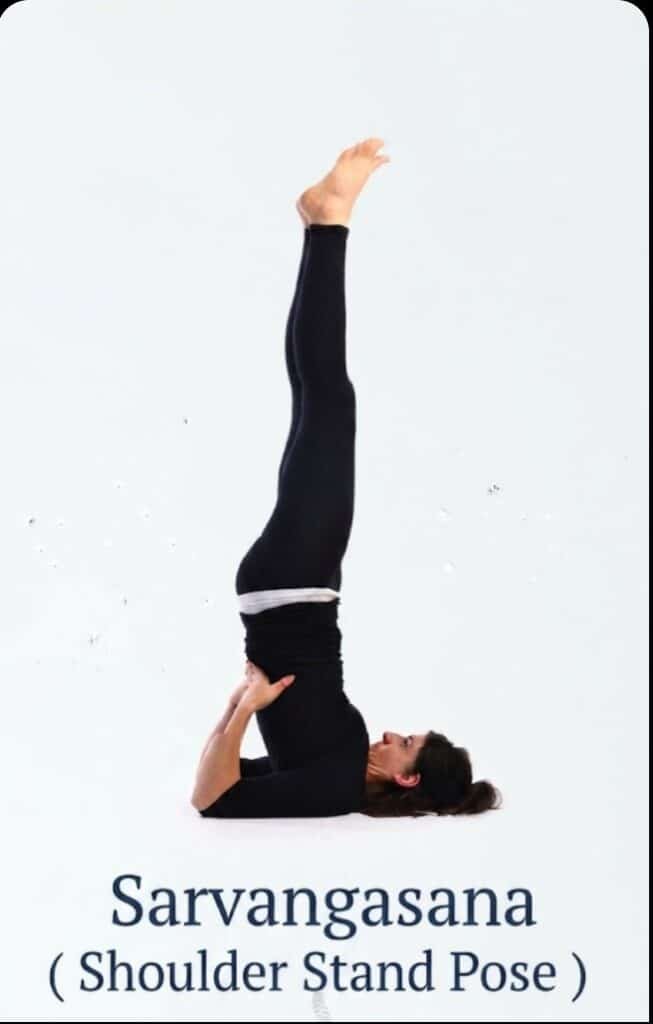
🌿 How to Perform Sarvangasana
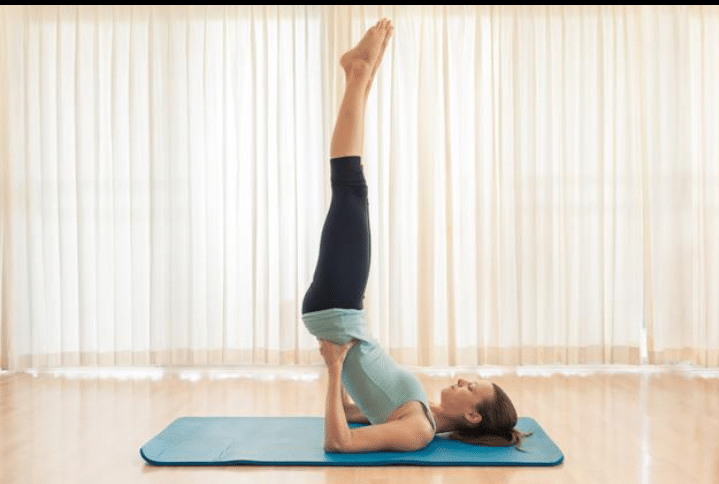
- Lie flat on your back with your arms alongside your body.
- Slowly raise both legs upward.
- Lift your hips and lower back off the floor.
- Support your lower back with both hands.
- Bring your elbows closer together.
- Straighten your legs upward toward the ceiling.
- Keep your weight on your shoulders and upper arms—not on your neck or head.
- Breathe slowly and hold for a comfortable duration.
- To come down, bend your knees and slowly roll your spine back to the floor with control.
Beginners should start with short holds and preferably learn the pose under qualified guidance.
✨ Benefits of Sarvangasana
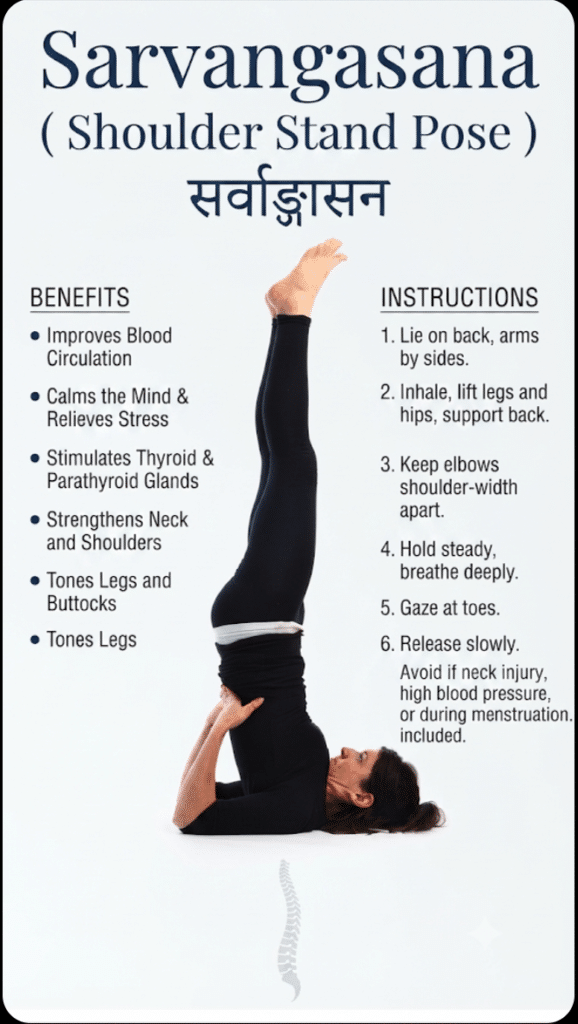
- 💪 Helps strengthen the shoulders, arms, back, and core.
- 🧘 Improves body awareness, balance, and control.
- 🤸 Supports spinal flexibility.
- 😌 Slow breathing in the pose may promote relaxation and calmness.
- 🩸 As an inversion, it changes circulation and body positioning.
- 🧠 Can improve focus and concentration as part of a regular yoga practice.
While Sarvangasana has many traditional health claims, it should not be considered a cure for thyroid disease or other medical conditions, as strong clinical evidence for pose-specific treatment claims is limited.
⚠️ Precautions
Sarvangasana places significant stress on the neck and shoulders. Avoid or seek professional medical/yoga guidance if you have:
- Neck injury or severe cervical problems
- Uncontrolled high blood pressure
- Heart problems
- Glaucoma or serious eye conditions
- Severe osteoporosis
- Recent surgery
Important: Never turn your head from side to side while holding the pose. Stop immediately if you feel pain, dizziness, tingling, or excessive pressure. Folded blankets under the shoulders can help create more space for the neck when used correctly.
🌱 Beginner-Friendly Alternatives
If the full Shoulder Stand is difficult, try:
- Setu Bandhasana (Bridge Pose)
- Viparita Karani (Legs-Up-the-Wall Pose)
- Supported variations using blankets or a wall
These can help you gradually prepare for inversions with less load on the neck.
❓ Frequently Asked Questions (FAQ)
1. Is Sarvangasana suitable for beginners?
Beginners can work toward it gradually, preferably under the guidance of an experienced yoga teacher.
2. How long should I hold Sarvangasana?
Start with around 15–30 seconds and increase gradually only if you can maintain proper alignment comfortably.
3. Should the weight be on the neck?
No. The weight should primarily be supported by the shoulders and upper arms, not the neck or head.
4. Can Sarvangasana cure thyroid problems?
No strong clinical evidence shows that Sarvangasana cures thyroid disorders. Yoga can support general well-being but should not replace medical treatment.
5. What should I do after Sarvangasana?
Come down slowly, rest briefly in a neutral position, and avoid sudden movements. A qualified yoga instructor can guide appropriate counterposes for your practice.
🌸 Conclusion
Sarvangasana is a powerful and graceful inversion that can build strength, flexibility, balance, and body awareness. However, because it places considerable demand on the neck and shoulders, correct alignment and gradual practice are essential. Practice patiently, respect your body’s limits, and prioritize safety over achieving the perfect pose. 🧘♀️✨
**“In yoga, true progress is not about going higher—it is about becoming more aware, balanced, and connected with yourself.”**