Dr. Sahab Yadav

Introduction
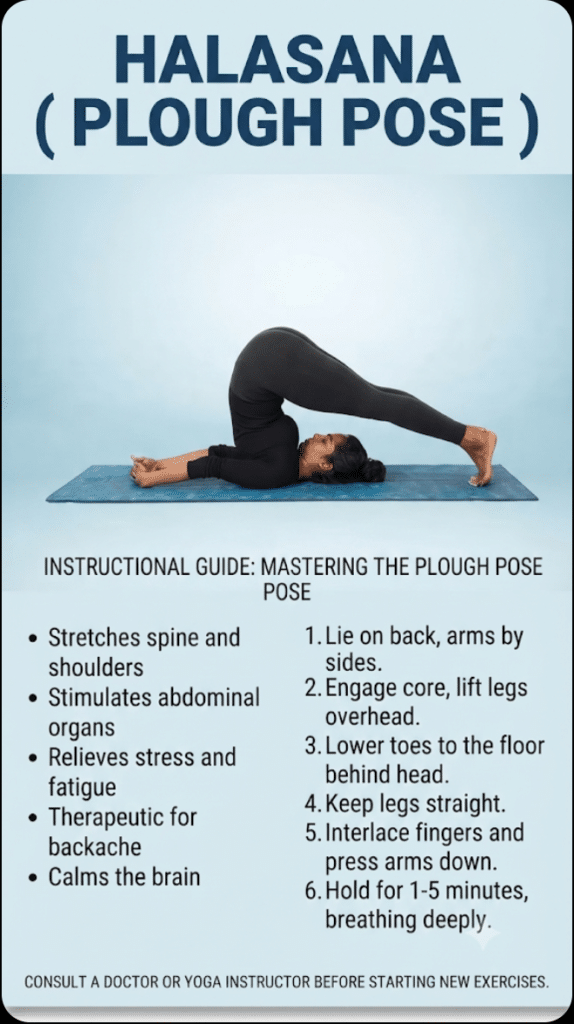
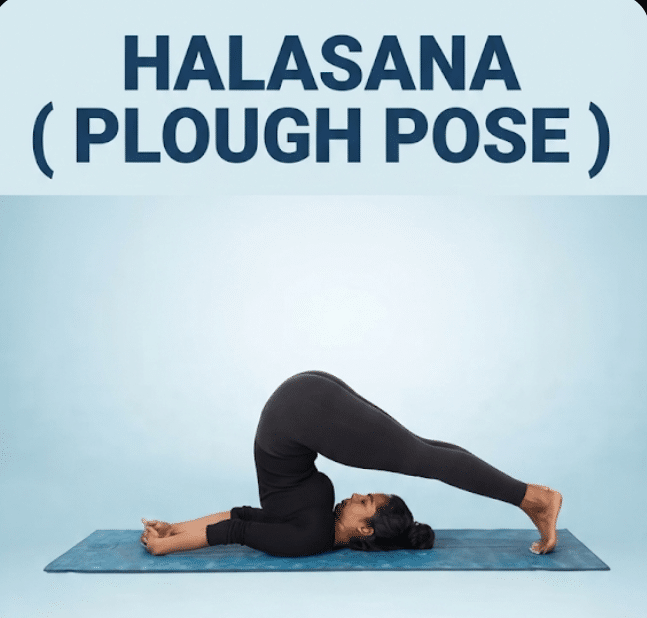
Halasana, also known as the Plough Pose, is an inverted yoga posture in which the legs move over the head, resembling a traditional plough. The Sanskrit word Hala means plough, while Asana means pose. It is an effective posture for improving flexibility, stretching the back of the body, and promoting relaxation.
How to Perform Halasana

- Lie flat on your back with your arms alongside your body.
- Keep your palms facing downward.
- Slowly raise both legs to a 90-degree angle.
- Lift your hips and lower back, supporting your back with your hands if needed.
- Gently move your legs over your head.
- Try to place your toes on the floor behind your head without forcing them.
- Breathe slowly and hold the position comfortably.
- To return, slowly roll your spine back down with control.
- Rest for a few breaths in Shavasana.
Important: Do not turn your head while holding the pose, as this can strain the neck.
🌿 Benefits of Halasana
- Improves flexibility of the spine and hamstrings.
- Stretches the shoulders, back, and legs.
- Engages the abdominal and core muscles.
- May promote relaxation and help reduce stress.
- Improves body awareness and posture.
- Can be part of a yoga routine supporting general back flexibility.
- Encourages slow, controlled breathing.
⚠️ Precautions
Avoid or practice only with professional guidance if you have:
- Neck injury or severe neck pain
- Cervical spine problems
- Herniated disc or serious spinal disorders
- Glaucoma or certain eye conditions
- Uncontrolled high blood pressure
- Recent surgery
- Pregnancy without medical/professional guidance
Never force your feet to touch the floor. Beginners can use props such as a chair, bolster, or folded blankets under the shoulders.
🌱 Beginner Modification
If your toes do not reach the floor:
- Keep your knees slightly bent.
- Rest your feet on a chair or bolster.
- Support your back with your hands.
- Hold the pose for only a few seconds initially.
🧘 Preparatory Poses
Try these poses before Halasana:
- Setu Bandhasana (Bridge Pose)
- Pawanmuktasana (Wind-Relieving Pose)
- Gentle hamstring stretches
- Cat-Cow stretches
❓ Frequently Asked Questions (FAQ)
1. Is Halasana good for beginners?
Yes, but beginners should practice gradually and preferably under the guidance of a qualified yoga instructor.
2. How long should I hold Halasana?
Beginners can start with 15–30 seconds and gradually increase according to comfort and ability.
3. Can Halasana help improve flexibility?
Yes. It deeply stretches the back of the body, including the spine and hamstrings.
4. Can I practice Halasana every day?
Yes, if you are comfortable and have no medical contraindications. Always focus on proper technique rather than duration.
5. What should I do after Halasana?
Rest briefly and perform a gentle counterpose or relaxation posture before continuing your practice.
🌸 Conclusion
Halasana (Plough Pose) is a powerful yoga posture that combines flexibility, strength, balance, and mindful breathing. With regular and correct practice, it can become a valuable part of a balanced yoga routine. However, because it places significant demands on the neck and spine, it should always be performed gently, without force, and with proper guidance when needed.
“Bend with patience, breathe with awareness, and let your body discover its own strength.” 🧘♀️✨