Introduction
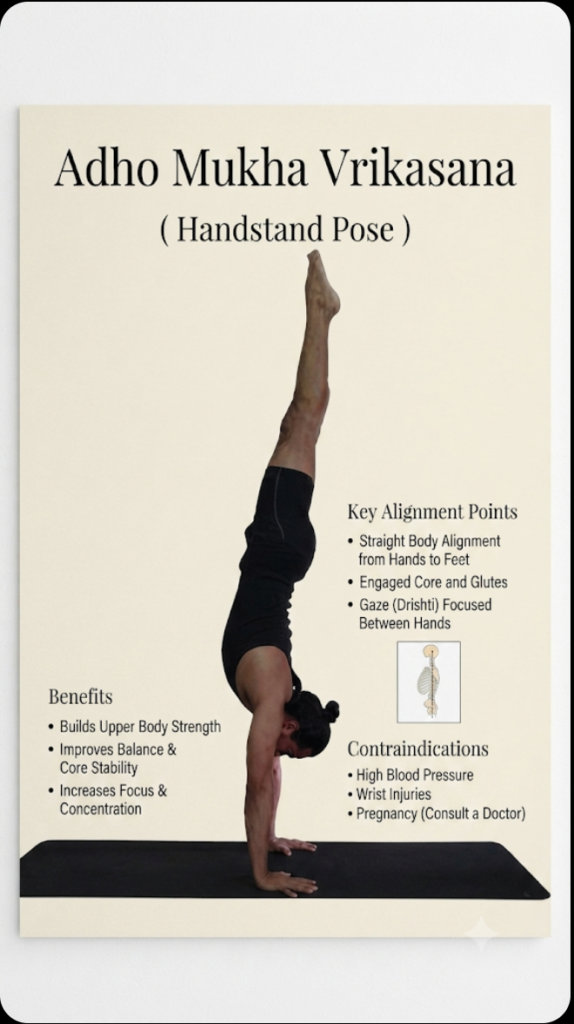
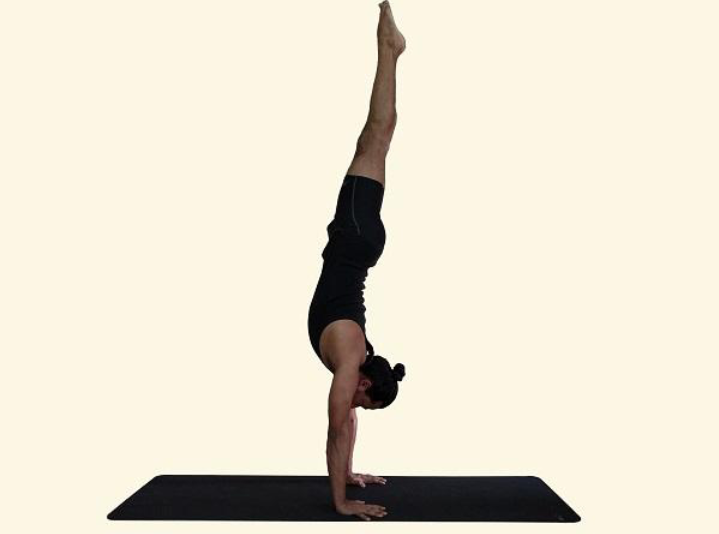
Adho Mukha Vrikshasana, commonly known as Handstand Pose, is an advanced yoga inversion in which the body is balanced upside down on the hands. The Sanskrit name refers to a “downward-facing tree”—with the hands acting like roots and the legs extending upward like branches.
It is a challenging posture that develops physical strength as well as concentration, body awareness and confidence.
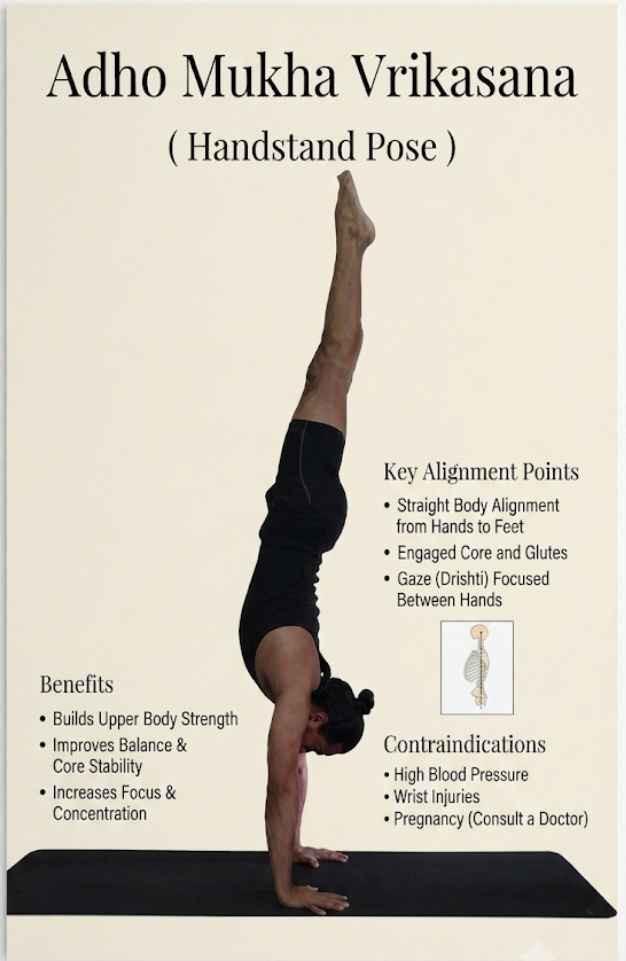
🧘 How to Perform Adho Mukha Vrikshasana
- Begin in Adho Mukha Svanasana (Downward-Facing Dog).
- Place your hands firmly on the mat, about shoulder-width apart, with fingers comfortably spread.
- Keep your wrists aligned and press through your palms and fingers.
- Shift your shoulders directly over your wrists.
- Engage your abdomen and keep your spine long.
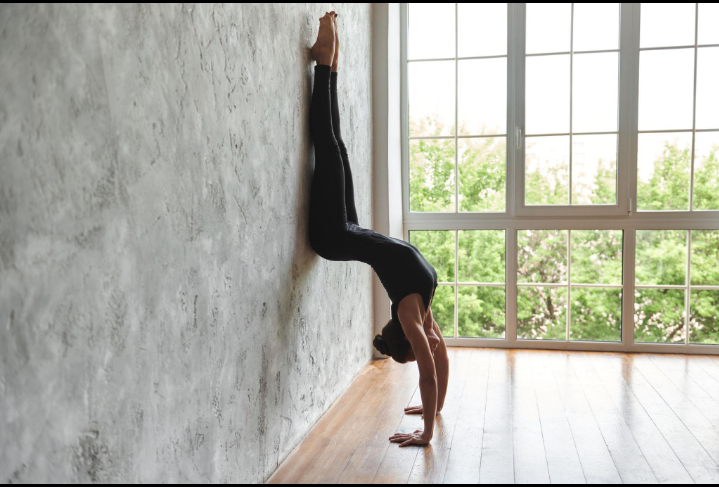
- Practice kicking one leg upward at a time, preferably with a wall behind you when learning.
- Once balanced, bring both legs together and extend them toward the ceiling.
- Keep your arms straight and shoulders active.
- Breathe slowly and maintain your gaze between your hands.
- To come down, lower one leg at a time with control and rest in a comfortable pose.
Beginner tip: Do not repeatedly kick forcefully. Practising with a qualified yoga teacher and using a wall for support can make learning safer.
💪 Benefits of Handstand Pose
Regular, appropriate practice may help:
- Strengthen the arms, wrists and shoulders
- Develop core strength and stability
- Improve balance and coordination
- Increase body awareness and concentration
- Develop confidence and mental focus
- Challenge the body to adapt to an unusual relationship with gravity
- Improve upper-body strength useful for other yoga postures
Handstand is also an excellent exercise in patience and resilience because mastering it usually requires consistent practice rather than immediate success.
⚠️ Precautions
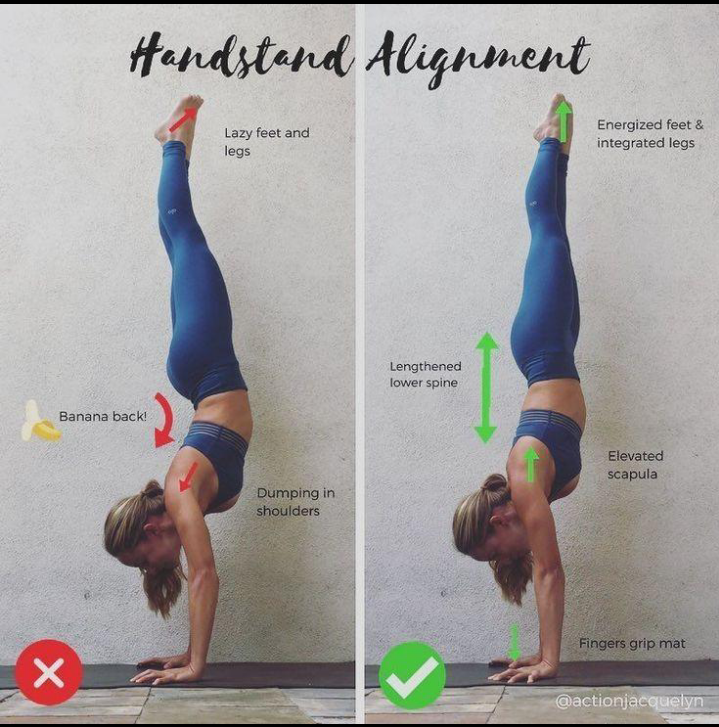
Adho Mukha Vrikshasana is not a beginner-level pose. Avoid practising it without appropriate guidance if you have pain or injury involving the wrists, elbows, shoulders, neck or back.
- Warm up your wrists, shoulders and core first.
- Practise on a non-slip surface with adequate space.
- Beginners should use a wall or qualified instructor.
- Never practise through sharp pain.
- Come out of the pose slowly and with control.
- If you have a medical condition or are unsure whether inversions are appropriate for you, consult an appropriate healthcare professional before practising.
❓ Frequently Asked Questions
1. Is Handstand suitable for beginners?
Generally, it is an advanced pose. Beginners should first develop wrist, shoulder and core strength and practise supported variations.
2. Can I practise Handstand against a wall?
Yes. A wall can provide useful support while learning alignment and balance.
3. How long should I hold a Handstand?
Quality is more important than duration. Beginners can start with short, controlled holds and gradually increase the duration as strength and balance improve.
4. Why do my wrists hurt during Handstand?
Handstand places substantial weight through the hands and wrists. Poor weight distribution, inadequate preparation or excessive practice may contribute to discomfort. Gradually conditioning the wrists and learning proper hand placement is important.
5. Does Handstand improve balance?
Yes. Maintaining the body upside down requires continuous adjustments in the muscles and nervous system, making balance and body awareness important parts of the practice.
6. Can Handstand improve concentration?
It can encourage strong concentration because maintaining the posture requires attention to breathing, alignment and balance.
7. How can I learn Handstand safely?
Start with foundational poses such as Downward-Facing Dog and Plank, strengthen your shoulders and core, practise at a wall, and learn from a qualified yoga teacher when possible.
🌸 Conclusion
Adho Mukha Vrikshasana is much more than simply standing on your hands. It is a practice of strength, balance, courage, concentration and patience. With regular practice, proper preparation and safe technique, the pose can become a powerful part of an experienced yoga practitioner’s routine.
“Root yourself in strength, rise with confidence, and keep reaching toward the sky.” 🌿🧘♀️✨