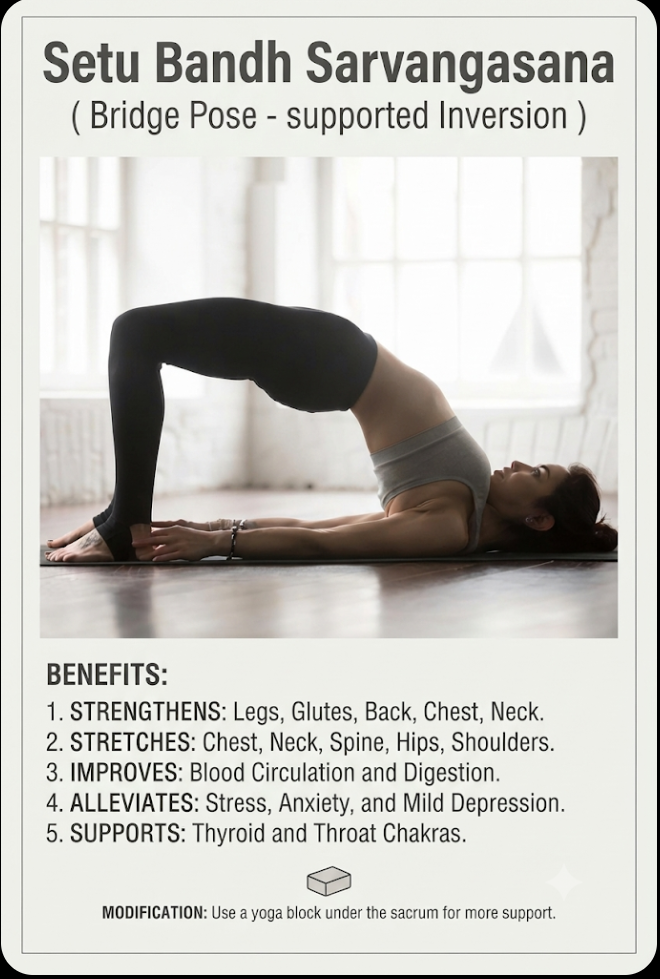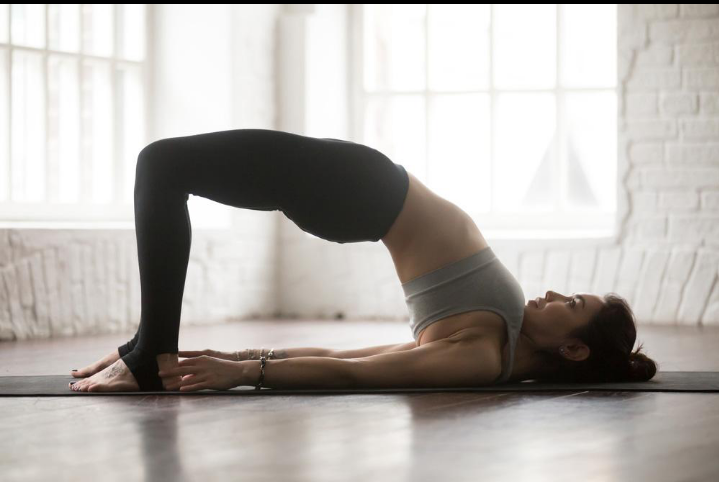
Setu Bandha Sarvangasana, commonly known as Bridge Pose, is a versatile yoga asana that combines a gentle backbend with strengthening of the legs, hips and back. In its supported form, a yoga block or bolster is placed beneath the sacrum, allowing the body to relax while the chest gently opens.
Because the head is positioned below the heart in Bridge Pose, it is sometimes described as a mild or supported inversion. It can be practiced dynamically for strength or restoratively with support.
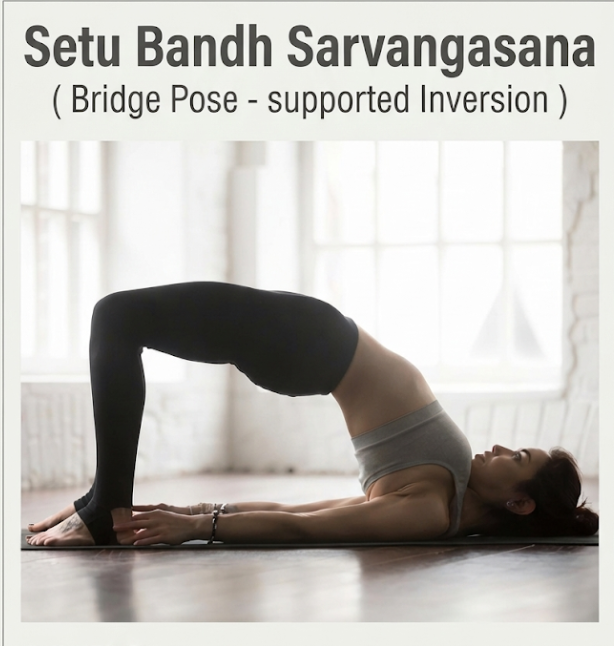
🧘 Meaning of the Name
- Setu = Bridge
- Bandha = Lock or bind
- Sarva = All
- Anga = Limb
- Asana = Pose
The body forms a bridge-like shape, which gives this posture its name.
🌸 How to Practice Setu Bandha Sarvangasana
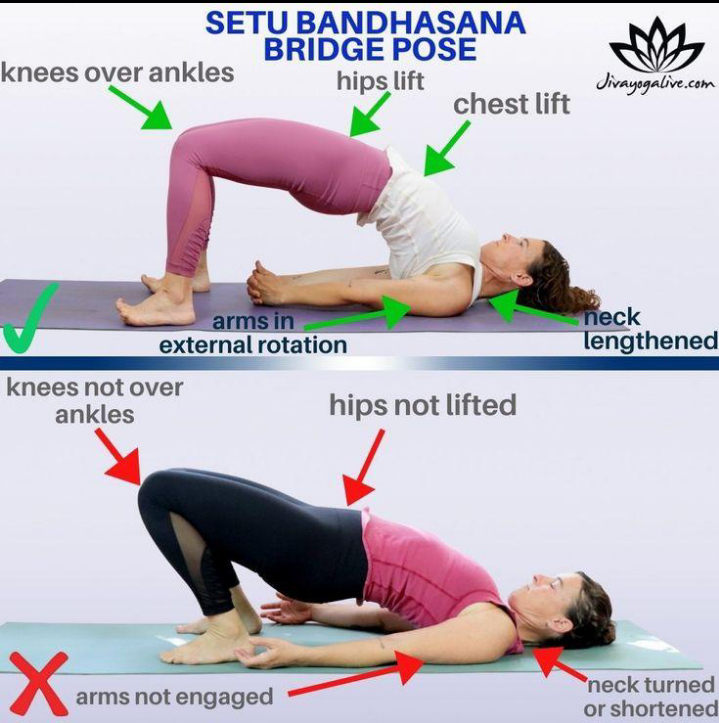
- Lie comfortably on your back on a yoga mat.
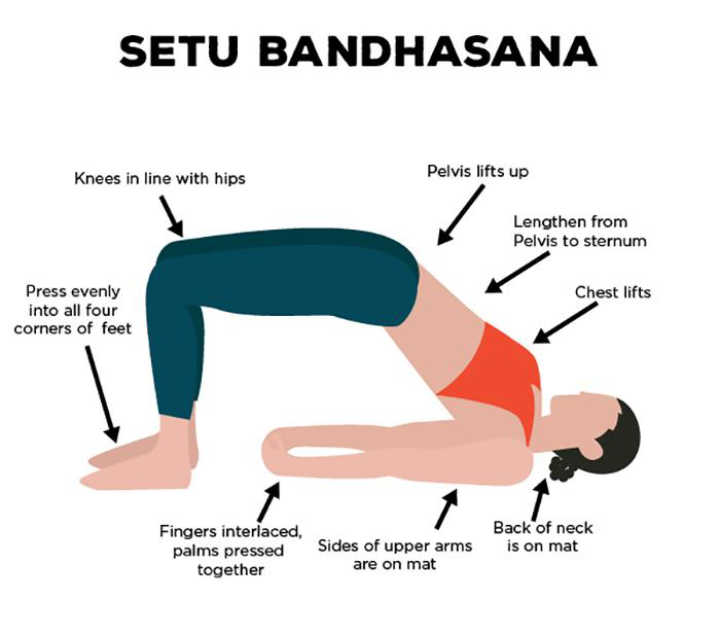
- Bend your knees and place your feet flat on the floor, approximately hip-width apart.
- Keep your arms beside your body with palms facing down.
- Press your feet gently into the floor and lift your hips upward.
- Keep your thighs and knees parallel rather than allowing the knees to fall outward.
- Broaden your chest and keep your neck relaxed.
- For the supported version, carefully place a yoga block beneath the sacrum—the broad bony area at the base of the spine—not directly under the lower lumbar curve.
- Allow your body weight to rest comfortably on the support and breathe slowly.
- Remain for several comfortable breaths, then remove the support and slowly lower your hips.
🧱 Supported Variation
The supported version is particularly useful when the goal is relaxation rather than strengthening. A block under the sacrum provides support so that the hips can remain elevated without requiring continuous muscular effort.
💪 Benefits of Bridge Pose
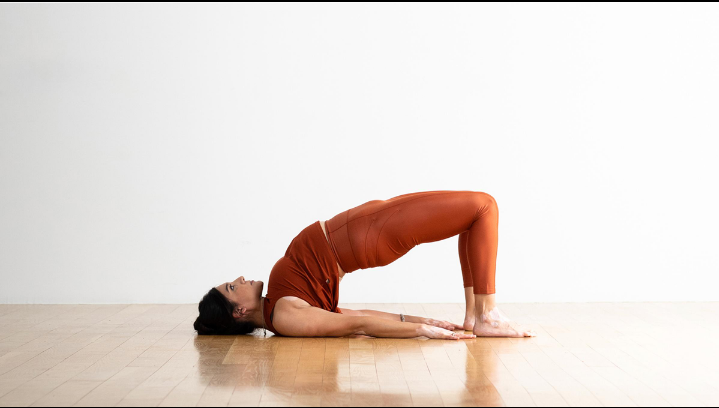
Regular, appropriate practice may:
- Strengthen the glutes, hamstrings and legs
- Strengthen muscles of the back
- Gently stretch the chest, shoulders and abdomen
- Lengthen the hip flexors
- Encourage better posture
- Open the front of the body
- Improve body awareness and breathing
- Provide a calming, restorative experience when practiced with support
- Prepare the body for more advanced backbends and, with appropriate instruction, shoulderstand practice
🌿 Supported Bridge vs. Active Bridge
| Active Bridge | Supported Bridge |
| Hips are actively lifted | Sacrum rests on a block/prop |
| Builds strength | More restorative |
| Greater muscular engagement | Less muscular effort |
| Usually held for shorter periods | Can be held comfortably for longer |
| Useful in strengthening sequences | Useful for relaxation and gentle opening |
⚠️ Safety & Precautions
Bridge Pose should be practiced carefully if you have neck, shoulder or lower-back problems. People with a current neck or shoulder injury should avoid the pose unless cleared and appropriately guided by a qualified professional.
Important: Never turn your head from side to side while holding the pose. Keep your gaze upward and your neck in a comfortable, natural position. Do not force the hips higher if you feel compression or pain in the lower back or neck.
If using a block, make sure it supports the sacrum, not the soft lumbar spine.
❓ Frequently Asked Questions
1. Is Setu Bandha Sarvangasana an inversion?
It can be considered a mild inversion because the head is below the heart, although it is not the same as a full inversion such as Headstand or Shoulderstand.
2. Is supported Bridge Pose suitable for beginners?
Yes. The supported version can be gentler because the prop reduces the muscular effort required to maintain the elevated hips. Beginners should learn the setup carefully and avoid forcing the posture.
3. How long should I hold Supported Bridge Pose?
Start with several slow breaths. If it feels comfortable and your alignment is stable, you can gradually increase the duration. Restorative versions are generally held longer than the active version.
4. Can Bridge Pose help with back stiffness?
It can gently strengthen the back body and open the front of the body. However, people with persistent or significant back pain should seek professional assessment rather than using yoga as a substitute for diagnosis or treatment.
5. Should my knees touch each other?
No. Keep your feet and thighs approximately hip-width apart and avoid allowing the knees to splay outward. A block between the thighs can provide an alignment cue.
6. Can I use a yoga block?
Yes. For Supported Bridge, place the block beneath the sacrum at a comfortable height. Start with a lower setting rather than immediately choosing the highest height.
7. Can Bridge Pose prepare me for Shoulderstand?
Yes. Bridge helps develop some of the strength, mobility and alignment awareness used in Shoulderstand, but it does not mean everyone should progress to Shoulderstand without appropriate instruction.
🌺 Conclusion
Setu Bandha Sarvangasana is much more than a simple backbend. It can strengthen the legs and back when practiced actively, while its supported variation offers a gentle, restorative way to open the chest and relax the body. Practicing with patience, controlled breathing and correct alignment allows you to experience the benefits while reducing unnecessary strain.
“Build your bridge with strength, breathe through it with calm, and let every pose bring you closer to balance.” 🧘♂️🌿