🌿 Puraka, Kumbhaka & Rechaka Pranayama
Understanding the Three Essential Phases of Yogic Breathing
Introduction
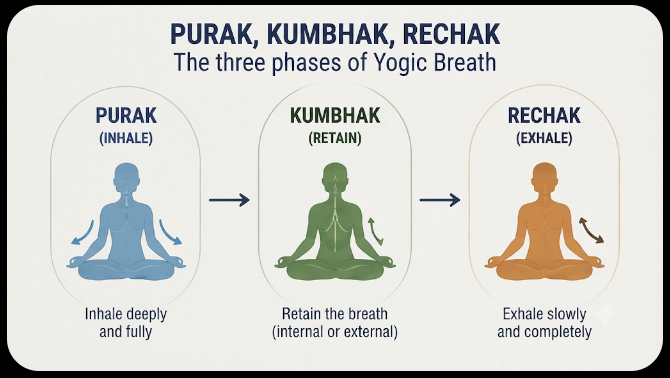
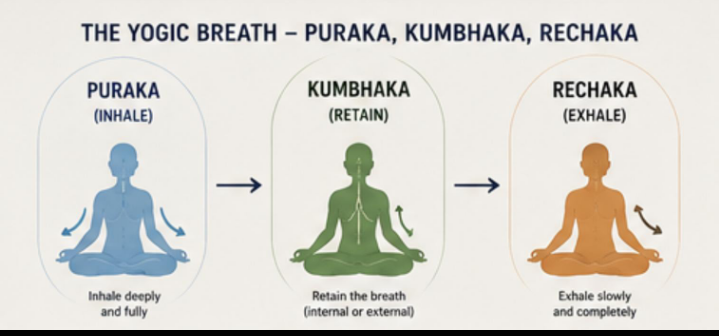
Pranayama is the yogic practice of consciously regulating the breath. Three fundamental terms used in pranayama are Puraka (inhalation), Kumbhaka (breath retention), and Rechaka (exhalation). The Ministry of AYUSH describes these as controlled phases of breathing and emphasizes gradual, attentive practice.
A simple way to remember them is:
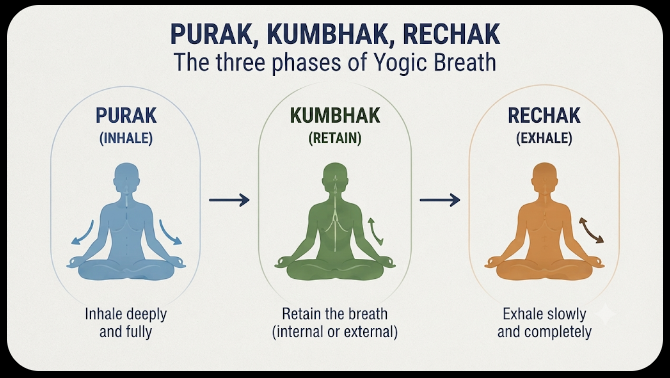
Puraka → Kumbhaka → Rechaka
Inhale → Hold → Exhale
In some traditions, retention after exhalation is also practiced and is called Bahya Kumbhaka.
🫁 1. Puraka — The Inhalation
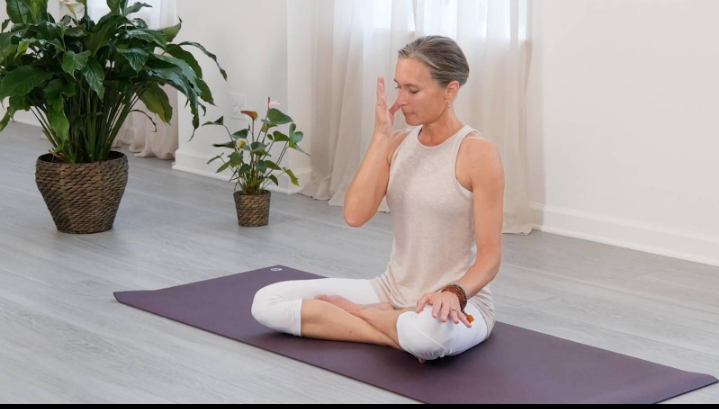
Puraka (पूरक) means inhalation or filling.
During Puraka, air is inhaled slowly and comfortably through the nose. The diaphragm moves downward and the chest and abdomen expand naturally.
How to practice Puraka
- Sit comfortably with the spine reasonably upright.
- Relax the shoulders, face and jaw.
- Breathe in slowly through the nose.
- Allow the abdomen and rib cage to expand naturally.
- Avoid forcing or taking an excessively large breath.
Puraka is the first stage of conscious breath regulation.
Potential benefits
Regular, gentle breathing practice may help with:
- Better awareness of breathing
- Relaxation and mental focus
- More controlled breathing patterns
- Supporting respiratory function when practiced appropriately
Research on yogic breathing suggests possible improvements in pulmonary function, although results vary according to the technique and population studied.
🧘 2. Kumbhaka — Breath Retention
Kumbhaka (कुम्भक) means retention or pause of the breath.
There are two main forms:
Antar Kumbhaka
Breath is retained after inhalation:
Puraka → Antar Kumbhaka → Rechaka
Bahya Kumbhaka
Breath is retained after exhalation:
Puraka → Rechaka → Bahya Kumbhaka
Kumbhaka is an advanced component of pranayama because breath retention changes the normal respiratory pattern. Beginners should not force prolonged breath-holding. It is better to learn it gradually under appropriate instruction.
The Ministry of AYUSH describes Kumbhaka as retention either inside or outside the lungs.
🌬️ 3. Rechaka — The Exhalation
Rechaka (रेचक) means exhalation or emptying.
After inhalation, air is released slowly and comfortably. In many gentle pranayama practices, exhalation is allowed to be somewhat longer than inhalation.
How to practice Rechaka
- Complete a comfortable inhalation.
- Relax the chest and shoulders.
- Exhale slowly through the nose.
- Do not push all the air out forcefully.
- Finish the exhalation comfortably and begin the next breath.
A gradual, comfortable lengthening of exhalation is commonly used in introductory yoga breathing.
🔄 The Complete Breathing Cycle
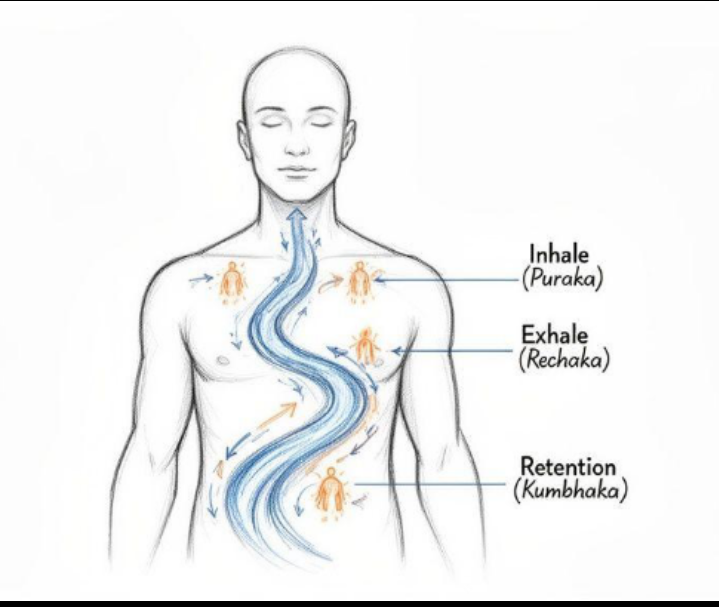
A basic cycle can be visualized as:
PURAKA
⬇️
Slow inhalation
⬇️
KUMBHAKA
Comfortable retention
⬇️
RECHAKA
Slow exhalation
⬇️
Repeat
In more advanced practice:
Puraka → Antar Kumbhaka → Rechaka → Bahya Kumbhaka
Not every pranayama technique uses all four phases.
🧘 Beginner-Friendly Practice
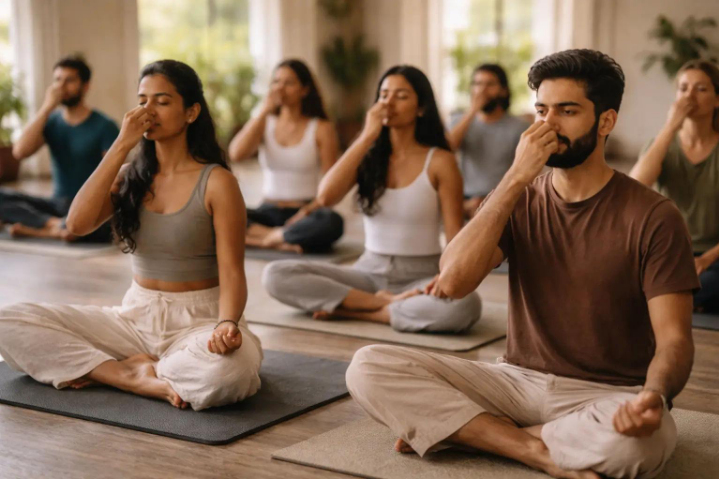
For beginners, the safest approach is to first develop smooth inhalation and exhalation without forced retention.
Simple routine
- Sit comfortably.
- Take 5–10 natural breaths.
- Gradually make the breathing slower and smoother.
- Inhale comfortably.
- Exhale comfortably, without strain.
- After becoming comfortable with this, learn short, gentle retention from a qualified yoga instructor if appropriate.
Do not chase a particular breath ratio or maximum breath-holding time. Classical sources and modern teaching traditions describe different ratios, and the appropriate ratio depends on the practice and the practitioner.
🌿 Possible Benefits of Pranayama
Regular, appropriately performed pranayama may support:
- 🧠 Relaxation and concentration
- 😌 Stress management
- 🫁 Breathing awareness and respiratory efficiency
- ❤️ Cardiovascular and autonomic regulation
- 🧘 Mindfulness and meditation practice
- 😴 A calmer pre-sleep routine
Evidence for health benefits is promising but varies considerably between different pranayama techniques and study populations; pranayama should therefore be viewed as a complementary wellness practice rather than a replacement for medical treatment.
⚠️ Important Precautions
Pranayama should be comfortable, gradual and controlled.
- Do not force inhalation or exhalation.
- Do not hold your breath until you feel severe air hunger, dizziness or discomfort.
- Beginners should avoid aggressive or forceful breathing techniques.
- Do not practice advanced Kumbhaka without appropriate instruction.
- If you feel dizzy, breathless, faint or develop chest discomfort, stop and return to normal breathing.
- People with significant medical conditions should discuss appropriate breathing practices with their healthcare professional.
Published reports of adverse events associated with yoga emphasize particular caution with forceful breathing and extreme practices, especially in people with pre-existing medical conditions.
❓ Frequently Asked Questions
1. What are Puraka, Kumbhaka and Rechaka?
Puraka is inhalation, Kumbhaka is breath retention, and Rechaka is exhalation.
2. Is Kumbhaka compulsory in every pranayama?
No. Different pranayama techniques use different breathing patterns. Beginners can first practice slow, comfortable inhalation and exhalation.
3. What is Antar Kumbhaka?
It is breath retention after inhalation.
4. What is Bahya Kumbhaka?
It is breath retention after exhalation.
5. Should beginners hold their breath for a long time?
No. Breath retention should be introduced gradually and should never be forced.
6. Is a longer exhalation useful?
A gentle, comfortable longer exhalation is used in many calming breathing practices. It should not cause breathlessness or strain.
7. Can pranayama cure diseases?
Pranayama may support relaxation, breathing function and general well-being, but it should not be considered a cure or substitute for appropriate medical treatment.
8. How long should I practice?
A beginner can start with 5–10 minutes of gentle breathing practice, gradually increasing according to comfort and appropriate instruction.
🌸 Conclusion
Puraka, Kumbhaka and Rechaka form the foundation of many pranayama practices: inhale consciously, pause appropriately, and exhale smoothly. The goal is not to force the breath but to develop control, awareness, relaxation and consistency.
Start gently, respect your body’s limits, and progress gradually. With regular practice, conscious breathing can become a simple bridge between the body, breath and mind. 🌿🧘♂️