🌿 Anulom–Vilom Pranayama
Alternate Nostril Breathing for Calmness, Focus & Better Breathing
Introduction
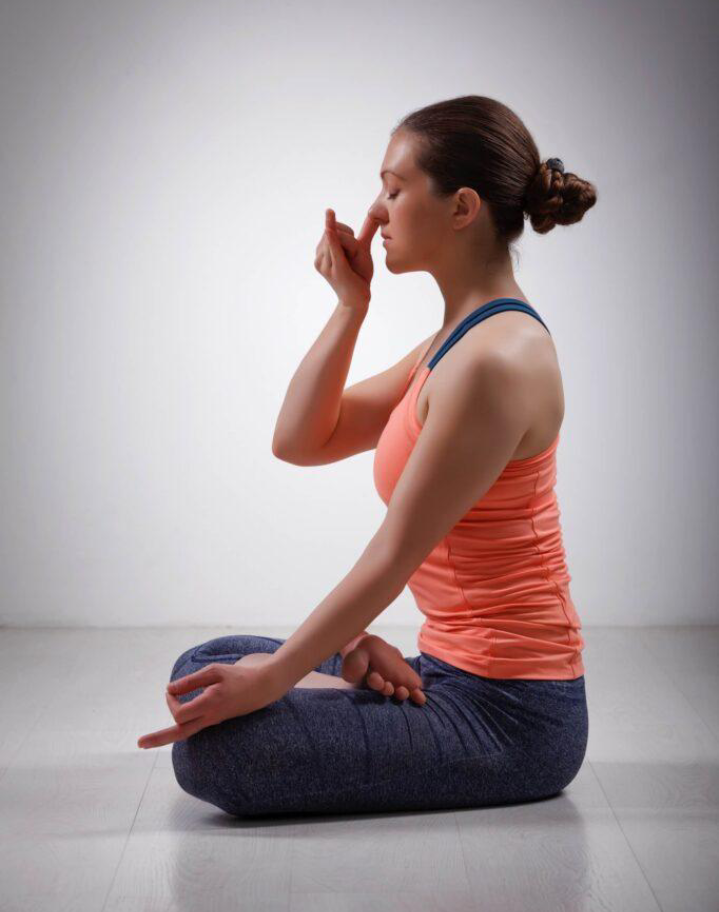
Anulom–Vilom Pranayama, commonly known as Alternate Nostril Breathing, is a traditional yogic breathing practice in which breathing is alternated between the left and right nostrils. It is often practiced as part of yoga, meditation and relaxation routines.
The practice emphasizes slow, smooth and controlled breathing rather than forceful inhalation or exhalation. Regular practice may help promote relaxation, concentration and a sense of mental balance. Research has also reported short-term changes in cardiovascular measures such as blood pressure during alternate-nostril breathing.
🧘 What is Anulom–Vilom?
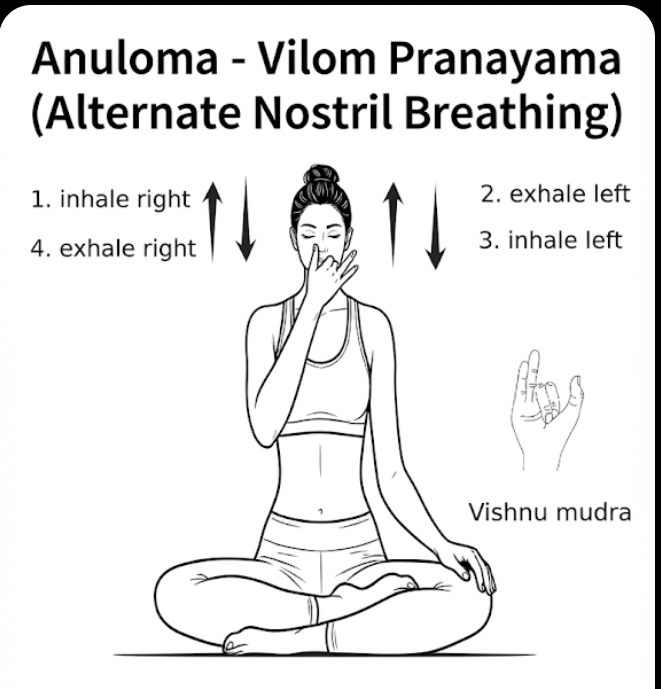
The basic breathing pattern is:
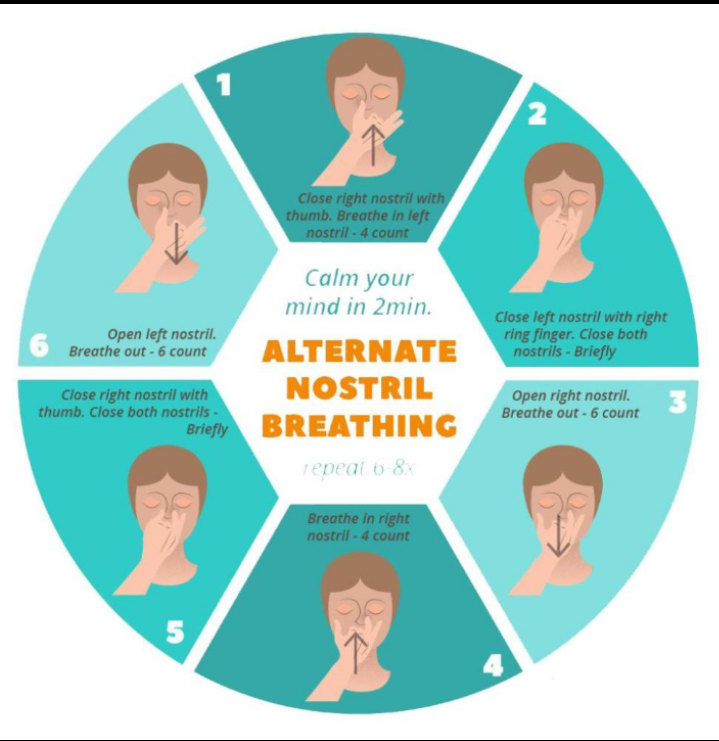
Inhale through the left nostril → exhale through the right → inhale through the right → exhale through the left.
This completes one round.
Anulom–Vilom and Nadi Shodhana are sometimes used interchangeably, although different yoga traditions may use these names for slightly different breathing patterns, particularly regarding breath retention.
🌿 How to Practice Anulom–Vilom
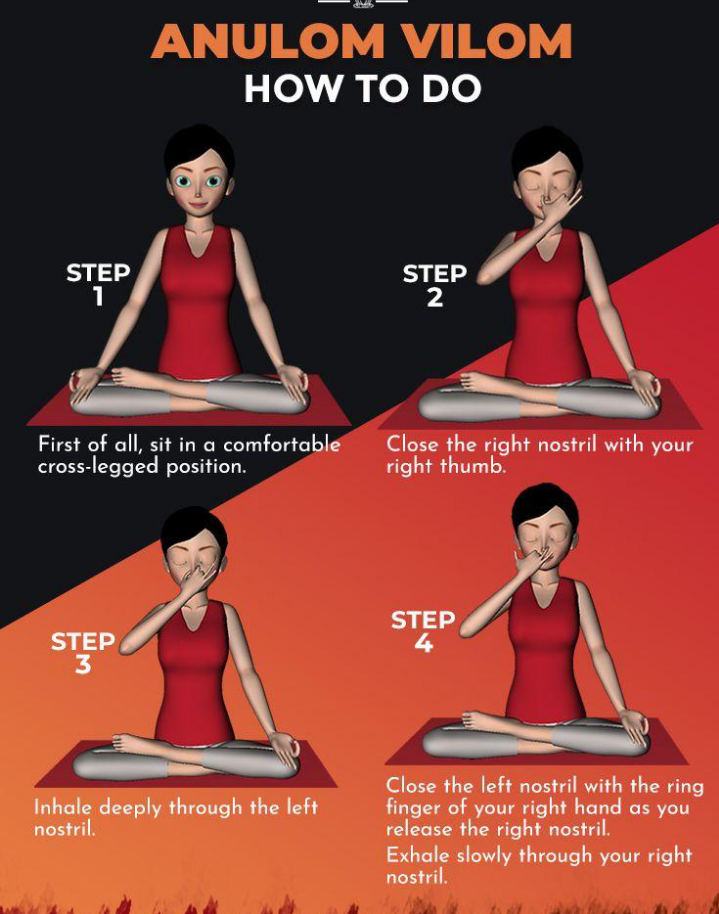
Step 1: Sit comfortably
Sit in Sukhasana, Padmasana, Vajrasana, or comfortably on a chair. Keep your spine and neck upright and relaxed.
Step 2: Position your hand
Use the right hand. Traditionally, the thumb is used to close the right nostril and the ring finger to close the left nostril.
Step 3: Begin breathing
- Close the right nostril with your thumb.
- Inhale slowly through the left nostril.
- Close the left nostril.
- Release the right nostril and exhale slowly through the right.
- Inhale through the right nostril.
- Close the right nostril.
- Open the left nostril and exhale slowly through the left.
Left inhale → Right exhale → Right inhale → Left exhale = 1 round.
⏱️ How Long Should You Practice?
Beginners can start with 1–2 minutes and gradually increase the duration according to comfort. A gentle practice of around 5 minutes is commonly recommended.
There is no need to force the breath or hold it for a long time. Beginners can initially practice without breath retention.
Simple beginner pattern
Inhale — 4 seconds
Exhale — 4–6 seconds
Keep the breathing comfortable and natural.
🌸 Potential Benefits
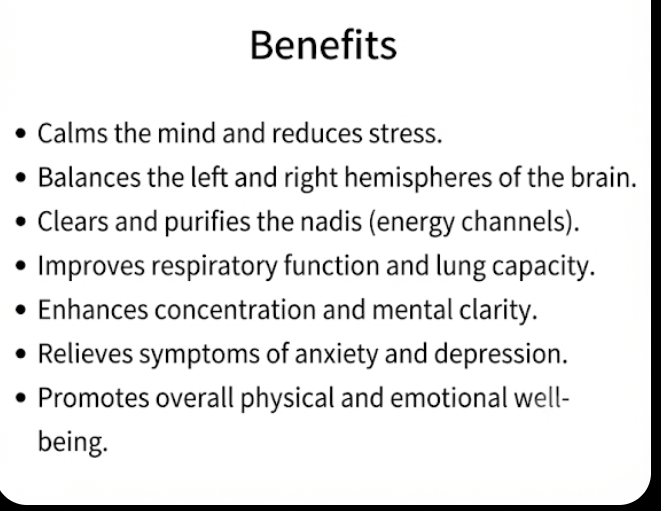
Regular, gentle practice may:
- Promote relaxation and reduce perceived stress
- Improve awareness and control of breathing
- Support concentration and mindfulness
- Promote a feeling of calmness
- Potentially influence heart rate and blood-pressure measures
- Complement yoga and meditation practices
Clinical research suggests that alternate-nostril breathing can produce measurable short-term cardiovascular changes, but it should be considered a complementary practice rather than a treatment for a medical condition.
⚠️ Precautions
Anulom–Vilom is generally well tolerated by healthy people when practiced gently. However:
- Do not forcefully inhale or exhale.
- Stop if you experience dizziness, nausea, breathlessness, chest discomfort or unusual discomfort.
- People with significant heart or lung conditions should discuss pranayama with their healthcare professional before beginning.
- During acute respiratory illness or severe nasal blockage, it may be better to postpone the practice.
- Beginners should avoid prolonged breath retention without appropriate instruction.
❓ Frequently Asked Questions
1. Is Anulom–Vilom the same as Alternate Nostril Breathing?
Yes, Anulom–Vilom is commonly described as a form of alternate nostril breathing. Different traditions may use the term Nadi Shodhana for closely related techniques.
2. Can I practice Anulom–Vilom every day?
Yes. A gentle daily practice can be incorporated into a yoga or meditation routine, provided it is comfortable for you.
3. Should beginners hold their breath?
Not necessarily. Beginners can practice without breath retention. Breath-holding variations should be learned gradually and preferably under appropriate instruction.
4. What is the best time to practice?
Many people prefer morning, particularly before meditation or other yoga practices. It can also be practiced at another convenient time when you can sit quietly.
5. Can I practice after eating?
It is generally more comfortable to practice when you are not immediately after a heavy meal. Allow some time for digestion.
6. Can Anulom–Vilom cure high blood pressure?
It should not be considered a cure. Some studies have found reductions or changes in blood-pressure measurements with alternate-nostril breathing, but it should complement—not replace—prescribed medical treatment.
7. What should I do if I feel dizzy?
Stop the exercise, return to normal breathing and rest. Avoid forcing the breath or continuing when you feel uncomfortable.
8. How many rounds should a beginner do?
Start comfortably—for example, 5–10 gentle rounds—and gradually increase if there is no discomfort.
🌺 Conclusion
Anulom–Vilom Pranayama is a simple, gentle and accessible breathing practice that can become a valuable part of a daily yoga or mindfulness routine. Its emphasis on slow, controlled breathing may support relaxation, concentration and healthy breathing habits.
The key is consistency without force: breathe smoothly, remain relaxed and listen to your body.
“Breathe slowly, breathe consciously, and let every breath bring you closer to inner balance.” 🌿🧘♂️
SHIVAM CLINIC – YOUR HEALTH, OUR PRIORITY