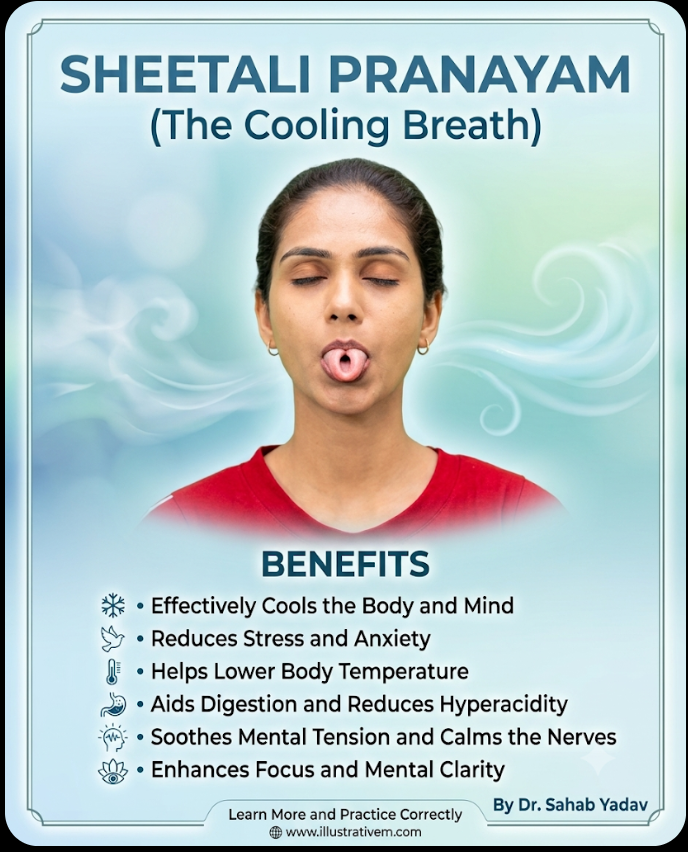
Sheetali Pranayama
A Cooling Breathing Technique for Mind and Body

Introduction
In today’s busy world, stress, anxiety, and mental fatigue have become common problems. Yoga offers several natural techniques to help us relax our minds and improve our overall well-being. One such technique is Sheetali Pranayama, also known as the Cooling Breath.
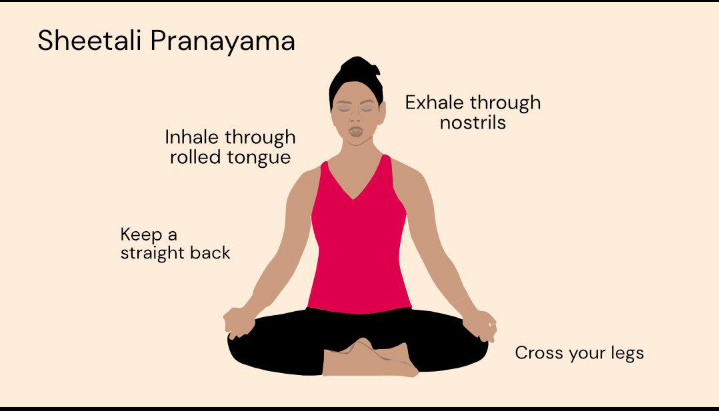
The word Sheetali comes from the Sanskrit word Sheetal, which means cool or soothing. This pranayama involves inhaling air through a rolled tongue and slowly exhaling through the nose. It is traditionally practised to produce a cooling sensation and promote calmness.
Sheetali Pranayama is a simple breathing practice that can be incorporated into a daily yoga routine, provided it is performed correctly and with appropriate precautions.
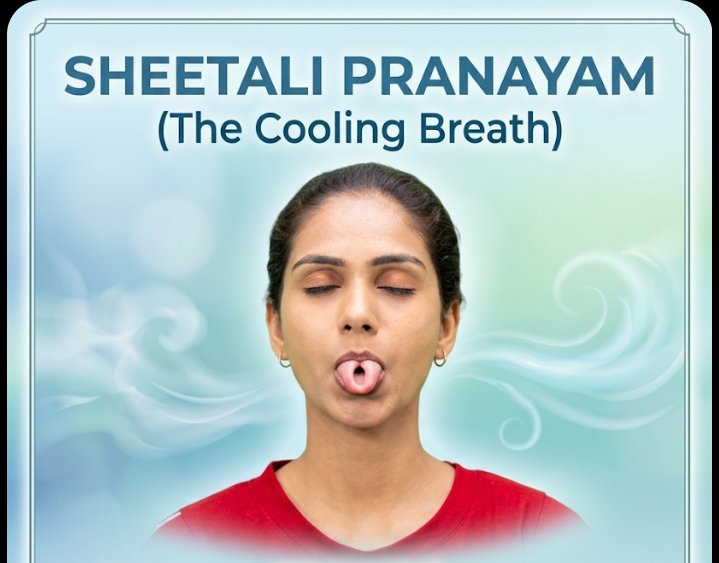
What Is Sheetali Pranayama?
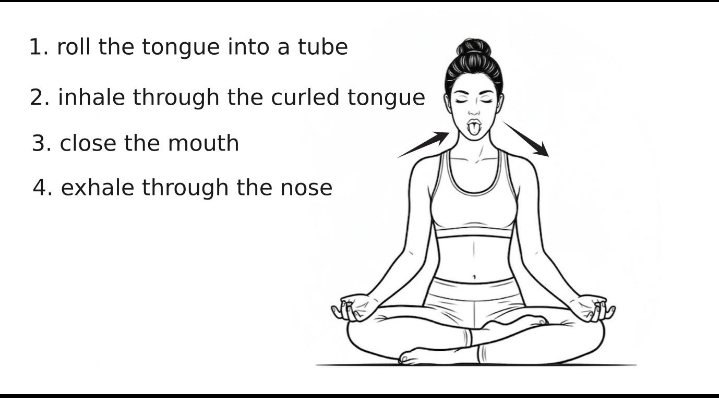
Sheetali Pranayama is a traditional yogic breathing technique designed to create a cooling sensation in the mouth and promote relaxation.
During this practice, the practitioner rolls the tongue into a tube, inhales gently through it, closes the mouth, and exhales slowly through the nose.
Some people cannot roll their tongues because of natural genetic variation. They can try Sheetkari Pranayama, a related cooling breathing technique, as an alternative.
How to Practise Sheetali Pranayama
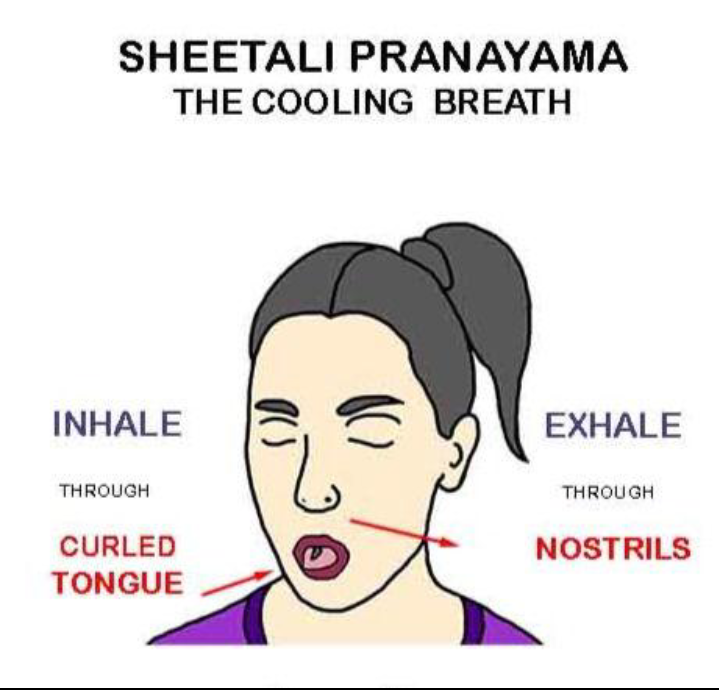
Follow these simple steps to practise Sheetali Pranayama safely.
Step 1: Choose a Comfortable Place
Sit in a quiet, clean, and well-ventilated area. You may sit cross-legged on a yoga mat or on a chair with your back straight.
Step 2: Relax Your Body
Close your eyes gently and relax your shoulders, face, and jaw. Breathe naturally through your nose for a few moments.
Step 3: Roll Your Tongue
Extend your tongue slightly and curl its sides upward to form a tube. Keep it relaxed rather than forcing it.
Step 4: Inhale Slowly
Breathe in gently through the rolled tongue. Notice the cool sensation of the incoming air.
Step 5: Close Your Mouth
After inhaling comfortably, withdraw your tongue and close your mouth.
Step 6: Exhale Through Your Nose
Breathe out slowly and comfortably through both nostrils.
Step 7: Repeat
Repeat the process for approximately 5–10 comfortable rounds initially. Gradually increase the duration if you feel comfortable.
Important: Do not force your breathing, hold your breath for long periods, or continue if you experience dizziness or discomfort.
Benefits of Sheetali Pranayama
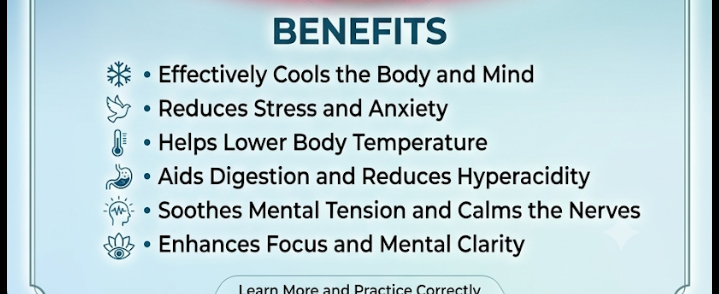
Sheetali Pranayama is traditionally associated with cooling and calming effects. Its potential benefits include the following.
1. Promotes Relaxation
Slow, controlled breathing may help calm the nervous system and support relaxation.
2. Helps Manage Stress
Practising mindful breathing can provide a simple way to pause, relax, and manage everyday stress.
3. May Support Mental Calmness
Concentrating on the breathing process may help reduce mental distractions and encourage mindfulness.
4. Creates a Cooling Sensation
Inhaling through the tongue can produce a noticeable cooling sensation in the mouth. However, this does not necessarily mean that the body’s core temperature decreases significantly.
5. Supports Mindful Breathing
Regular practice encourages awareness of breathing and may complement meditation and other relaxation techniques.
6. Can Be Included in a Yoga Routine
Sheetali Pranayama can be combined with gentle yoga poses, meditation, and other suitable breathing exercises.
Scientific note: Although Sheetali Pranayama has a long history in traditional yoga, high-quality scientific evidence for many of its specific health claims remains limited. It should not replace medical treatment for any health condition.
Best Time to Practise Sheetali Pranayama
Sheetali Pranayama may be practised:
- In the morning, as part of a yoga routine.
- In the evening, to promote relaxation.
- After gentle yoga exercises, when your breathing has returned to normal.
Choose a comfortable, quiet environment and avoid practising immediately after a heavy meal.
Although it is traditionally considered a cooling practice, avoid it if you feel excessively cold or if it triggers respiratory discomfort.
Precautions and Contraindications
Sheetali Pranayama is generally a gentle practice for healthy adults, but certain precautions are important.
- Cold weather: Avoid or modify the practice if it makes you feel excessively cold.
- Respiratory sensitivity: People with asthma or other respiratory conditions should be cautious, especially if inhaling cool air triggers symptoms.
- Low blood pressure or dizziness: Practise gently and stop if you feel light-headed. Do not force deep breathing.
- Avoid prolonged breath retention: Beginners should breathe naturally without holding their breath.
- Avoid during respiratory discomfort: Stop if you develop coughing, wheezing, breathlessness, or chest discomfort.
- Seek professional advice when necessary: People with significant heart or lung conditions should consult a qualified healthcare professional before starting a new breathing practice.
Never use Sheetali Pranayama as a substitute for urgent medical care or prescribed medication.
Frequently Asked Questions (FAQs)
1. What is Sheetali Pranayama?
Sheetali Pranayama is a yogic breathing technique in which air is inhaled through a rolled tongue and exhaled through the nose. It is traditionally used to create a cooling sensation and promote relaxation.
2. What are the main benefits of Sheetali Pranayama?
Its potential benefits include relaxation, stress management, mindfulness, and a cooling sensation in the mouth. Evidence supporting specific medical benefits is limited.
3. How many minutes should I practise Sheetali Pranayama daily?
Beginners can start with approximately 1–3 minutes, using a few comfortable rounds. Gradually increase the duration according to comfort and individual tolerance.
4. Can Sheetali Pranayama reduce body heat?
It creates a cooling sensation in the mouth and is traditionally considered a cooling practice. However, strong evidence that it significantly lowers core body temperature is lacking. It should not be relied upon to treat heatstroke or dangerous overheating.
5. Can I practise Sheetali Pranayama in summer?
Yes. Healthy adults may practise it in summer if they find it comfortable. However, it is not a substitute for drinking sufficient fluids, resting in a cool environment, or taking appropriate measures during extreme heat.
6. Can Sheetali Pranayama help reduce anxiety?
Slow, mindful breathing may help some people manage everyday stress and anxiety. However, it is not a replacement for professional assessment or treatment when anxiety is persistent or severe.
7. What should I do if I cannot roll my tongue?
You can consider Sheetkari Pranayama, a related technique in which air is inhaled through the teeth with the lips slightly parted. Practise gently and avoid it if cool air causes dental sensitivity or respiratory discomfort.
8. Can I practise Sheetali Pranayama before sleeping?
Yes, if it feels comfortable and relaxing. Practising gently in the evening may help you unwind before bedtime.
9. Is Sheetali Pranayama suitable for everyone?
Not necessarily. People who are sensitive to cold air or have certain respiratory or cardiovascular conditions should take appropriate precautions and seek professional advice when needed.
10. What is the difference between Sheetali and Sheetkari Pranayama?
- Sheetali Pranayama: Air is inhaled through a rolled tongue.
- Sheetkari Pranayama: Air is inhaled through the teeth, generally with the lips slightly parted.
Both are traditionally described as cooling breathing techniques.
Conclusion
Sheetali Pranayama is a simple and traditional yogic breathing technique that can help cultivate relaxation, mindfulness, and a sense of calm. Its distinctive feature is inhaling through the rolled tongue and exhaling slowly through the nose.
When practised gently and consistently, it can become a useful part of a balanced yoga and meditation routine. However, it is important to understand its limitations, follow appropriate precautions, and avoid treating it as a cure for medical conditions.
Remember: The purpose of pranayama is not to force the breath but to develop a calm, comfortable, and mindful relationship with it.
Breathe gently, stay mindful, and make wellness a part of your everyday life.
Suggested blog tagline: Sheetali Pranayama — A Breath of Calm, A Moment of Coolness.