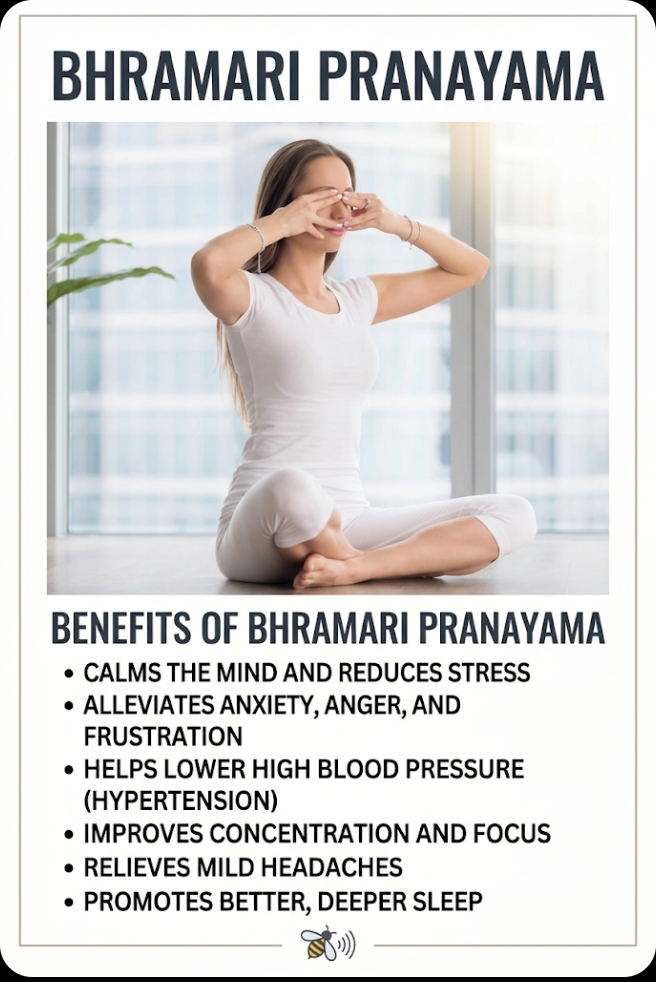
Bhramari Pranayama
The Humming Bee Breathing Technique for a Calm Mind and Relaxed Body
1. Introduction
In today’s fast-paced world, stress, anxiety, mental fatigue, and poor sleep have become common concerns. Yoga offers several breathing techniques that may help us relax and improve our mental well-being. One such practice is Bhramari Pranayama, also known as Humming Bee Breath.
Bhramari Pranayama is a simple yogic breathing technique in which a person inhales gently through the nose and produces a soft humming sound while exhaling. The sound resembles the buzzing of a bee, which gives this pranayama its name.
This practice is traditionally used to calm the mind, reduce tension, and prepare the body for meditation. Research suggests that it may offer benefits for stress management and certain aspects of physiological function, although further high-quality studies are needed to confirm its effects.

2. What Is Bhramari Pranayama?
The word Bhramari comes from the Sanskrit word Bhramara, meaning a black bee. Pranayama refers to yogic practices involving the regulation of breathing.
During Bhramari Pranayama, the practitioner produces a gentle humming sound while breathing out through the nose, creating a soothing vibration.
The main objectives of Bhramari Pranayama are to:
- Promote relaxation and mental calmness.
- Help manage everyday stress.
- Encourage slow, controlled breathing.
- Improve awareness of breathing.
- Prepare the mind for meditation.
3. Health Benefits of Bhramari Pranayama
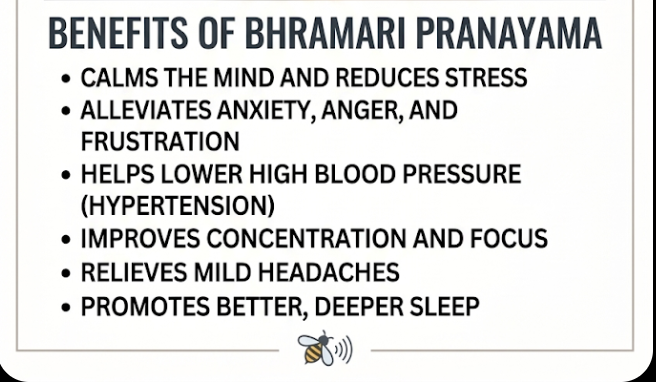
Regular, comfortable practice may provide the following benefits.
1. Helps Reduce Stress
Slow breathing combined with humming may encourage relaxation and help reduce feelings of everyday stress and tension.
2. May Help Relieve Anxiety
Bhramari Pranayama can be used as a relaxation technique when a person feels anxious or overwhelmed. However, it is not a replacement for professional treatment for anxiety disorders.
3. Promotes Mental Calmness
The gentle humming sound gives the mind something simple to focus on, which may reduce distracting thoughts and encourage a sense of tranquillity.
4. Supports Better Sleep
Practising Bhramari before bedtime may help some people unwind and prepare for sleep. Evidence specifically establishing its effectiveness for insomnia remains limited.
5. May Support Healthy Blood Pressure
Some studies have reported favourable changes in blood pressure and other cardiovascular measurements following breathing practices. However, Bhramari should not be considered a substitute for prescribed blood pressure medication.
6. May Improve Attention and Concentration
Focusing on the humming sound and the movement of the breath may help develop mindfulness and attention.
7. Supports Respiratory Function
Bhramari encourages slow, controlled exhalation. Some research suggests possible benefits for selected measures of lung function, but the evidence is not sufficient to establish it as a treatment for respiratory diseases.
Scientific note: A 2024 literature review examined experimental studies of Bhramari Pranayama and reported promising findings related to psychological well-being, cardiovascular function, and respiratory health. Nevertheless, the quality and limitations of the available research should be considered when interpreting these findings.
4. How to Practise Bhramari Pranayama: Step-by-Step Guide
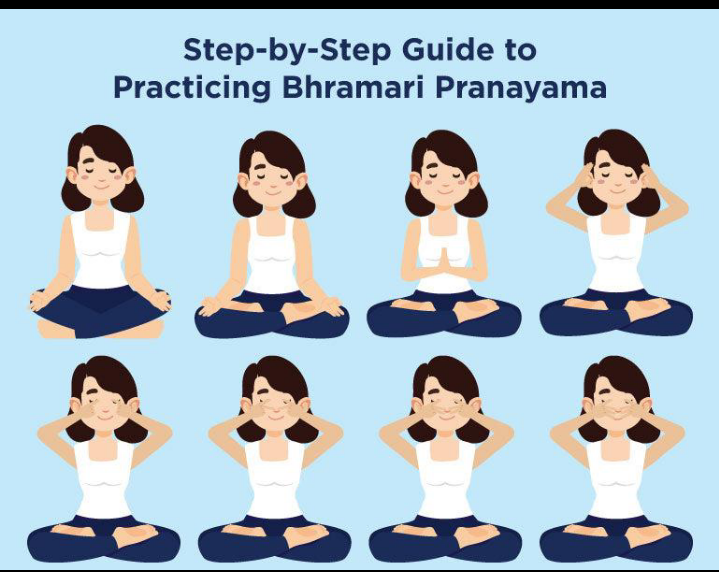
Bhramari Pranayama is easy to learn and requires no special equipment.
Step 1: Choose a Comfortable Position
Sit comfortably on a yoga mat in Sukhasana (cross-legged sitting) or on a chair.
Keep your back straight, shoulders relaxed, and hands resting on your knees.
Step 2: Close Your Eyes
Gently close your eyes and relax your facial muscles.
Observe your natural breathing for a few moments.
Step 3: Inhale Through Your Nose
Take a slow, comfortable breath in through both nostrils.
Do not inhale forcefully or fill your lungs beyond your comfort level.
Step 4: Exhale with a Humming Sound
Keep your lips gently closed and slowly breathe out through your nose while producing a soft humming sound, such as “mmmmmm.”
Allow the sound to remain smooth and comfortable throughout the exhalation.
Step 5: Focus on the Vibration
Notice the gentle vibration created by the humming sound around your face and head.
Keep your jaw relaxed and avoid straining your throat.
Step 6: Repeat the Practice
After completing the exhalation, inhale gently and repeat.
Beginners can start with 5 comfortable rounds and gradually increase to 5–10 rounds if the practice feels comfortable.
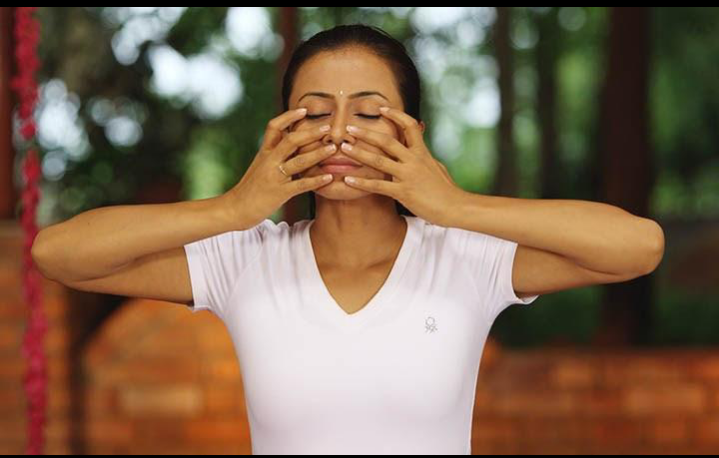
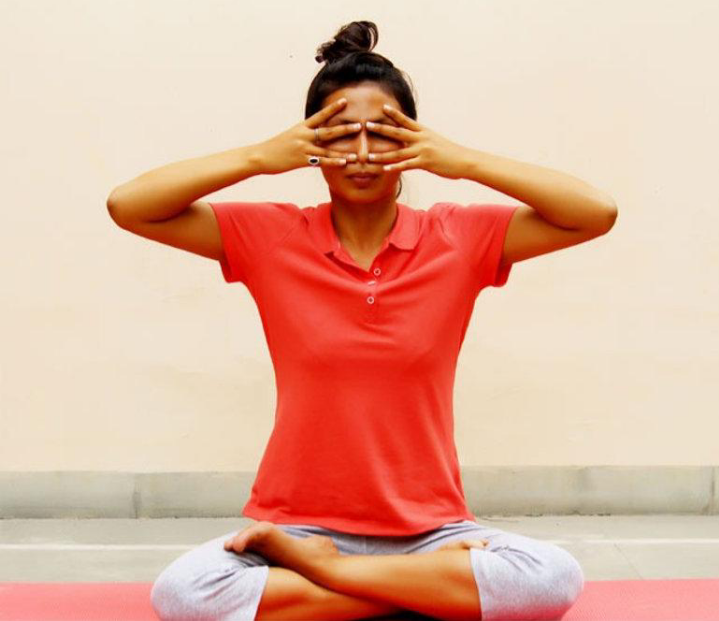
Important: Closing the ears with the thumbs is an optional variation. Beginners can practise Bhramari without closing their ears. If using the hands, apply only gentle pressure and never insert your fingers into the ear canals.
5. Best Time to Practise Bhramari Pranayama
Bhramari Pranayama can be practised at different times of the day, depending on your preference.
Early morning: It can be included in a morning yoga or meditation routine.
During the day: A short session may help you relax after a stressful period.
Before bedtime: Gentle practice may help you unwind before sleeping.
Choose a quiet, well-ventilated place where you can sit comfortably without interruption.
6. Precautions and Safety Guidelines
Although Bhramari is generally a gentle breathing practice, certain precautions are important.
- Avoid forceful breathing: Keep inhalation, humming, and exhalation comfortable.
- Do not hold your breath: Beginners should avoid breath retention or Kumbhaka, particularly without appropriate guidance.
- Ear problems: Avoid the practice if you have an active ear infection or ear pain, and seek medical advice if symptoms persist.
- Heart or respiratory conditions: Consult your healthcare professional before starting if you have a significant heart or lung condition.
- Pregnancy: Ask your healthcare professional or qualified prenatal yoga instructor for guidance if you are pregnant.
- Dizziness or discomfort: Stop immediately if you experience dizziness, breathlessness, pain, or unusual discomfort.
People with hypertension should not stop or adjust their prescribed medication because they practise pranayama.
The Ministry of AYUSH’s Morarji Desai National Institute of Yoga also describes Bhramari as a calming practice and advises avoiding it during an ear infection.
7. Frequently Asked Questions (FAQs)
Q1. What is Bhramari Pranayama?
Bhramari Pranayama is a yogic breathing technique in which a person slowly exhales through the nose while producing a humming sound similar to a bee.
Q2. What are the main benefits of Bhramari Pranayama?
It may help promote relaxation, manage everyday stress, improve mindfulness, and prepare the mind for meditation. Research also suggests possible benefits for selected cardiovascular and respiratory measures, although further evidence is needed.
Q3. How many times should I practise Bhramari Pranayama daily?
Beginners can start with five comfortable rounds per session. If well tolerated, they may gradually increase to 5–10 rounds.
There is no single required number of rounds suitable for everyone.
Q4. Can Bhramari Pranayama help reduce anxiety?
It may help some people manage everyday anxiety and tension by encouraging slow breathing and relaxation. However, it should not replace professional assessment or treatment for persistent or severe anxiety.
Q5. Can Bhramari Pranayama help with sleep?
Some people find it relaxing before bedtime. It may be included in a bedtime routine, but it is not a proven standalone treatment for insomnia.
Q6. Can people with high blood pressure practise Bhramari Pranayama?
Some people with hypertension may be able to practise gentle Bhramari, but they should consult their healthcare professional if their blood pressure is uncontrolled or they have other significant medical conditions. The practice does not replace prescribed treatment.
Q7. Should I close my ears while practising Bhramari?
No. Closing the ears is optional. Beginners can perform the basic technique with their hands resting on their knees.
If you choose to close your ears, do so gently and avoid inserting your fingers into the ear canals.
Q8. Is Bhramari Pranayama suitable for beginners?
Yes. The basic technique is relatively simple. Beginners should start slowly, avoid straining, and learn from a qualified yoga instructor if they are uncertain about the technique.
Q9. Can Bhramari Pranayama cure medical conditions?
No. Bhramari is a complementary relaxation practice, not a cure for medical conditions. It should not replace appropriate medical evaluation or treatment.
Q10. What is the difference between Bhramari Pranayama and ordinary deep breathing?
Ordinary deep breathing usually focuses on controlling the breathing rhythm. Bhramari adds a humming sound during exhalation, which provides an additional point of focus and creates gentle vibrations.
8. Conclusion
Bhramari Pranayama, or Humming Bee Breath, is a simple and accessible yogic breathing technique that can be incorporated into a daily wellness routine.
Its gentle humming sound and slow exhalation may help promote relaxation, reduce everyday stress, improve mindfulness, and prepare the mind for meditation. Emerging scientific evidence also suggests potential benefits for certain physiological functions, although more research is required.
For best results, practise regularly, breathe comfortably, and avoid straining. Remember that pranayama works best as part of a balanced lifestyle that includes physical activity, adequate sleep, a nutritious diet, and appropriate medical care.
Breathe gently, hum peacefully, and give your mind a moment of calm.