🌺 Samadhi (समाधि): The Ultimate State of Meditation and Spiritual Awakening
🌺 Introduction
Samadhi is considered the highest state of meditation in the ancient Indian traditions of Yoga and spirituality. It represents a profound state of mental stillness, deep concentration, and spiritual awareness in which the mind becomes completely absorbed in the object of meditation.
In Sanskrit, the word Samadhi refers to a state of complete integration, absorption, or union. It is the ultimate stage of the eight limbs of Yoga described by Maharishi Patanjali in the Yoga Sutras.
Samadhi is not merely relaxation or temporary peace of mind. It is a deep meditative experience in which the usual distractions of the mind become still, allowing the practitioner to experience profound inner awareness.
🌿What Is Samadhi?
Samadhi is the eighth and final limb of Ashtanga Yoga, as described in Patanjali’s Yoga Sutras.
According to the yogic tradition, Samadhi occurs when the mind becomes completely absorbed in meditation, and the distinction between the meditator, the process of meditation, and the object of meditation becomes profoundly diminished.
It is considered a state of deep inner peace, clarity, and spiritual realization.
🌺 The Eight Limbs of Yoga

Samadhi is the culmination of the eightfold path of Yoga.
| Limb | Meaning |
| ————- | ————————– |
| 1. Yama | Ethical disciplines |
| 2. Niyama | Personal observances |
| 3. Asana | Physical postures |
| 4. Pranayama | Breath regulation |
| 5. Pratyahara | Withdrawal of the senses |
| 6. Dharana | Concentration |
| 7. Dhyana | Meditation |
| 8. Samadhi | Deep meditative absorption |
The first five limbs help prepare the body, breath, senses, and mind. Dharana, Dhyana, and Samadhi are the inner stages of yogic practice.
🥰 Types of Samadhi
Different yogic and spiritual traditions describe various forms of Samadhi. In Patanjali’s Yoga Sutras, two important classifications are discussed.
### 1\. Samprajnata Samadhi
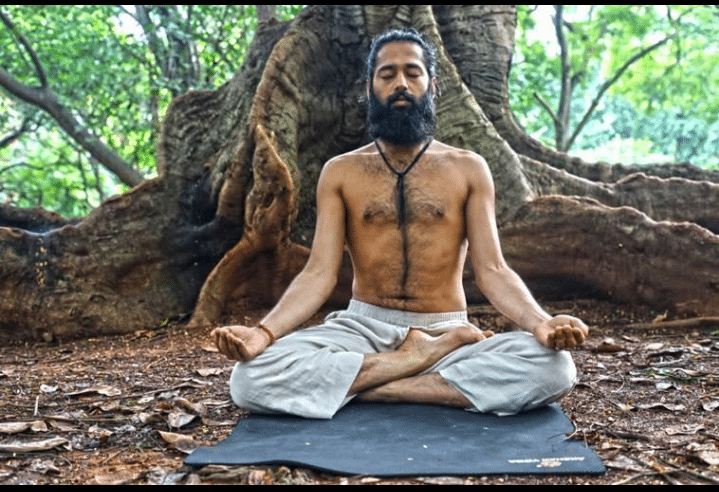
Also known as Sabija Samadhi in certain yogic explanations, this is a state of meditative absorption in which awareness of an object or subtle support remains.
The mind becomes highly concentrated, and ordinary distractions are greatly reduced.
Traditional descriptions include:
* Savitarka: Absorption involving gross objects and conceptual understanding.
* Nirvitarka: Absorption beyond ordinary conceptual thought about gross objects.
* Savichara: Subtle contemplation involving finer objects.
* Nirvichara: Deep absorption beyond subtle reflective thought.
### 2\. Asamprajnata Samadhi
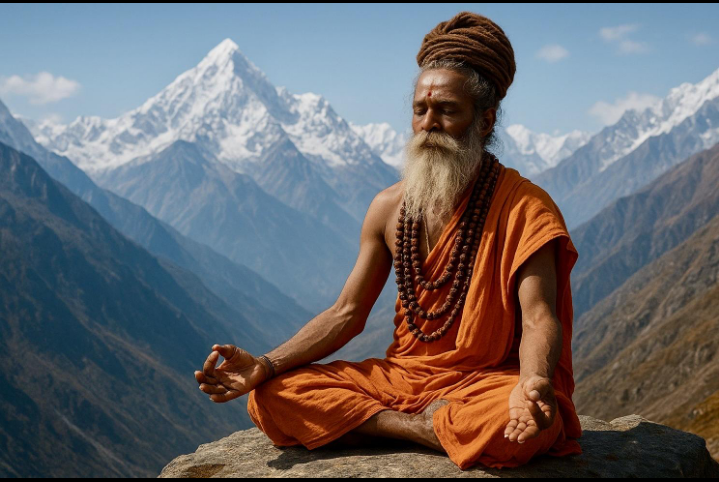
Also associated with the term Nirbija Samadhi in yogic discussions, this refers to a profound state in which ordinary mental activity and dependence on meditation objects become progressively absent.
It is traditionally described as a state of deep spiritual realization beyond ordinary thought.
Note: The terminology and classification of Samadhi differ across Yoga, Vedanta, and Buddhist traditions.
🌿 Benefits of Samadhi
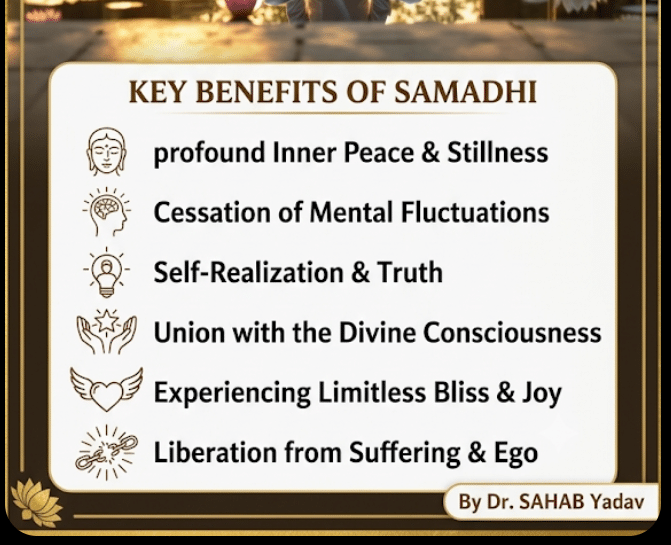
Samadhi is traditionally regarded as a spiritual realization rather than a technique for obtaining worldly benefits. Regular meditation and preparation for deeper meditative states may support overall well-being.
Potential benefits of regular meditation practice include:
* Mental peace: Helps cultivate calmness and emotional balance.
* Improved concentration: Supports attention and focus.
* Stress management: May help reduce perceived stress and promote relaxation.
* Self-awareness: Encourages deeper understanding of thoughts, emotions, and reactions.
* Emotional stability: May help develop patience and a balanced response to daily challenges.
* Spiritual growth: In yogic traditions, meditation is a pathway toward self-realization and liberation.
Important: These are potential benefits of meditation practice, not guaranteed effects of attaining Samadhi. Samadhi itself is a spiritual concept and is not a medically established treatment for any disease.
🌺 How to Practise Meditation for Samadhi
Samadhi is not something that can be forced or achieved overnight. It is traditionally approached through consistent practice, discipline, self-awareness, and gradual refinement of the mind.
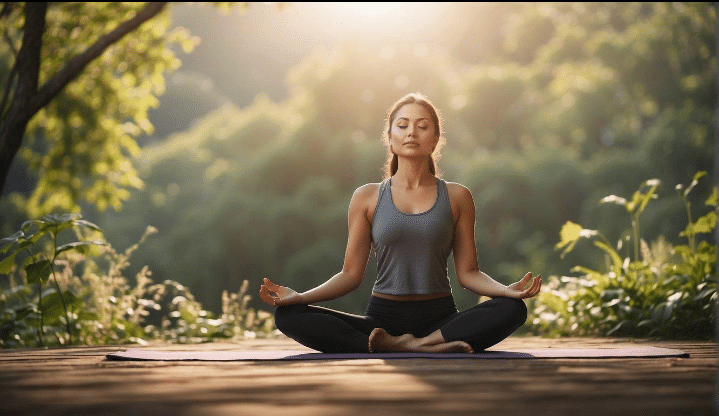
🌺 Step-by-Step Meditation Practice
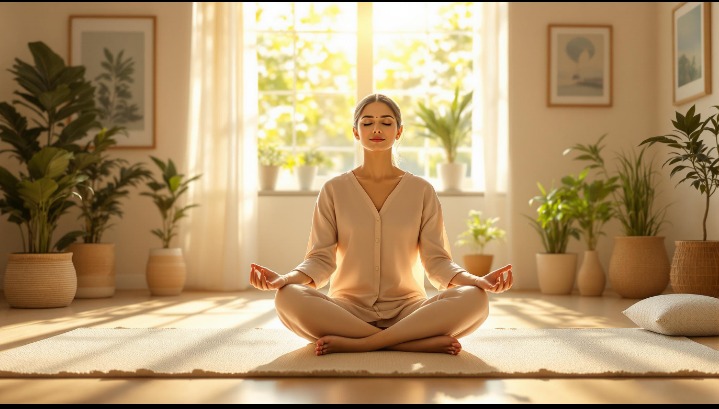
Step 1: Choose a peaceful place
Sit in a quiet, comfortable environment where you can practise without interruption.
Step 2: Sit comfortably
Adopt a comfortable meditative posture, such as Padmasana, Sukhasana, or sitting on a chair with your back naturally upright.
Step 3: Observe your breathing
Allow your breath to flow naturally. Gradually bring your attention to the inhalation and exhalation without forcing the breath.
Step 4: Practise Dharana
Focus your attention on a single object, such as your breath, a mantra, or a point of awareness.
Step 5: Enter Dhyana
As concentration becomes continuous, meditation may deepen into a state of sustained awareness with fewer distractions.
Step 6: Allow deep absorption
Continue practising without forcing an experience or expecting extraordinary sensations. In the yogic tradition, Samadhi is described as arising through deep meditative absorption.
🌺 Samadhi in Daily Life
The principles of Samadhi can inspire us to cultivate greater awareness and inner peace in everyday activities.
* Practise mindfulness while walking.
* Observe your thoughts without immediately reacting to them.
* Perform daily activities with complete attention.
* Spend a few minutes in silent meditation every day.
* Cultivate compassion, patience, and self-discipline.
The deeper purpose of Yoga is not limited to sitting in meditation. It also involves bringing awareness, balance, and wisdom into daily life.
🌿 Frequently Asked Questions (FAQ)
### 1\. What is Samadhi in simple words?
Samadhi is a profound state of meditative absorption in which the mind becomes deeply still and awareness is highly focused.
### 2\. Is Samadhi the same as meditation?
No. Meditation, or Dhyana, is the seventh limb of Yoga, while Samadhi is the eighth. In Patanjali’s system, Samadhi represents a deeper state of meditative absorption.
### 3\. How long does it take to achieve Samadhi?
There is no fixed timeline. It depends on the individual’s practice, discipline, mental preparation, and the tradition being followed. It should not be treated as a guaranteed achievement within a specific number of days or months.
### 4\. Can beginners practise Samadhi?
Beginners can start preparing through simple meditation, breath awareness, concentration, and ethical living. Traditional Yoga recommends developing a stable foundation before pursuing deeper meditative states.
### 5\. Is Samadhi a state of unconsciousness?
No. Samadhi is traditionally described as a state of profound meditative awareness, not ordinary sleep or unconsciousness. The exact nature of awareness differs according to the type of Samadhi and spiritual tradition.
### 6\. What is the difference between Dhyana and Samadhi?
Dhyana is continuous meditation or sustained awareness of the meditation object. Samadhi is a deeper absorption in which the distinction between the meditator and the object of meditation becomes diminished.
### 7\. What is the ultimate purpose of Samadhi?
In Patanjali’s Yoga tradition, the ultimate spiritual goal is Kaivalya, or liberation—the realization of the true nature of consciousness and freedom from the afflictions that bind the mind.
🌺 Conclusion
Samadhi represents the highest stage of the eightfold path of Yoga and the culmination of a journey toward inner stillness, awareness, and spiritual realization.
Through the regular practice of Yama, Niyama, Asana, Pranayama, Pratyahara, Dharana, and Dhyana, a practitioner gradually prepares the mind for deeper meditative absorption.
The true essence of Samadhi lies not in chasing extraordinary experiences but in cultivating discipline, awareness, and inner peace.
“When the mind becomes still, the light of inner awareness shines clearly.”
Disclaimer: This article is intended for educational and spiritual awareness purposes. Meditation should be practised comfortably and without forcing prolonged breath retention or extreme mental or physical experiences.