INTRODUCTION
What is Anorexia?
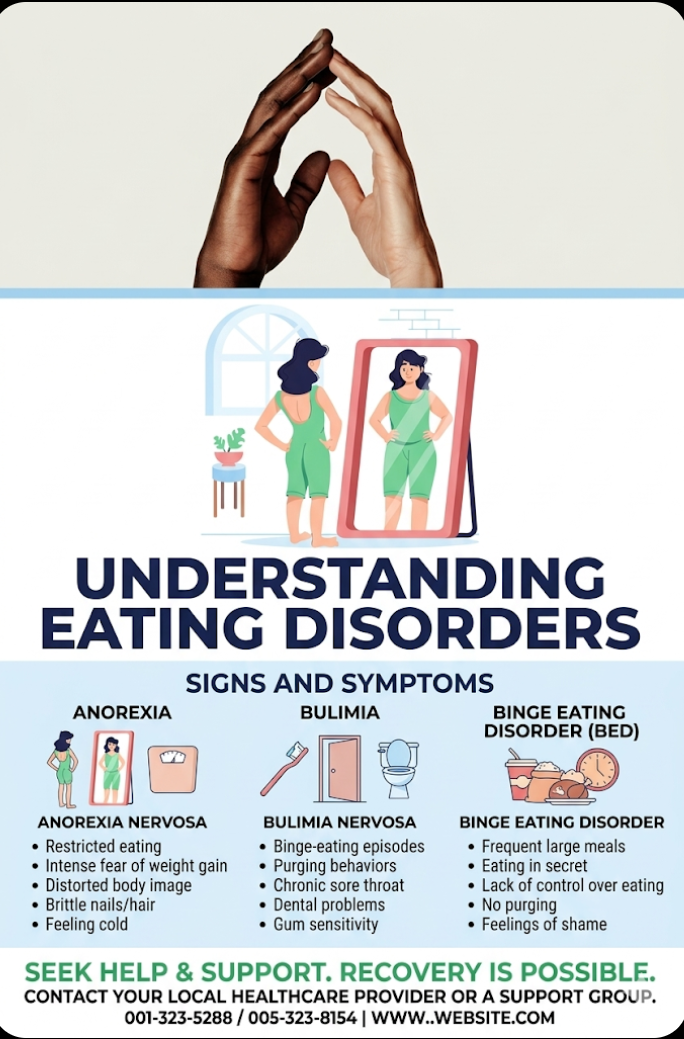
Anorexia nervosa is a serious eating disorder in which a person has an intense fear of gaining weight and a distorted body image. People with anorexia often eat very little, exercise excessively, and may become dangerously underweight.
It is not just about food—it is deeply connected to mental health, emotions, and self-esteem.

ANOREXIA
Common Symptoms
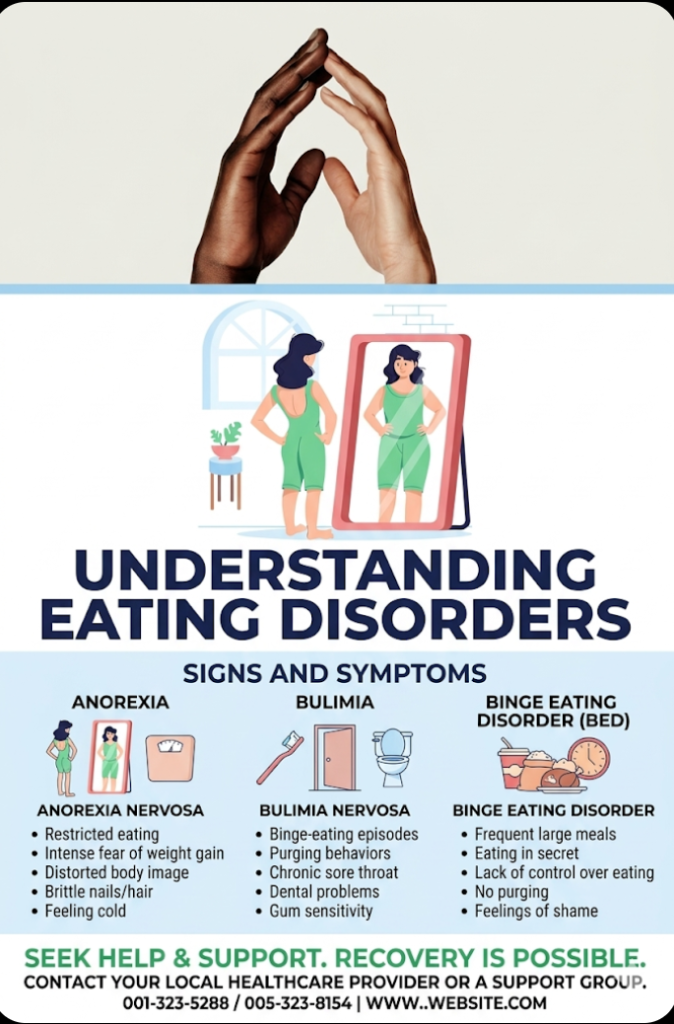
- Extreme weight loss
- Fear of gaining weight
- Skipping meals or eating very little
- Obsession with calories and dieting
- Weakness, dizziness, or fatigue
- Hair fall and dry skin
- Irregular or missed periods (in females)
Causes of Anorexia
Anorexia usually develops due to a combination of factors:
- Psychological: Low self-esteem, perfectionism
- Social: Pressure to look thin
- Biological: Genetic or hormonal influences
- Emotional stress: Trauma, anxiety, or depression
Home Remedies & Supportive Care

⚠️ Important: Anorexia is a serious condition. Home remedies can support recovery but medical and psychological treatment is essential.
1. Nutrient-Rich Small Meals
- Start with small, frequent meals instead of large portions
- Include foods like fruits, nuts, milk, and whole grains
- Focus on balanced nutrition, not just calories
2. Herbal Support
- Ginger tea can help improve appetite
- Ashwagandha may reduce stress and anxiety
- Chamomile tea helps in relaxation and sleep
3. Emotional Support at Home
- Encourage family meals in a calm environment
- Avoid criticism about body or food habits
- Offer positive reinforcement
4. Mind-Body Practices
- Yoga and meditation help reduce anxiety
- Deep breathing improves mental calmness
- Journaling emotions can help release stress
5. Regular Routine
- Fixed meal times
- Proper sleep schedule
- Limited screen exposure to unrealistic body images
When to See a Doctor
Seek professional help if:
- Rapid weight loss continues
- The person refuses to eat regularly
- Signs of depression or self-harm appear
- Physical weakness becomes severe
Frequently Asked Questions (FAQ)
1. Is anorexia only about not eating?
No. It is a mental health disorder involving fear, control, and body image issues—not just food.
2. Can anorexia be cured at home?
Home support helps, but professional treatment (doctor + therapist) is necessary for recovery.
3. Who is most affected?
Mostly teenagers and young adults, but it can affect any age or gender.
4. Is anorexia life-threatening?
Yes. Severe cases can lead to heart problems, organ failure, or death if untreated.
5. How can family help?
By showing patience, love, and understanding, and encouraging professional help.
Conclusion
Anorexia is a serious but treatable condition when addressed early with proper care. While home remedies like nutritious food, herbal support, and emotional care can help, medical and psychological treatment is crucial. Recovery takes time, patience, and strong support—but with the right approach, a healthy and balanced life is possible.