
What is Atopic Dermatitis?
Atopic Dermatitis (AD), commonly known as eczema, is a chronic inflammatory skin condition characterized by itching, dryness, redness, and recurrent flare-ups. It usually starts in childhood, but many adults can also suffer from it.
It is not contagious, but it can significantly affect quality of life due to constant itching and visible skin lesions.
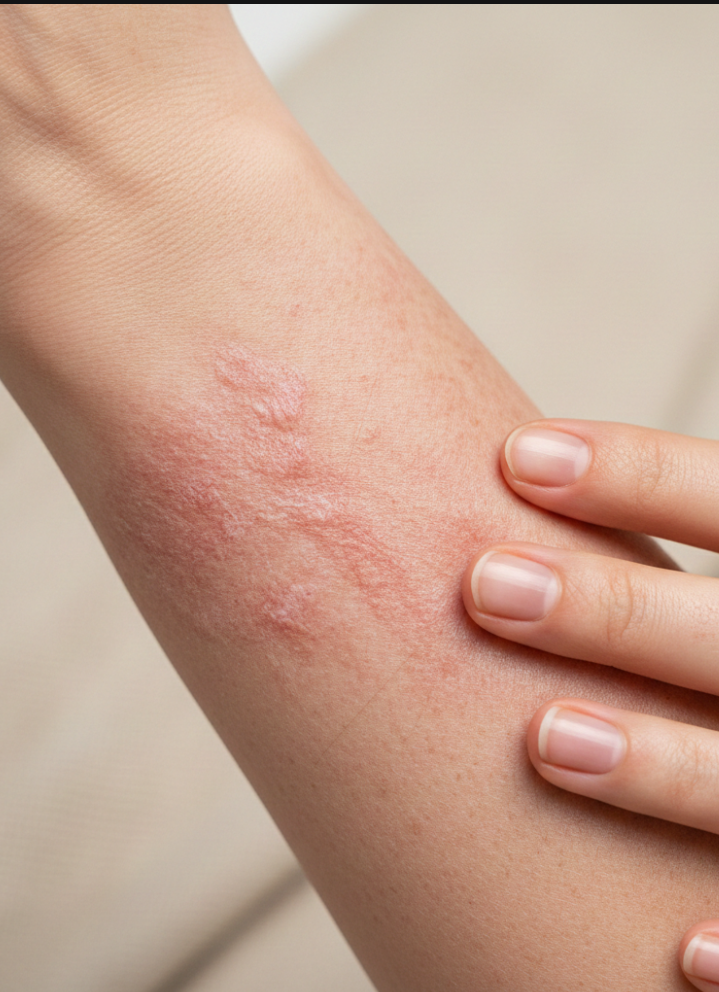
ATOPIC DERMATITIS
Why Does Atopic Dermatitis Occur?
Atopic dermatitis occurs due to a combination of:
- Genetic predisposition
- Weak skin barrier
- Immune system overreaction
- Environmental triggers
NOTE :-
People with a history of asthma, allergic rhinitis, or food allergies are more prone to this condition.
Common Symptoms
Symptoms vary with age and severity:
In Infants
- Red, oozing patches on cheeks, scalp
- Severe itching
In Children
- Dry, scaly patches in elbow folds, knees, neck
- Thickened skin due to scratching
In Adults
- Chronic dry, itchy skin
- Darkened or thickened areas
- Hand eczema, eyelid eczema
⚠️ NOTE :-
Excessive itching can lead to skin infections.
Triggers That Worsen Atopic Dermatitis
- Soaps and detergents
- Dust mites and pollen
- Heat and sweating
- Stress
- Wool or synthetic clothing
- Certain foods (especially in children)
Diagnosis
Diagnosis is usually clinical, based on:
- Medical history
- Family history of allergy
- Physical examination
NOTE :-
No single blood test confirms atopic dermatitis.
Treatment Options
Although there is no permanent cure, symptoms can be well controlled.
1. Skin Care (Most Important)
- Regular use of moisturizers
- Lukewarm baths
- Mild, fragrance-free soaps
2. Medications
- Topical corticosteroids
- Topical calcineurin inhibitors
- Antihistamines for itching
- Antibiotics if infection occurs
3. Advanced Treatments (Severe Cases)
- Phototherapy
- Immunomodulators
- Biologic injections (as advised by dermatologist)
Lifestyle & Home Care Tips
- Keep nails short
- Wear cotton clothes
- Avoid known triggers
- Maintain proper hydration
- Manage stress through yoga or meditation
Ayurvedic Perspective (Optional)
In Ayurveda, Atopic Dermatitis is linked with Vata-Kapha imbalance and Rakta dushti. Management includes:
- Herbal formulations
- Panchakarma (under expert guidance)
- Diet and lifestyle correction
⚠️ NOTE :-
Always consult a qualified Ayurvedic or medical professional.
Frequently Asked Questions (FAQ)
Q1. Is Atopic Dermatitis contagious?
❌ No, it does not spread from person to person.
Q2. Can Atopic Dermatitis be cured permanently?
There is no permanent cure, but long-term control is possible with proper treatment and skincare.
Q3. Is it only a childhood disease?
No. While common in children, many adults also suffer from atopic dermatitis.
Q4. Does food allergy cause eczema?
Food can trigger flares in some patients, especially children, but not in all cases.
Q5. Are steroid creams safe?
Yes, when used correctly under medical supervision. Misuse can cause side effects.
Q6. Can stress worsen eczema?
Yes, emotional stress is a known trigger for flare-ups.
Q7. Can Ayurveda help in Atopic Dermatitis?
Ayurvedic treatment may help in reducing symptoms and improving immunity when done properly.
Conclusion
Atopic Dermatitis is a chronic but manageable condition. Early diagnosis, proper skin care, trigger avoidance, and regular follow-ups can help patients live a comfortable and confident life.
📌 NOTE :-
If symptoms persist or worsen, consult a dermatologist for personalized treatment.




Congratulations 👏