
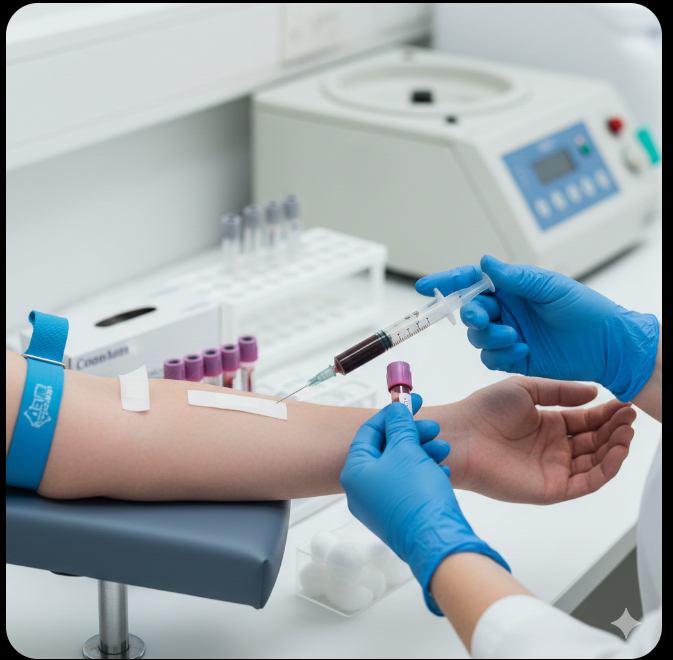
COMMON BLOOD TEST
1️⃣ Blood Tests
Used to detect antibodies or infection in blood:
- HIV 1 & 2 (ELISA / Rapid / CLIA)
- Syphilis – VDRL / RPR, TPHA
- Hepatitis B – HBsAg
- Hepatitis C – Anti-HCV
- HSV (Herpes Simplex Virus) – HSV-1 & HSV-2 IgG / IgM
2️⃣ Urine Test
- NAAT (Nucleic Acid Amplification Test) for
- Chlamydia
- Gonorrhea ✔️ First-catch urine sample (best for males)
3️⃣ Swab Tests
Swab taken from affected area:
- Urethral swab – Gonorrhea, Chlamydia
- Vaginal / Cervical swab – Trichomonas, BV, Candida, Chlamydia
- Anal / Throat swab – For MSM or oral/anal exposure
- Genital ulcer swab – HSV PCR, Syphilis PCR
4️⃣ Microscopy Tests
- Gram stain – Gonorrhea
- Wet mount – Trichomonas vaginalis
- Tzanck smear – Herpes (screening)
5️⃣ Advanced Molecular Tests
- PCR / NAAT
- Chlamydia
- Gonorrhea
- HSV
- HPV ✔️ Most accurate and preferred tests
6️⃣ Special Tests
- Pap smear / HPV DNA test – Cervical cancer & HPV
- CD4 count & Viral load – HIV monitoring
🧪 Basic STD Screening Panel (Asymptomatic Patient)
✔ HIV
✔ VDRL / RPR
✔ HBsAg
✔ Anti-HCV
✔ Urine NAAT (Chlamydia + Gonorrhea)
🚩 When to Get Tested?
- Genital discharge, ulcers, itching
- Painful urination
- Unprotected sex
- Multiple partners
- Partner diagnosed with STD
- Routine screening (every 6–12 months)
⚠️ Important Advice
- Avoid antibiotics before testing
- Use condoms until reports are clear
- Treat both partners together
- Follow up testing may be needed




👍👍