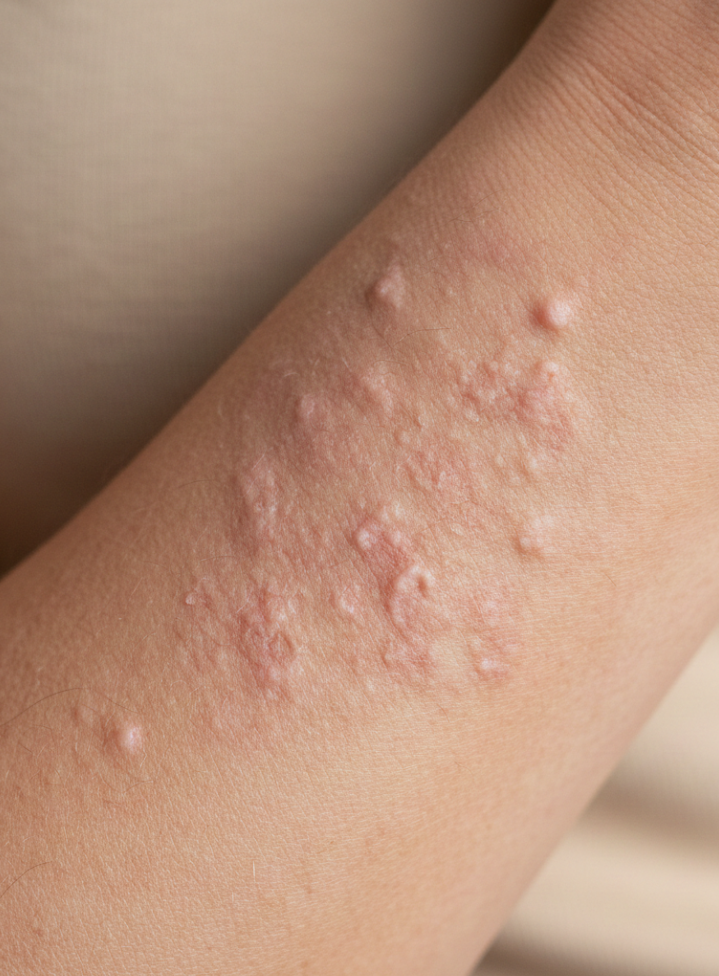
What is Eczema?
Eczema, also known as Atopic Dermatitis, is a chronic inflammatory skin condition characterized by itching, redness, dryness, and skin rashes. It is not contagious but can significantly affect quality of life due to persistent itching and discomfort.
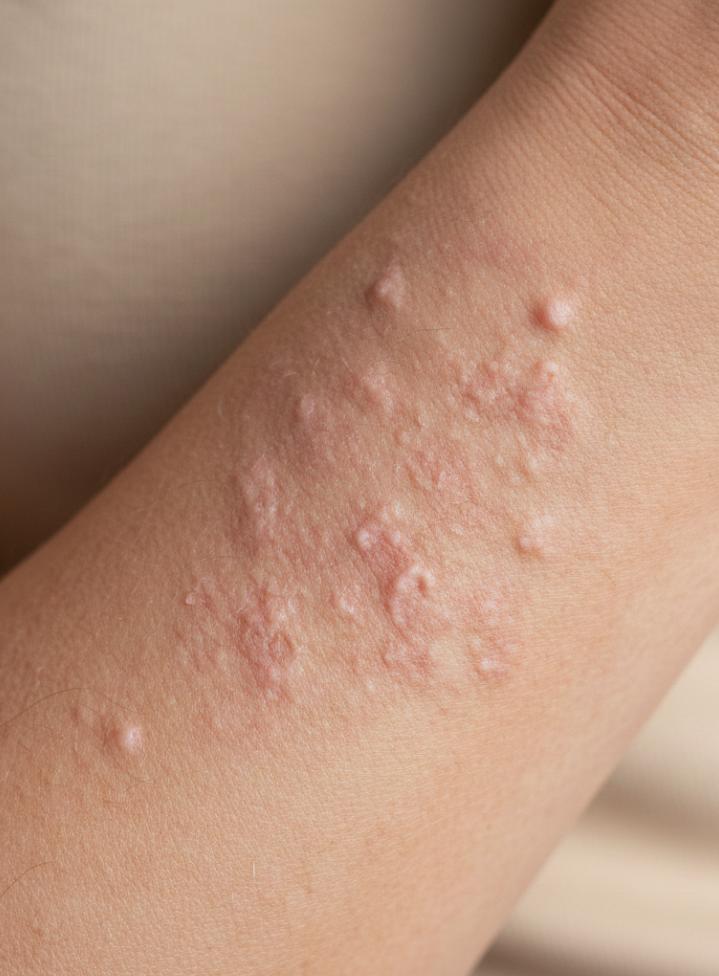
ATOPIC DERMATITIS
NOTE :-
Eczema commonly affects children, but many adults also suffer from it.
Types of Eczema
- Atopic Dermatitis – Most common type
- Contact Dermatitis – Due to allergens or irritants
- Dyshidrotic Eczema – Small blisters on hands and feet
- Seborrheic Dermatitis – Affects scalp, face (dandruff)
- Nummular Eczema – Coin-shaped patches
- Stasis Dermatitis – Related to poor circulation in legs
Causes of Eczema
- Genetic tendency
- Weak skin barrier
- Allergy or hypersensitivity
- Dry skin
- Stress
- Hormonal imbalance
- Environmental factors (dust, pollution, weather changes)
- Certain foods (in some patients)
Common Symptoms
- Intense itching (worse at night)
- Dry, scaly skin
- Red or brownish patches
- Oozing or crusting in severe cases
- Thickened skin due to scratching
- Cracks and bleeding in chronic eczema
Common Trigger Factors
- Soap, detergents, perfumes
- Synthetic or woolen clothes
- Dust mites and pollen
- Excessive sweating
- Cold or dry weather
- Stress and anxiety
Diagnosis
- Mainly clinical diagnosis
- Detailed history of allergy and family history
- Patch testing (in contact dermatitis)
- Blood tests if required
Treatment of Eczema
Modern Medicine
- Moisturizers and emollients
- Topical corticosteroids
- Antihistamines for itching
- Immunomodulator creams
- Antibiotics if secondary infection
Ayurvedic Perspective
According to Ayurveda, eczema is related to Vata-Kapha or Pitta imbalance and is comparable to Vicharchika.
Ayurvedic management includes:
- Blood purification herbs
- Herbal oils and lepam
- Panchakarma (Virechana, Raktamokshana if indicated)
- Diet and lifestyle correction
Diet & Lifestyle Tips
✔ Avoid spicy, oily, junk food
✔ Increase fruits and vegetables
✔ Drink adequate water
✔ Use mild soaps
✔ Keep skin moisturized
✔ Wear cotton clothes
✔ Manage stress through yoga & meditation
Conclusion
Eczema is a chronic condition, but with proper treatment, trigger avoidance, and lifestyle changes, it can be well controlled and long-term remission is possible.
Frequently Asked Questions (FAQ)
Q1. Is eczema contagious?
❌ No, eczema is not contagious.
Q2. Can eczema spread from one person to another?
❌ No, it cannot spread by touch or sharing items.
Q3. Is eczema permanent?
Eczema may be long-term but can be controlled effectively.
Q4. Does food cause eczema?
In some patients, certain foods can trigger flare-ups.
Q5. Is eczema common in children?
✅ Yes, eczema is very common in infants and children.
Q6. Can stress worsen eczema?
✅ Yes, stress is a known trigger.
Q7. Is Ayurveda effective for eczema?
✅ Ayurveda helps in root-cause management and long-term control.
Q8. Can eczema leave scars?
Usually no, but chronic scratching can cause pigmentation.
Q9. Can eczema affect the face?
✅ Yes, especially in children and adults with sensitive skin.
Q10. When should I consult a doctor?
If itching, infection, or flare-ups are frequent or severe.