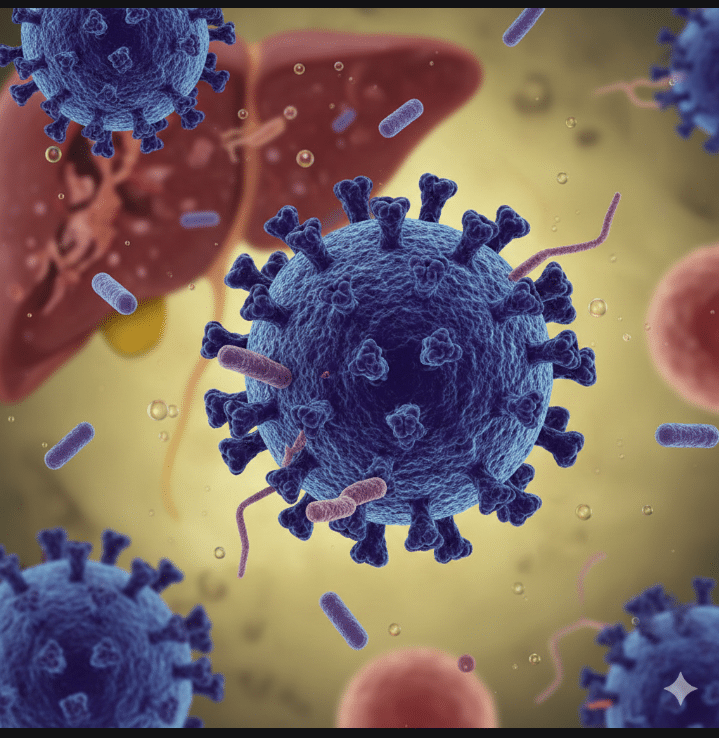
What is Hepatitis B?
Hepatitis B is a viral infection of the liver caused by the Hepatitis B virus (HBV). It can be acute (short-term) or chronic (long-term) and may lead to serious complications like liver cirrhosis, liver failure, and liver cancer if not treated properly.Hepatitis B is a major public health problem, especially in developing countries.
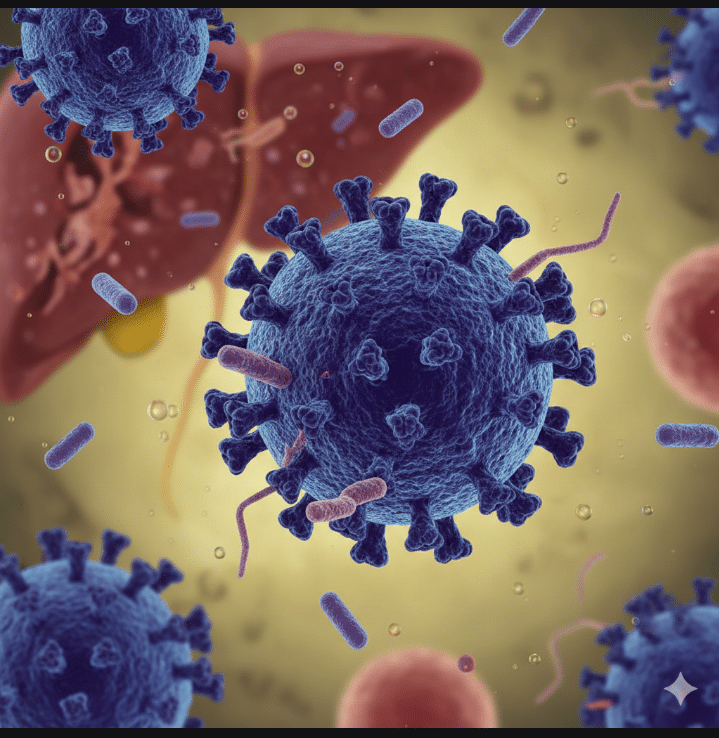
HEPATITIS VIRUS UNDER MICROSCOPE
How Does Hepatitis B Spread?
Hepatitis B spreads through contact with infected blood or body fluids.
Common modes of transmission:
- Unprotected sexual contact
- From infected mother to baby at birth
- Sharing needles, syringes, or razors
- Unsafe blood transfusion
- Tattooing or piercing with unsterilized instruments
- Accidental needle-stick injury (healthcare workers)
⚠️ NOTE :-
It does NOT spread through food, water, coughing, hugging, or sharing utensils.
Types of Hepatitis B
1. Acute Hepatitis B
- Short-term infection
- Most adults recover completely
- Symptoms last less than 6 months
2. Chronic Hepatitis B
- Infection lasts more than 6 months
- More common if infected at birth or childhood
- Can progress to cirrhosis or liver cancer
Symptoms of Hepatitis B
Many patients may remain asymptomatic, especially in early stages.
Common symptoms:
- Fatigue and weakness
- Fever
- Loss of appetite
- Nausea and vomiting
- Abdominal pain (right upper side)
- Dark-colored urine
- Pale stools
- Jaundice (yellowing of eyes and skin)
Diagnosis of Hepatitis B
Diagnosis is done by blood tests, including:
- HBsAg – indicates current infection
- Anti-HBs – indicates immunity
- Anti-HBc – past or current infection
- HBeAg & Anti-HBe – viral activity
- HBV DNA – viral load
- Liver function tests (SGOT, SGPT, bilirubin)
- Ultrasound abdomen (to assess liver damage)
Treatment of Hepatitis B
Acute Hepatitis B
- Usually no antiviral treatment required
- Supportive care: rest, fluids, healthy diet
- Regular monitoring
Chronic Hepatitis B
Treatment depends on:
- Viral load
- Liver enzyme levels
- Liver damage
Antiviral medicines include:
- Tenofovir
- Entecavir
- Pegylated Interferon (in selected cases)
⚠️ NOTE :-
Treatment is usually long-term and supervised by a doctor.
Complications of Untreated Hepatitis B
- Chronic hepatitis
- Liver cirrhosis
- Liver failure
- Hepatocellular carcinoma (liver cancer)
Prevention of Hepatitis B
1. Vaccination
- Most effective method
- Safe and highly effective
- Given in 3 doses (0, 1, and 6 months)
2. Safe practices
- Use condoms
- Avoid sharing needles, razors, toothbrushes
- Ensure sterilized instruments
- Screen blood before transfusion
Hepatitis B – Frequently Asked Questions (FAQ)
Q1. Is Hepatitis B curable?
Acute Hepatitis B usually recovers completely. Chronic Hepatitis B cannot be fully cured but can be effectively controlled with treatment.
Q2. Can Hepatitis B patient live a normal life?
Yes. With proper treatment and regular follow-up, patients can live a normal and healthy life.
Q3. Is Hepatitis B contagious?
Yes, but only through blood and body fluids, not through casual contact.
Q4. Is Hepatitis B vaccine safe?
Yes. It is very safe, effective, and recommended for all age groups.
Q5. Can a Hepatitis B positive mother deliver a healthy baby?
Yes. With proper vaccination and HBIG injection at birth, transmission can be prevented.
Q6. Should family members of a patient get tested?
Yes. All close contacts should be tested and vaccinated if required.
Q7. Can alcohol be consumed in Hepatitis B?
No. Alcohol can worsen liver damage and should be strictly avoided.
Q8. How often should a chronic Hepatitis B patient be monitored?
Usually every 3–6 months, depending on disease severity.
Conclusion
Hepatitis B is a preventable and manageable disease. Early diagnosis, proper treatment, regular monitoring, and vaccination play a key role in preventing complications and improving quality of life.