Introduction
Herpes Genitalis, commonly known as Genital Herpes, is a sexually transmitted infection (STI) caused by the Herpes Simplex Virus (HSV). It is a chronic, recurrent viral infection that mainly affects the genital and anal areas. Although it is not life-threatening, it causes significant physical discomfort and psychological stress.
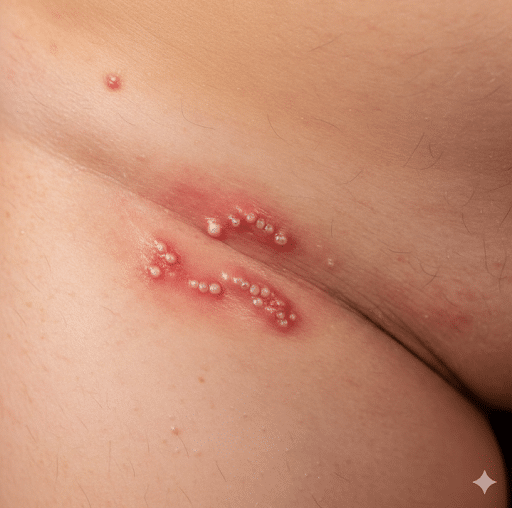
HERPES GENITALIS
Causative Agent
Genital herpes is caused by:
- HSV-2 – Most common cause of genital herpes
- HSV-1 – Increasingly causes genital infection due to oral-genital contact
NOTE :-
Both viruses remain latent in nerve ganglia and can reactivate periodically.
Mode of Transmission
- Unprotected vaginal, anal, or oral sexual contact
- Skin-to-skin contact with infected lesions
- Transmission can occur even without visible lesions
- From mother to baby during childbirth (rare but serious)
Incubation Period
- Usually 2–12 days after exposure
Clinical Features (Symptoms)
Primary Infection (First Episode)
- Fever, malaise, body ache
- Painful fluid-filled blisters (vesicles) on genitalia
- Burning, itching, or tingling sensation
- Ulcers after rupture of blisters
- Painful urination
- Inguinal lymph node enlargement
Recurrent Episodes
- Milder symptoms
- Fewer lesions
- Shorter duration
- Triggered by stress, illness, fatigue, or lowered immunity
Common Sites of Lesions
- Penis, scrotum (males)
- Vulva, vagina, cervix (females)
- Perianal region
- Buttocks and inner thighs
Diagnosis
- Clinical examination
- Tzanck smear (shows multinucleated giant cells)
- PCR test (most sensitive)
- Viral culture
- HSV-1 & HSV-2 IgG/IgM blood test
Differential Diagnosis
- Syphilitic chancre
- Chancroid
- Aphthous ulcers
- Fixed drug eruption
Treatment
There is no permanent cure, but antiviral therapy controls symptoms and reduces transmission.
Antiviral Drugs
- Acyclovir
- Valacyclovir
- Famciclovir
Treatment Goals
- Reduce pain and healing time
- Decrease frequency of recurrence
- Lower viral shedding and transmission risk
Suppressive Therapy
Recommended for patients with frequent recurrences (≥6 episodes/year).
Complications
- Secondary bacterial infection
- Psychological distress
- Increased risk of HIV transmission
- Neonatal herpes (if untreated during pregnancy)
Prevention
- Consistent condom use
- Avoid sexual contact during active lesions
- Antiviral suppressive therapy
- Regular STI screening
- Patient and partner counseling
Patient Counseling
- Genital herpes is manageable
- Recurrences decrease over time
- Honest communication with sexual partners is essential
- Maintain good immunity and stress control
Prognosis
- Lifelong infection with periodic reactivation
- Severity and frequency usually reduce with time
- Normal sexual and family life is possible with proper management
Conclusion
Herpes Genitalis is a common viral STI with recurrent nature. Early diagnosis, appropriate antiviral treatment, patient education, and preventive measures play a key role in effective disease control and improved quality of life.