Introduction
Herpes Simplex Virus (HSV) is a common viral infection that affects the skin and mucous membranes. It exists in two main types—HSV-1 and HSV-2.
Blood tests for HSV antibodies help determine whether a person has been exposed to the virus in the past or has a recent infection.
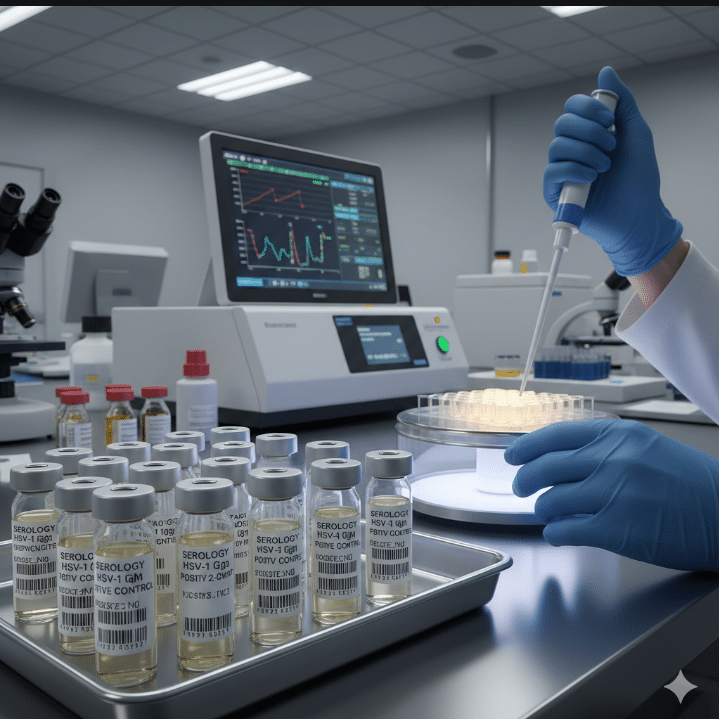
HSV ANTIBODIES TEST PROCESS
What are HSV Antibodies?
When HSV enters the body, the immune system produces antibodies to fight the virus. These antibodies remain in the blood for life.
There are two main antibodies tested:
- IgM antibodies – indicate recent or primary infection
- IgG antibodies – indicate past exposure or long-standing infection
Types of HSV Antibody Tests
1. HSV IgM Antibody Test
- Appears early after infection
- Suggests recent or active infection
- Less specific, may give false positives
2. HSV IgG Antibody Test
- Appears after a few weeks
- Persists for life
- Indicates past infection or exposure
3. Type-Specific HSV IgG
- Differentiates between HSV-1 and HSV-2
- Most reliable for diagnosis
Clinical Uses of HSV Antibody Testing
- To detect asymptomatic infection
- To differentiate primary vs recurrent infection
- Screening in pregnancy
- Evaluation of patients with recurrent genital ulcers
- Counseling for sexual partners
Interpretation of Results
| Result | Meaning |
| IgM Positive | Recent infection |
| IgG Positive | Past exposure |
| HSV-1 IgG Positive | Oral herpes exposure |
| HSV-2 IgG Positive | Genital herpes exposure |
| Both Negative | No exposure or very early infection |
NOTE :-
⚠️ Results should always be correlated with clinical symptoms.
Limitations of HSV Antibody Tests
- Cannot tell exact time of infection
- Cannot confirm active lesions
- IgM tests may be unreliable
- False positives possible
For active lesions, PCR or Tzanck smear is preferred.
FAQ – Frequently Asked Questions
Q1. What does HSV antibody positive mean?
It means the person has been exposed to HSV at some point in life.
Q2. Can HSV IgG be positive without symptoms?
Yes. Many people have HSV antibodies but never develop symptoms.
Q3. Is HSV antibody test useful in active ulcers?
No. PCR or viral culture is better for active lesions.
Q4. Does positive HSV antibody mean STD?
HSV-2 is mainly sexually transmitted. HSV-1 may be transmitted by oral contact.
Q5. Can HSV antibodies go away?
No. Once formed, HSV IgG antibodies remain lifelong.
Q6. Is HSV antibody test needed before marriage?
It may help in counseling but is not mandatory.
Q7. Can pregnancy be affected by HSV antibodies?
Primary infection during pregnancy is risky; old infection (IgG positive) is usually safe.
Q8. Can HSV antibody test differentiate oral and genital herpes?
Only type-specific IgG can help differentiate HSV-1 and HSV-2.
Conclusion
HSV antibody testing is useful for understanding past exposure and infection status, especially in asymptomatic individuals. However, results should always be interpreted along with clinical findings and other diagnostic tests.