INTRODUCTION
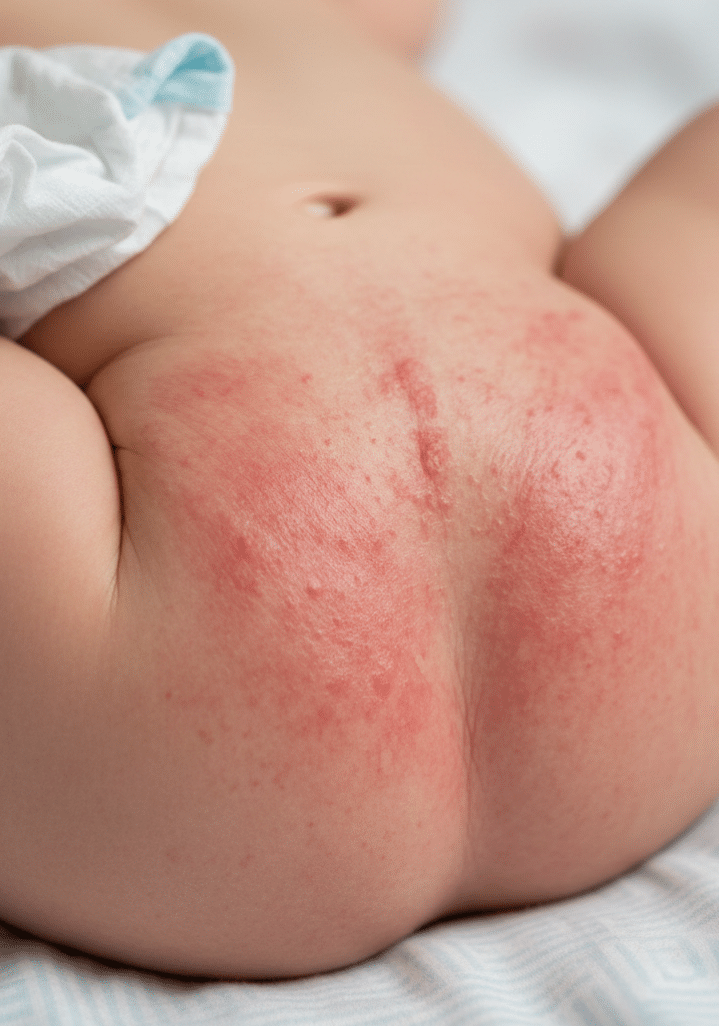
Napkin dermatitis, commonly known as diaper rash, is one of the most frequent skin problems seen in infants and toddlers. It occurs in the area covered by diapers or napkins and can cause discomfort, redness, and irritation. Although common, napkin dermatitis is usually preventable and treatable with proper care.
NAPKIN DERMATITIS
What is Napkin Dermatitis?
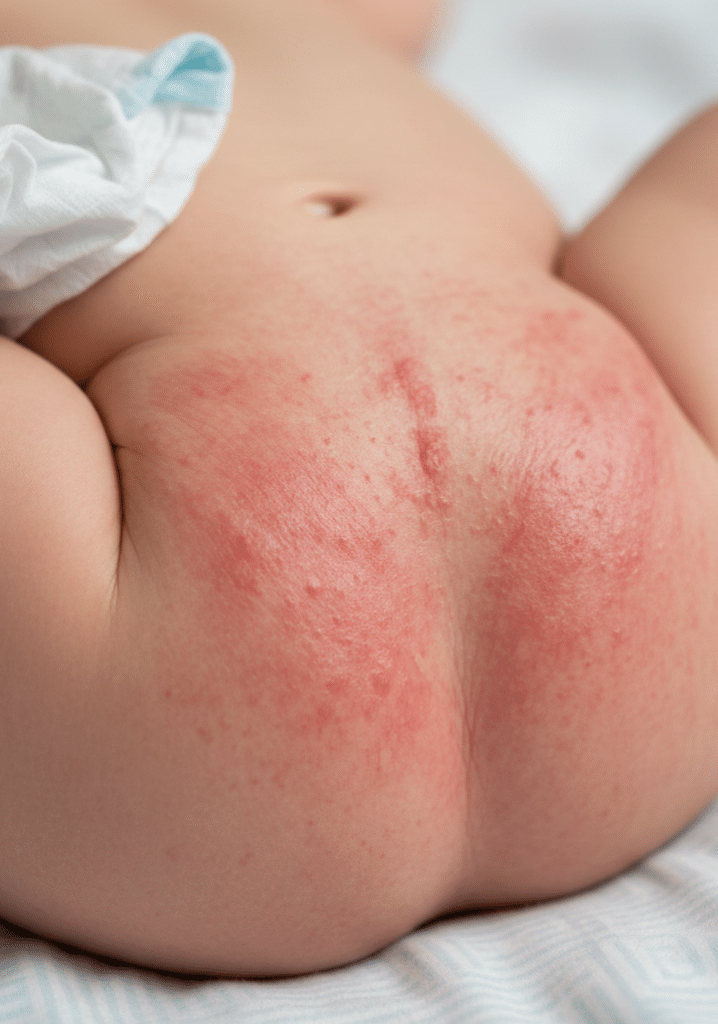
Napkin dermatitis is an inflammatory skin condition affecting the diaper area, including the buttocks, groin, thighs, and lower abdomen. It results from prolonged exposure of the skin to moisture, urine, stool, and friction from diapers.
Causes of Napkin Dermatitis
Several factors contribute to the development of napkin dermatitis:
- Prolonged moisture due to wet or soiled diapers
- Irritation from urine and feces (ammonia formation)
- Friction between skin and diaper
- Infrequent diaper changes
- Use of harsh soaps, wipes, or detergents
- Introduction of new foods, which may change stool consistency
- Secondary infection, especially with Candida albicans (fungal infection)
Signs and Symptoms
- Red, inflamed skin in the diaper area
- Warmth and swelling
- Pain or discomfort, baby may cry during diaper changes
- Peeling or shiny skin
- Small red bumps or satellite lesions (suggest fungal infection)
- Severe cases may show oozing or ulcers
Types of Napkin Dermatitis
- Irritant Contact Dermatitis – Most common, spares skin folds
- Candidal Diaper Dermatitis – Involves skin folds with satellite lesions
- Allergic Contact Dermatitis – Due to wipes, diapers, creams
- Seborrheic Dermatitis – Greasy scales, may extend beyond diaper area
Diagnosis
Diagnosis is usually clinical, based on appearance and history.
Laboratory tests are rarely required unless infection is suspected or rash is persistent.
Treatment of Napkin Dermatitis
1. General Care
- Frequent diaper changes
- Keep the area clean and dry
- Allow diaper-free time when possible
2. Barrier Creams
- Zinc oxide
- Petroleum jelly
- Lanolin-based creams
3. Topical Medications (if needed)
- Mild topical steroids (short duration, under medical advice)
- Antifungal creams (for candidal infection)
- Antibiotics only if secondary bacterial infection is present
⚠️ NOTE :-
Avoid self-medication with strong steroid creams.
Prevention Tips
- Change diapers frequently
- Use soft, fragrance-free wipes or plain water
- Pat dry instead of rubbing
- Apply barrier cream regularly
- Choose breathable, well-fitting diapers
- Wash cloth diapers thoroughly and rinse well
Frequently Asked Questions (FAQs)
Q1. Is napkin dermatitis dangerous?
No, it is usually mild and treatable. However, untreated severe cases can cause infections.
Q2. How long does diaper rash take to heal?
Most cases improve within 2–3 days with proper care.
Q3. Can adults get napkin dermatitis?
Yes, adults using diapers due to medical conditions can also develop napkin dermatitis.
Q4. When should I consult a doctor?
- If rash does not improve in 3–4 days
- If there is pus, fever, or severe pain
- If fungal infection is suspected
Q5. Can home remedies help?
Keeping the area dry and clean helps, but avoid applying powders or oils without guidance.
Conclusion
Napkin dermatitis is a common and preventable skin condition that mainly affects infants but can also occur in adults using diapers. Early recognition, good hygiene, frequent diaper changes, and appropriate use of barrier creams are key to quick recovery. Parents and caregivers should not ignore persistent or worsening rashes and should seek medical advice when necessary. With proper care, napkin dermatitis can be effectively managed and prevented.