
⭐Introduction
Nipah virus (NiV) is a rare but highly dangerous viral infection that can spread from animals to humans and also through human-to-human contact. First identified in 1998 during an outbreak in Malaysia, Nipah virus has since caused several outbreaks in South and Southeast Asia, especially in India and Bangladesh. Due to its high fatality rate and lack of a specific cure, Nipah virus remains a serious global public health concern.
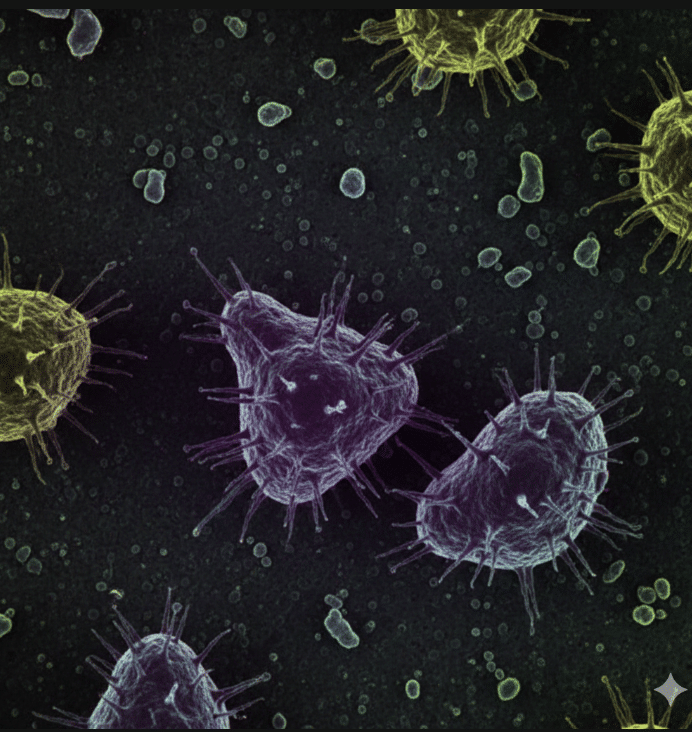
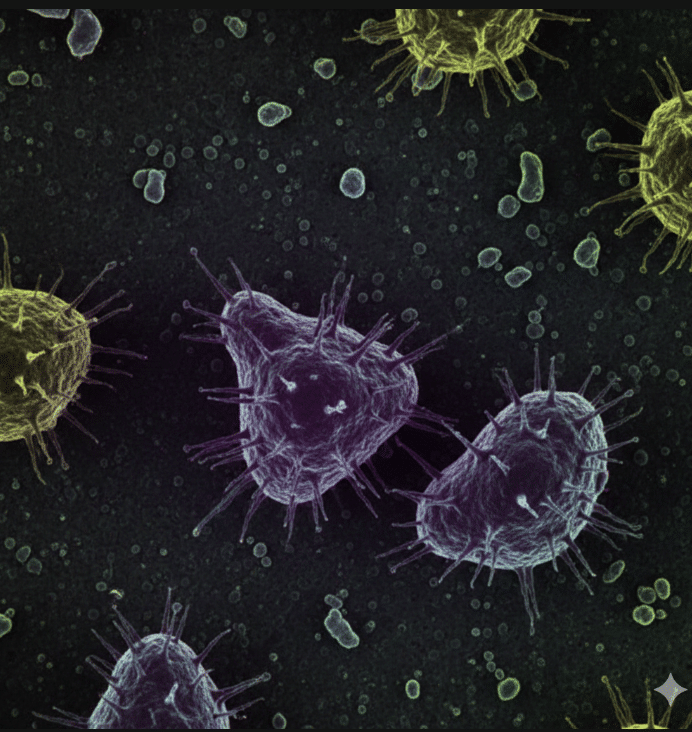
NIPAH VIRUS UNDER MICROSCOPE
🌺What is Nipah Virus?
Nipah virus is a zoonotic virus belonging to the Paramyxoviridae family. Fruit bats of the Pteropus species (flying foxes) are the natural hosts of the virus. Humans can get infected either directly from animals or indirectly through contaminated food or infected people.
⭐Mode of Transmission
Nipah virus can spread through:
- Contact with infected fruit bats
- Consumption of fruits or raw date palm sap contaminated by bat saliva or urine
- Close contact with infected pigs
- Human-to-human transmission via body fluids (saliva, respiratory droplets, urine, blood)
Healthcare workers and caregivers are at higher risk during outbreaks.
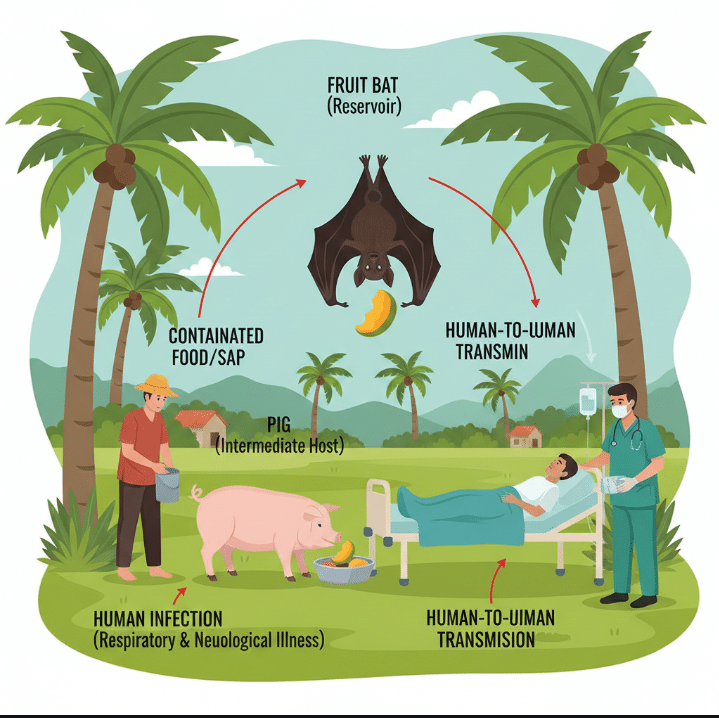
MODE OF TRANSMISSION
⭐Symptoms of Nipah Virus Infection
Symptoms usually appear 4–14 days after exposure and may include:
Early Symptoms:
- Fever
- Headache
- Muscle pain
- Vomiting
- Sore throat
Severe Symptoms:
- Dizziness and confusion
- Acute respiratory distress
- Encephalitis (brain inflammation)
- Seizures
- Coma
NOTE :-
The disease can progress rapidly and may be fatal within days.
💐Diagnosis
Nipah virus infection is diagnosed through laboratory tests such as:
- RT-PCR (Reverse Transcriptase Polymerase Chain Reaction)
- ELISA (antibody detection)
- Virus isolation (in specialized labs)
NOTE :-
Early diagnosis is crucial to control spread and improve survival chances.
🌹Treatment
Currently, there is no specific antiviral treatment or vaccine approved for Nipah virus. Management is mainly supportive, including:
- Intensive care
- Ventilator support if needed
- Treatment of complications
- Strict infection control measures
NOTE :-
Experimental treatments are under research, but prevention remains the best defense.
🌺Prevention and Control
Key preventive measures include:
- Avoid eating fruits partially eaten by bats
- Do not drink raw date palm sap
- Maintain hand hygiene
- Avoid close contact with infected persons
- Use protective equipment in healthcare settings
- Public awareness and rapid outbreak response
⭐Frequently Asked Questions (FAQs)
1. Is Nipah virus contagious?
Yes, Nipah virus can spread from person to person, especially through close contact with bodily fluids.
2. What is the fatality rate of Nipah virus?
The fatality rate ranges from 40% to 75%, depending on the outbreak and quality of medical care.
3. Is there a vaccine available for Nipah virus?
No approved vaccine is currently available, though research and clinical trials are ongoing.
4. Which countries are most affected by Nipah virus?
India, Bangladesh, Malaysia, and Singapore have reported Nipah virus outbreaks.
5. Can Nipah virus be prevented?
Yes, with proper hygiene, safe food practices, early detection, and isolation of cases, the spread can be controlled.
6. Is Nipah virus similar to COVID-19?
No. While both can cause respiratory illness, Nipah virus primarily causes encephalitis and has a much higher fatality rate.
🌺Conclusion
Nipah virus is a serious and often fatal disease with the potential to cause outbreaks if not detected early. Although rare, its high mortality rate and ability to spread between humans make it a major public health threat. In the absence of a vaccine or specific treatment, awareness, prevention, early diagnosis, and strict infection control are the most effective tools to combat Nipah virus. Continuous research, surveillance, and community education are essential to prevent future outbreaks and protect global health.




Thank for explaining the symptoms
Thank for explaining Nipah virus