INTRODUCTION
Oropharyngeal candidiasis—commonly known as oral thrush—is a fungal infection of the mouth and throat caused by Candida albicans. Although Candida normally lives in the mouth harmlessly, certain conditions allow it to overgrow, leading to white patches, irritation, and difficulty eating.
NOTE:-
This condition is common in infants, elderly people, denture users, diabetics, and those with weak immunity.
What is Oropharyngeal Candidiasis?
It is a fungal infection affecting the tongue, inner cheeks, palate, gums, and sometimes the throat (pharynx).
It appears as white, creamy patches that may be painful or leave a red surface when scraped.
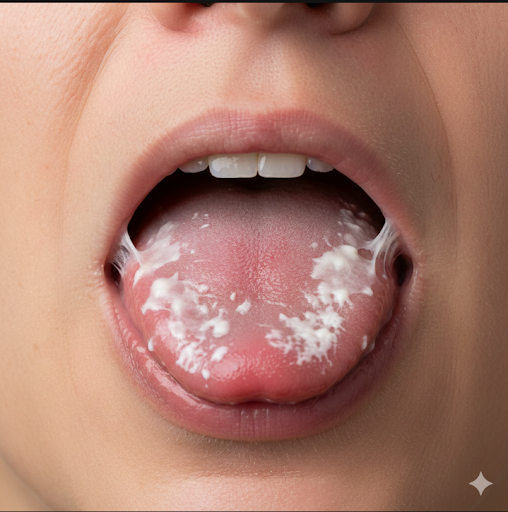
OROPHARYNGEAL CANDIDIASIS
Causes
Oropharyngeal candidiasis develops when the balance of microorganisms in the mouth is disturbed. Common causes include:
1. Weakened Immunity
- HIV/AIDS
- Cancer patients on chemotherapy
- Long-term steroid use
- Organ transplant patients (immunosuppressants)
2. Diabetes Mellitus
High sugar levels promote rapid fungal growth.
3. Antibiotic Use
Broad-spectrum antibiotics kill good bacteria, allowing Candida to multiply.
4. Denture Use
Ill-fitting or unclean dentures create a moist environment for fungal growth.
5. Dry Mouth (Xerostomia)
Due to dehydration, salivary gland problems, radiation therapy, or certain medications.
6. Smoking
Weakens oral mucosa and increases fungal colonization.
Signs & Symptoms
Common symptoms include:
- White, creamy patches on the tongue, inner cheeks, palate, or throat
- Redness or soreness in the mouth
- Burning sensation
- Pain while swallowing
- Loss of taste or unpleasant taste
- Cracks at the corners of the mouth (angular cheilitis)
- Dry mouth feeling
In severe cases, the infection may spread to the esophagus, causing difficulty swallowing.
Who Is at Higher Risk?
- Infants & elderly
- Diabetics (poorly controlled)
- HIV/AIDS patients
- Cancer patients
- Denture wearers
- Asthma patients using steroid inhalers
- People on long-term antibiotics
- Smokers
- Organ transplant recipients
Diagnosis
Diagnosis is usually clinical.
A doctor may check:
- Characteristic white plaques
- Red patches after wiping
- Swab culture (in severe or recurrent cases)
- Blood sugar levels (if diabetes suspected)
Treatment
1. Antifungal Medications
Topical antifungals (mild cases):
- Clotrimazole mouth paint / lozenges
- Nystatin oral suspension
- Miconazole oral gel
Systemic antifungals (moderate/severe cases):
- Fluconazole tablets
- Itraconazole (if resistant)
- Amphotericin B (rare, severe cases)
2. Treat Underlying Cause
- Control diabetes
- Improve mouth hygiene
- Replace or clean dentures
- Adjust antibiotics if needed
3. For Inhaler Users
- Rinse mouth after using steroid inhalers
- Use a spacer device
Home Remedies
These do not replace medical treatment, but help recovery:
- Warm salt-water gargles
- Maintain good oral hygiene
- Limit sugar intake
- Keep dentures clean
- Drink adequate water
- Quit smoking
- Eat probiotic-rich foods (curd, yogurt)
Prevention
- Brush twice daily
- Clean tongue regularly
- Rinse mouth after meals and inhaler use
- Control diabetes
- Avoid excessive antibiotics
- Keep dentures clean and remove at night
- Stop smoking
- Maintain hydration
Complications
If untreated, infection may:
- Spread to esophagus (esophageal candidiasis)
- Cause difficulty eating and dehydration
- Recur frequently in diabetics and immunocompromised patients
- Spread systemically (rare, in very weak immunity)
FAQs
1. Is oropharyngeal candidiasis contagious?
Not usually. Candida is normally present in most people. Overgrowth occurs due to internal factors like low immunity or antibiotics.
2. Can oral thrush spread to the throat?
Yes, if untreated it can involve the pharynx and esophagus, causing painful swallowing.
3. How long does treatment take?
Mild cases improve in 5–7 days. Severe cases may need 2–3 weeks of antifungal therapy.
4. Does it occur in babies?
Yes, infants commonly develop thrush. Breastfeeding mothers may also get nipple candidiasis.
5. When should I see a doctor?
If:
Symptoms persist beyond 1 week
You have diabetes, HIV, or are on immunosuppressants
You experience difficulty in swallowing.