⭐INTRODUCTION
Sitting asanas are an important group of yoga postures practiced in a seated position. These asanas are mainly used for meditation, breathing practices (pranayama), and improving posture. They help calm the mind, strengthen the spine, and prepare the body for longer periods of stillness. Sitting asanas are suitable for beginners as well as advanced yoga practitioners.
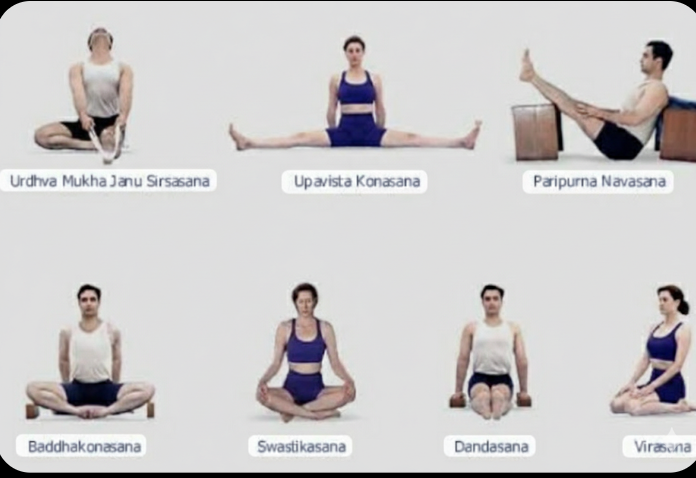
SEATED YOGA POSTURE
⭐What Are Sitting Asanas?
Sitting asanas are yoga postures performed while sitting on the floor with crossed legs, extended legs, or folded knees. The spine is kept straight, and the body remains stable and relaxed. These asanas focus on flexibility, balance, and mental concentration.
⭐Common Sitting Asanas
Some well-known sitting asanas include:
- Sukhasana (Easy Pose)
- Padmasana (Lotus Pose)
- Vajrasana (Thunderbolt Pose)
- Baddha Konasana (Butterfly Pose)
- Paschimottanasana (Seated Forward Bend)
⭐Benefits of Sitting Asanas
- Improve posture and spinal alignment
- Enhance concentration and mindfulness
- Increase flexibility of hips, knees, and ankles
- Aid digestion and improve blood circulation
- Reduce stress, anxiety, and mental fatigue
- Prepare the body for meditation and pranayama
⭐Precautions
- Sit on a cushion or folded blanket if there is discomfort
- Avoid forcing the knees or hips
- People with knee, hip, or lower back injuries should practice under guidance
- Maintain slow and steady breathing
💐Frequently Asked Questions (FAQ)
1. Who can practice sitting asanas?
Almost everyone can practice sitting asanas, including beginners, children, and elderly people, with proper modifications.
2. Are sitting asanas good for meditation?
Yes, sitting asanas are ideal for meditation because they help keep the spine straight and the mind calm.
3. How long should sitting asanas be practiced?
They can be practiced for 5–15 minutes daily, depending on comfort and experience.
4. Can sitting asanas help reduce stress?
Yes, regular practice relaxes the nervous system and reduces stress and anxiety.
5. Can sitting asanas be practiced after meals?
Light sitting asanas like Vajrasana can be practiced after meals, but most others should be done on an empty stomach.
🌺Conclusion
Sitting asanas form the foundation of yoga practice. They promote physical stability, mental peace, and inner awareness. Regular practice of sitting asanas improves posture, flexibility, and concentration, making them essential for a healthy body and a calm mind. By practicing them daily with patience and awareness, one can experience balance and harmony in everyday life.