
Introduction
Syphilis is a sexually transmitted infection (STI) caused by the bacterium Treponema pallidum. It spreads mainly through sexual contact, but can also be transmitted from mother to unborn baby. If diagnosed early, syphilis is completely curable, but if left untreated, it can cause serious complications affecting the heart, brain, nerves, and eyes.
SYPHILIS
Cause of Syphilis
Syphilis is caused by the bacterium Treponema pallidum.
Modes of Transmission
- Unprotected vaginal, anal, or oral sex
- Direct contact with syphilitic sores (chancre)
- From infected mother to fetus (congenital syphilis)
- Rarely through blood transfusion (now very uncommon)
Stages of Syphilis & Symptoms
1. Primary Syphilis
- Single painless sore (chancre) on:
- Genitals
- Mouth
- Anus
- Enlarged lymph nodes
- Heals on its own in 3–6 weeks (infection still remains)
2. Secondary Syphilis
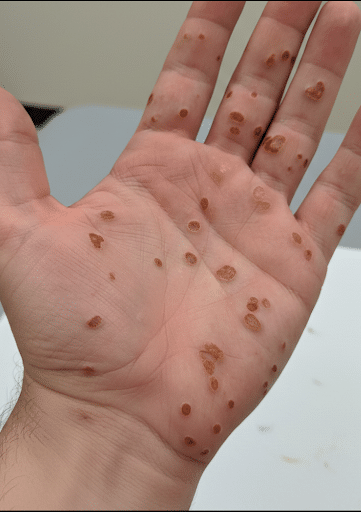
- Skin rash (commonly on palms and soles)
- Fever
- Sore throat
- Hair loss (patchy)
- Body aches
- Warts around genitals (condyloma lata)
3. Latent Syphilis
- No symptoms
- Can last for years
- Still detectable by blood tests
4. Tertiary (Late) Syphilis
Occurs years later if untreated:
- Brain damage (neurosyphilis)
- Heart problems
- Blindness
- Paralysis
- Mental illness
Congenital Syphilis
If a pregnant woman has syphilis, it can cause:
- Miscarriage
- Stillbirth
- Deformed bones
- Blindness or deafness in newborn
- Brain damage
Diagnosis of Syphilis
Blood Tests
- VDRL
- RPR
- TPHA / FTA-ABS (confirmatory tests)
Other Tests
- Dark-field microscopy (from chancre)
- CSF examination (for neurosyphilis)
Treatment of Syphilis
First-Line Treatment
- Benzathine Penicillin G (injection)
Alternative (Penicillin Allergy)
- Doxycycline
- Azithromycin (limited use)
⚠️ NOTE :-
Sex partners must also be treated
Prevention of Syphilis
- Use condoms consistently
- Regular STI screening
- Avoid multiple sexual partners
- Screen all pregnant women
- Early treatment of infected persons
Prognosis
- Early syphilis → complete cure
- Late syphilis → damage may be permanent but progression can be stopped
Frequently Asked Questions (FAQ)
Q1. Is syphilis curable?
Yes, syphilis is completely curable, especially in early stages.
Q2. Is syphilis painful?
Primary sore (chancre) is usually painless, which is why many people miss it.
Q3. Can syphilis spread without symptoms?
Yes, especially during latent stage.
Q4. Can syphilis be transmitted through kissing?
Only if there is direct contact with an open sore in the mouth.
Q5. Is syphilis the same as HIV?
No, they are different infections, but having syphilis increases HIV risk.
Q6. How long after exposure does syphilis appear?
Usually 10–90 days, average 3 weeks.
Q7. Can syphilis come back after treatment?
Reinfection is possible if exposed again.
Q8. Should pregnant women be tested for syphilis?
Yes, mandatory screening during pregnancy is recommended.
Q9. Can condoms prevent syphilis?
They reduce risk but do not give 100% protection if sores are outside covered areas.
Q10. Is syphilis common in India?
Yes, it remains a significant STI, especially among high-risk groups.
Conclusion
Syphilis is a serious but preventable and curable infection. Early diagnosis, proper treatment, and partner notification are key to controlling the disease and preventing complications.




Thank you Dr.