INTRODUCTION
Tinea Capitis, commonly known as scalp ringworm, is a contagious fungal infection that affects the scalp and hair shafts. It is especially common among children but can affect adults as well. Early identification and treatment are important to prevent complications like hair loss or spread to others.
What is Tinea Capitis?
Tinea capitis is a fungal infection caused by dermatophytes (fungi that feed on keratin). These fungi invade the scalp skin, causing itching, scaling, hair breaking, and sometimes painful swelling.
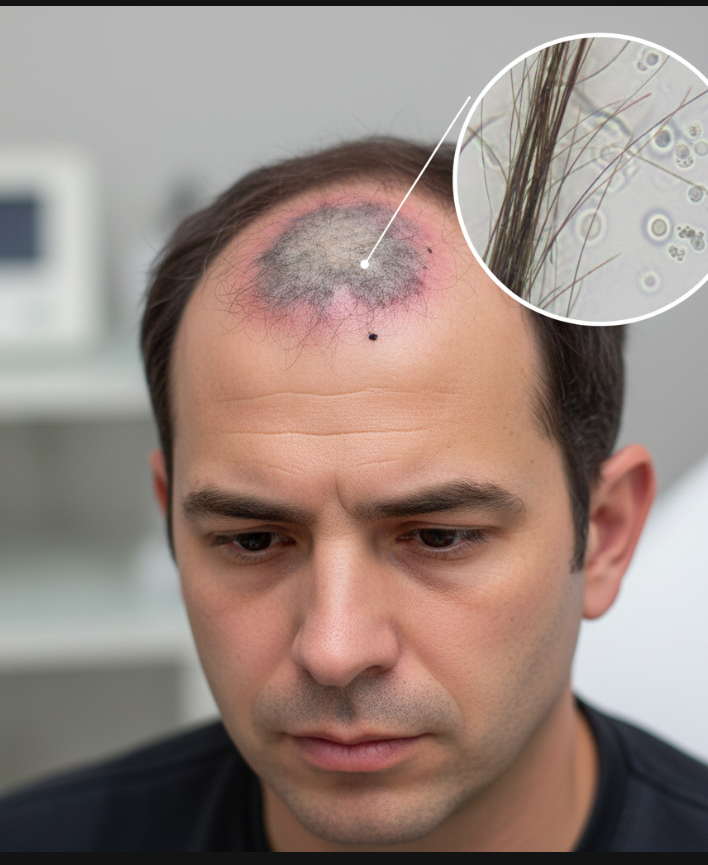
TINEA CAPITIS
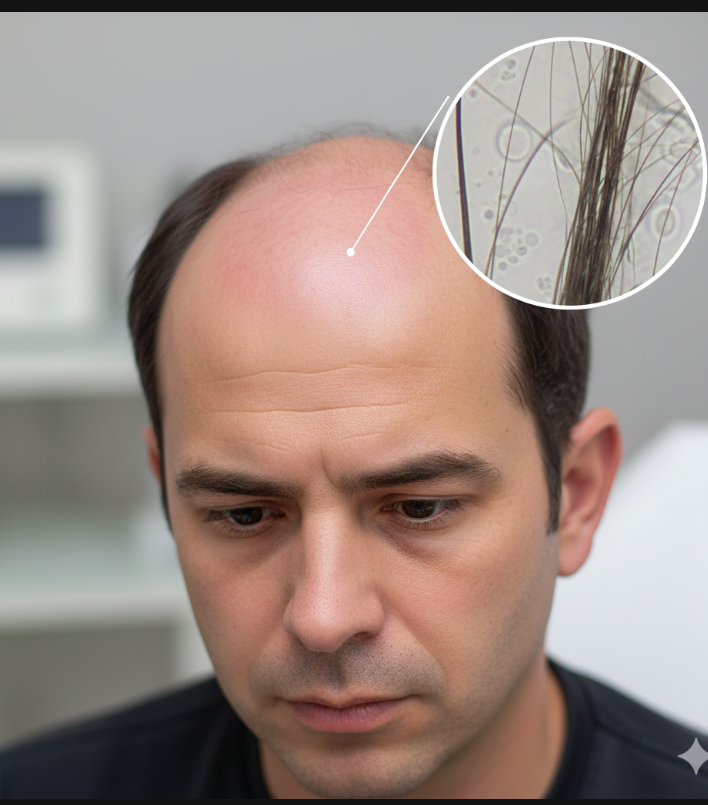
BALDNESS due to TINEA CAPITIS
Causes
The infection is caused mainly by two groups of fungi:
1. Trichophyton species
- Common in urban areas
- Transmitted by direct contact
2. Microsporum species
- Often spread by pet animals (cats, dogs)
How it spreads
- Direct skin-to-skin contact
- Sharing combs, towels, pillow covers, caps, helmets
- Contact with infected pets
- Poor scalp hygiene
- Crowded living conditions
Who Is at Risk?
- Children aged 3–14 years
- People with poor hygiene
- Those using shared grooming tools
- School-going children
- People with weak immunity
- Individuals with pets having skin infection
Signs and Symptoms
Tinea capitis can appear in several forms:
Common Symptoms
- Itchy scalp
- Scaly patches on the scalp
- Round or irregular bald patches
- Hair breaking close to the scalp (“black dot” pattern)
- Dandruff-like flakes
- Mild pain or tenderness
Severe Symptoms
- Kerion: Painful, pus-filled, swollen lumps on scalp
- Fever (rare)
- Swollen lymph nodes in neck
- Crusting or yellow discharge
Diagnosis
A dermatologist may use:
- Physical examination of scalp
- Wood’s lamp test (some fungi glow under UV light)
- KOH microscopy – to identify fungus under microscope
- Fungal culture – confirms type of fungus
Treatment
Tinea capitis needs oral antifungal medication, as topical creams alone are not enough.
1. Oral Medicines
- Griseofulvin – first choice in many cases
- Terbinafine – commonly preferred and effective
- Itraconazole or Fluconazole – alternatives in resistant cases
Duration: 4–8 weeks depending on severity.
2. Medicated Shampoos (help reduce spread)
- Ketoconazole 2% shampoo
- Selenium sulfide 2.5% shampoo
Use 2–3 times per week for 2–4 weeks.
3. For Kerion
- Oral antifungals
- Short-term steroids (only if advised by doctor) to reduce inflammation
- Antibiotics if secondary bacterial infection occurs
Home Care & Prevention
- Wash scalp regularly with medicated shampoo
- Avoid sharing combs, towels, caps, pillows
- Disinfect hair tools frequently
- Keep hair clean and dry
- Check pets for fungal infections
- Trim child’s nails to prevent scratching
- Wash bedding weekly in hot water
Complications (if untreated)
- Permanent hair loss (rare)
- Scarring
- Spread to other body parts
- Infection to family members
FAQ
1. Is Tinea capitis contagious?
Yes, it spreads easily through direct contact and shared items.
2. Can adults get Tinea capitis?
Yes, but children are more commonly affected.
3. Can I use only shampoo for treatment?
No. Oral antifungal tablets are necessary for complete cure.
4. How long does it take to cure?
Usually 4–8 weeks, depending on severity and drug used.
5. Does it cause permanent hair loss?
Rarely. Most hair grows back after treatment unless severe kerion formed.
6. Can home remedies cure Tinea capitis?
Home remedies cannot cure it, but they may help reduce discomfort. Treatment must be medical.