Tinea faciei is a common fungal infection of the face caused by dermatophytes (fungus that grows on skin). It often looks like red, ring-shaped, itchy patches, and is frequently mistaken for allergies, acne, or eczema. This infection can affect men, women, and even children, especially in hot and humid climates.
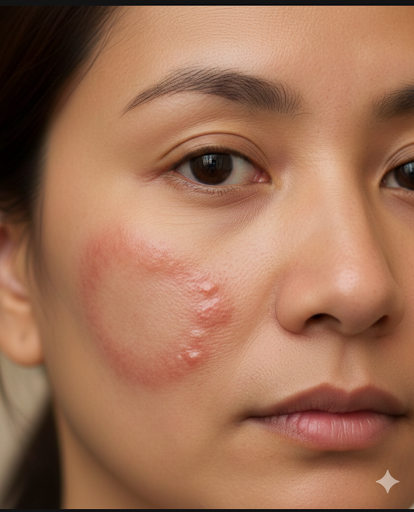
TINEA FACIEI
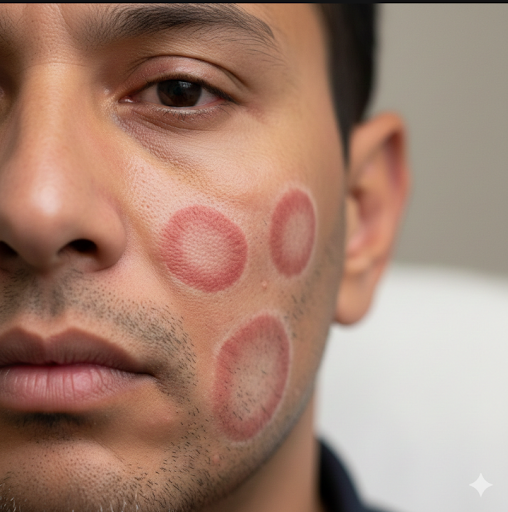
TINEA FACIEI
What is Tinea Faciei?
Tinea faciei is a ringworm infection of the facial skin, excluding the beard area in men (beard area infection is called tinea barbae).
The fungus attacks the upper layer of skin and gives a ring-like appearance, which is why it is also commonly called ringworm of the face.
Causes
Common causes include:
- Dermatophyte fungal organisms (T. rubrum, T. mentagrophytes, Microsporum)
- Contact with infected persons
- Using contaminated towels, bedsheets, combs, or clothes
- Pets like cats, dogs, rabbits carrying fungal spores
- Sweating and humidity
- Poor hygiene or excessive face touching
- Prolonged use of steroid creams (very common cause → makes the infection worse)
Risk Factors
You are at higher risk if:
- You live in hot and humid areas
- You have diabetes
- You sweat excessively
- You share personal items with others
- You use steroid creams like Betnovate, Panderm, Quadriderm, Dermifree, etc.
- You have pets with skin infection
Symptoms of Tinea Faciei
- Red, circular or irregular patches
- Itching or burning sensation
- Raised active border with clearer skin in the center
- Worsening after heat or sweating
- Flaking or peeling skin
- Sometimes mistaken for dermatitis, eczema, or acne
- Patches may appear on:
- Cheeks
- Forehead
- Chin
- Around the nose
- Near eyelids (careful area)
Is Tinea Faciei Contagious?
Yes.
It spreads through:
- Direct skin contact
- Sharing towels, razors, pillow covers
- Pets with ringworm
- Touching infected body areas and then touching the face
Diagnosis
A dermatologist can identify it by:
- Physical examination
- KOH test (skin scraping under microscope)
- Wood’s lamp (rarely needed)
Treatment
1. Topical Antifungal Creams (First Choice)
Apply twice daily for 2–4 weeks:
- Terbinafine
- Clotrimazole
- Ketoconazole
- Luliconazole
- Eberconazole
- Sertaconazole
2. Oral Antifungal Medicines
Needed if:
- Infection is severe
- Not improving
- Large area involved
- Recurrent infections
Common medicines (doctor-prescribed):
- Terbinafine
- Itraconazole
- Fluconazole
3. Very Important Rule
❌ Never use steroid-mixed creams like:
Betnovate, Quadriderm, Clop, Dermifree, Betnovate-N, Panderm, or any “whitening/instant relief” creams.
These make the infection:
- More aggressive
- Chronic
- Resistant to treatment
Home Care Tips
- Keep face clean and dry
- Use antifungal face wash if recommended
- Wash pillow covers and towels daily in hot water
- Avoid sharing personal items
- Trim nails to prevent scratching
- Avoid makeup on infected area
- Disinfect your phone screen
Prevention
- Maintain proper hygiene
- Avoid steroid creams
- Shower after sweating
- Use separate towel and bedsheet
- Treat infected pets
- Wear breathable clothing
- Complete the entire course of treatment (even after symptoms improve)
Possible Complications
If untreated:
- Infection may spread to neck or body
- Hyperpigmentation (dark marks)
- Frequent recurrence
- Misdiagnosis leading to long-term steroid damage
FAQ on Tinea Faciei
1. Can tinea faciei be cured permanently?
Yes, with proper antifungal treatment and hygiene, it can be completely cured.
2. How long does it take to heal?
Usually 2–4 weeks, but longer if infection is severe or steroid creams were used earlier.
3. Are dark spots left behind?
Sometimes. They fade slowly with treatment and sun protection.
4. Can I use home remedies?
Home remedies alone are not effective. They may worsen the infection.
5. Can children get tinea faciei?
Yes, especially from infected pets.
6. Is it harmful?
Not dangerous but highly contagious and uncomfortable, and spreads easily.