Introduction
Verrucae vulgaris, commonly known as common warts, are benign skin growths caused by the Human Papillomavirus (HPV). They are extremely common in children, young adults, and people with low immunity. Though harmless, they can be cosmetically bothersome or painful depending on their location.

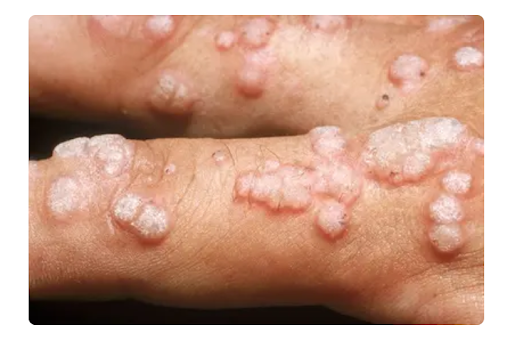
VERRUCA VULGARIS
What Are Verrucae Vulgaris?
Verrucae vulgaris are small, rough, hyperkeratotic papules that typically appear on hands, fingers, elbows, and knees. They spread easily through direct contact and contaminated surfaces.

NECK VERRUCAE VULGARIS
Causes
The main cause is infection by specific types of HPV (mostly types 2, 4, 27, and 57).
Risk factors
- Skin trauma or cuts
- Excessive moisture
- Nail biting
- Low immunity
- Direct contact with infected individuals or surfaces
- Sharing personal items (towels, nail cutters)
Clinical Features
Common warts appear as:
- Rough, firm, raised papules
- Grayish, brown or skin-colored
- Black dots on surface (thrombosed capillaries)
- Pain on pressure (often lateral pressure)
Common sites
- Hands and fingers
- Around nails (periungual warts)
- Knees
- Elbows
- Face (rare)
Types of Warts
Although verruca vulgaris refers to “common warts,” other variants include:
- Filiform warts – thread-like, on face/eyelids
- Flat warts (Verruca plana) – smooth, flat-topped
- Plantar warts – on soles, painful
How Do They Spread?
HPV enters through small skin breaks.
Spreads via:
- Touching warts
- Shared objects
- Scratching (autoinoculation)
- Wet environments (bathrooms, swimming pools)
Diagnosis
Usually clinical.
Features include:
- Hyperkeratotic surface
- Black dots (capillary loops)
- Pain on squeezing from sides
- Dermoscopy: red/black dots, papillomatous surface
Biopsy is rarely needed.
Treatment Options
1. Topical Treatments
- Salicylic acid (10–40%) – first-line
- Lactic acid combinations
- Tretinoin for facial warts
- Imiquimod 5% (immune response modifier)
- 5-Fluorouracil cream
NOTE :-
Regular use for several weeks is required.
2. Procedural Treatments
- Cryotherapy (liquid nitrogen): very effective, requires sessions
- Electrocautery / Radiofrequency ablation
- Laser therapy (CO₂ / Pulsed dye laser)
- Chemical cautery (TCA 50–80%)
- Cantharidin application (blister-inducing agent)
3. Systemic Treatments
Useful in recurrent or multiple warts:
- Zinc supplementation
- Cimetidine
- Isotretinoin (rare cases)
4. Home Remedies (Evidence variable)
- Duct tape occlusion therapy
- Aloe vera
- Garlic extract
- Apple cider vinegar
NOTE :-
Should be used cautiously to avoid burns.
Prognosis
- 50% warts resolve spontaneously within 1 year
- 70% resolve within 2 years
- Recurrence can occur if immunity is low or HPV persists
Prevention
- Avoid touching/scratching warts
- Do not share towels or razors
- Keep hands and feet dry
- Use footwear in public washrooms
- Treat cuts and abrasions promptly
- Boost immunity through a healthy lifestyle
Frequently Asked Questions (FAQ)
1. Are warts contagious?
Yes. They spread by direct contact and shared surfaces.
2. Do warts turn into cancer?
No, verruca vulgaris is benign and not cancerous.
3. How long does treatment take?
Anywhere from 2–12 weeks, depending on size and location.
4. Can children get warts?
Yes, very commonly due to weaker immunity.
5. Is cryotherapy painful?
Mild burning or stinging is common, but pain is temporary.
Conclusion
Verrucae vulgaris are common and harmless but can be cosmetically bothersome. Most cases respond well to topical or procedural treatments. Early intervention prevents spread and recurrence.