INTRODUCTION
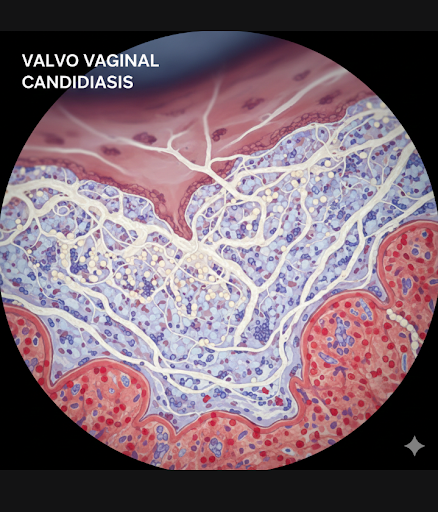
Vulvovaginal candidiasis (VVC), commonly known as a vaginal yeast infection, is a very common fungal infection affecting the vagina and vulva in women. It is caused mainly by Candida albicans, a yeast normally present in small amounts in the vagina. When this yeast overgrows, it leads to infection.
It is estimated that 3 out of 4 women will experience at least one episode of VVC in their lifetime.

VULVOVAGINAL CANDIDIASIS
What Causes Vulvovaginal Candidiasis?
Candida grows excessively when the natural balance of the vagina is disturbed. Common triggers include:
1. Antibiotic Use
Broad-spectrum antibiotics kill good bacteria (Lactobacilli), allowing Candida to multiply.
2. High Estrogen Levels
Pregnancy, oral contraceptive pills, and hormone therapy can increase risk.
3. Diabetes / High Blood Sugar
Sugar promotes fungal growth.
4. Weak Immune System
HIV, steroid use, or chronic illnesses increase susceptibility.
5. Tight or Synthetic Clothing
Keeps the genital area moist and warm, promoting fungal growth.
6. Excessive Moisture / Poor Hygiene
Wearing wet underwear for long, sweating, or not drying the area properly.
7. Uncontrolled Use of Vaginal Products
Scented soaps, sprays, douches disturb vaginal pH.
Symptoms of Vulvovaginal Candidiasis
Women typically experience:
- Intense itching in vulva and vagina
- Thick, white, curd-like discharge (cottage cheese type)
- Burning sensation, especially during urination
- Pain during intercourse (dyspareunia)
- Redness and swelling of vulva
- Cracks or fissures around vulvar skin
- No foul smell (unlike bacterial vaginosis)
NOTE :-
If symptoms recur 4 or more times per year, it is called Recurrent Vulvovaginal Candidiasis (RVVC).
Who Is at Higher Risk?
Women with:
- Diabetes
- Pregnancy
- OCP use
- Frequent antibiotic use
- Immunosuppression
- Wearing tight underwear
- Obesity
- High sugar intake
- Recurrent vaginal infections
Diagnosis
A clinician may perform:
✔ Clinical examination
✔ Microscopy (KOH test) – shows budding yeast / pseudohyphae
✔ Culture test in recurrent cases
✔ Blood sugar test in suspected diabetics
NOTE :-
Self-diagnosis is not always reliable; many conditions mimic yeast infection.
Treatment Options
1. Local Antifungal Creams / Suppositories
Commonly used:
- Clotrimazole 1% / 2% vaginal cream
- Miconazole vaginal suppositories
- Econazole cream
Duration: 3 to 7 days depending on severity.
2. Oral Medication
- Fluconazole 150 mg single dose
In severe cases: 150 mg on day 1, 4, and 7.
3. Treatment of Recurrent VVC
- Fluconazole 150 mg weekly for 6 months
- Check blood sugar and treat underlying conditions
4. Treatment for Sexual Partners
Partners are usually not treated unless symptomatic (balanitis).
Prevention
- Wear cotton underwear
- Avoid tight leggings or synthetic garments
- Keep the genital area clean and dry
- Avoid douching / scented soaps / deodorants
- After swimming or exercise, change clothes quickly
- Control blood sugar
- Maintain weight
- Avoid unnecessary antibiotic use
- Use probiotics during antibiotic therapy
Home Remedies
These may help, but should not replace medical treatment:
- Warm Sitz bath with lukewarm water
- Coconut oil (external use) for soothing
- Curd / yogurt to improve gut flora
- Avoid sugar and bakery foods
When to See a Doctor?
✔ Symptoms are severe
✔ Symptoms do not improve in 3 days
✔ Recurrent infections
✔ Diabetic women with poor control
✔ During pregnancy
✔ If you’re unsure whether it’s yeast infection or another condition
Frequently Asked Questions (FAQ)
1. Is vulvovaginal candidiasis sexually transmitted?
No, it is not an STD, but sexual activity may trigger symptoms.
2. Can it occur during pregnancy?
Yes, due to high estrogen levels. Treatment should be taken under medical guidance.
3. Does it affect fertility?
No, it does not affect fertility.
4. Is it dangerous?
Usually mild, but very uncomfortable. Severe cases may need medical treatment.
5. Can men get it?
Yes. Some men develop balanitis (itching and redness on penis).
6. Can it happen again?
Yes, recurrence is common, especially with diabetes and antibiotics.
Conclusion
Vulvovaginal candidiasis is a common, treatable condition. With proper hygiene, lifestyle changes, and appropriate antifungal therapy, most women recover quickly. If infections are recurrent, underlying medical issues must be evaluated.