Introduction
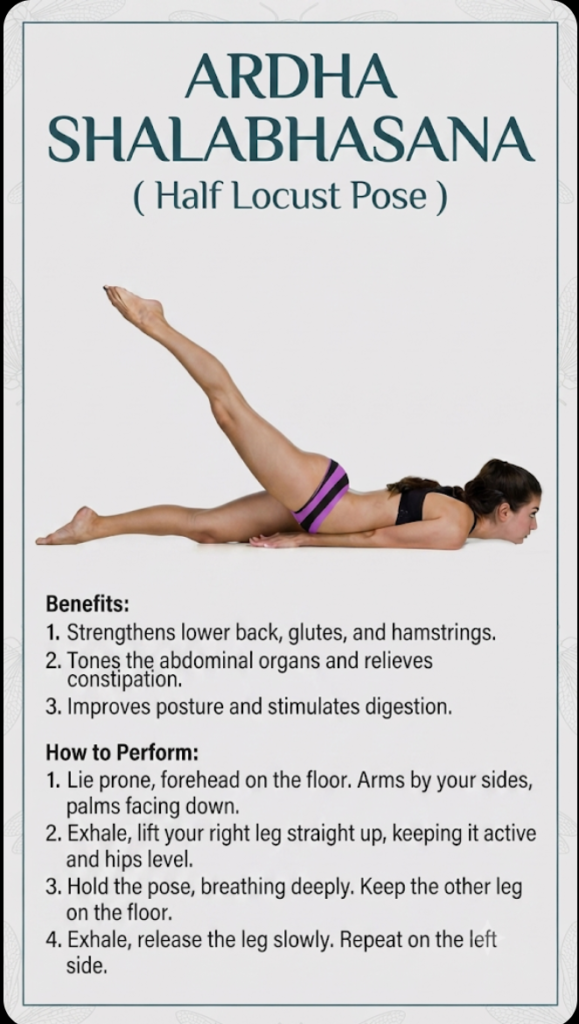
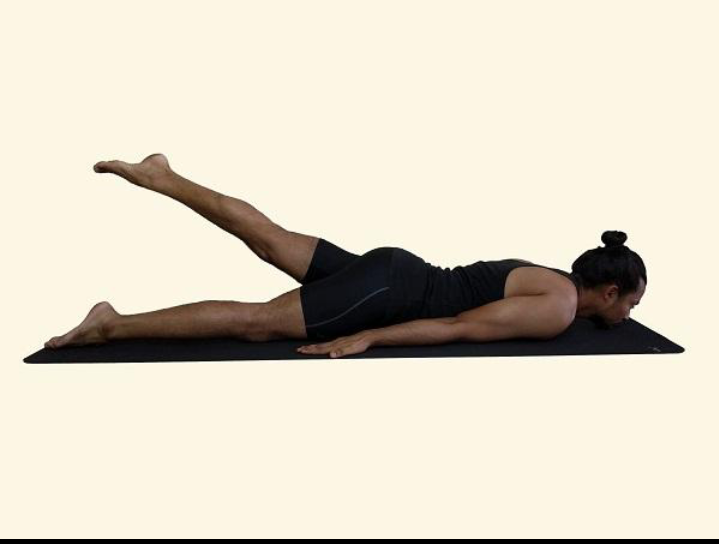
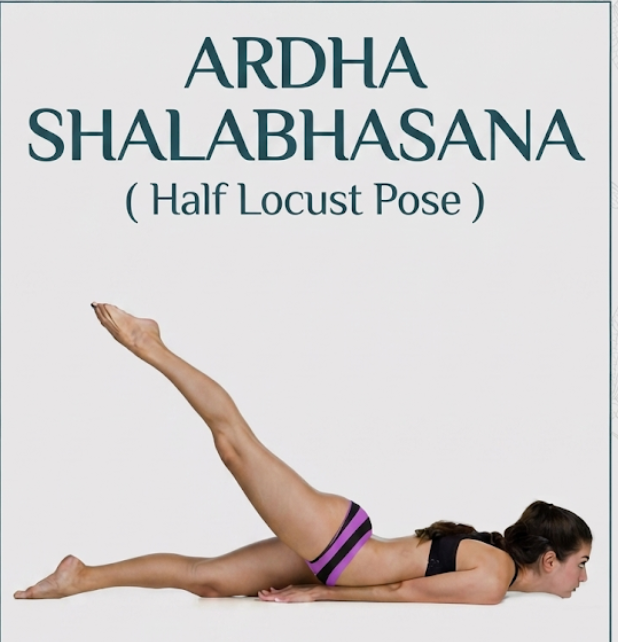
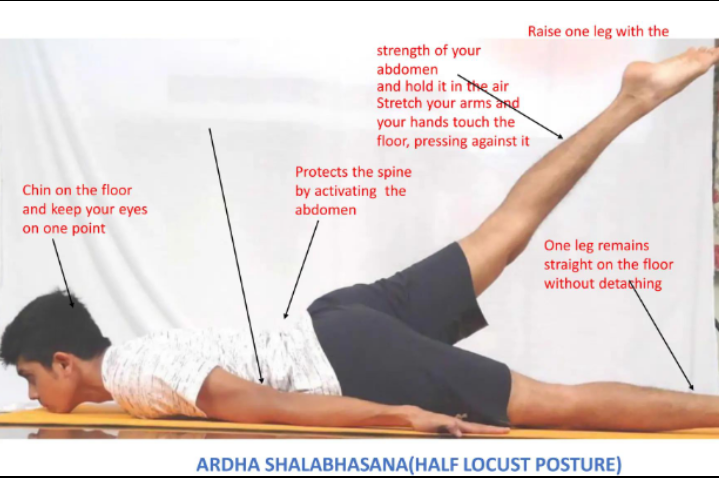
Ardha Shalabhasana, also known as Half Locust Pose, is a prone yoga posture in which one leg is lifted while the other leg and upper body remain grounded. “Ardha” means half, “Shalabha” means locust, and “Asana” means pose. It is a simpler variation of Shalabhasana and can be useful as a preparatory posture for stronger back-extension practices.
How to Perform Ardha Shalabhasana
- Lie on your stomach on a comfortable yoga mat.
- Keep your legs straight and close together.
- Place your arms alongside the body or hands beneath the thighs, according to the variation you are practicing.
- Keep your forehead or chin comfortably supported on the mat.
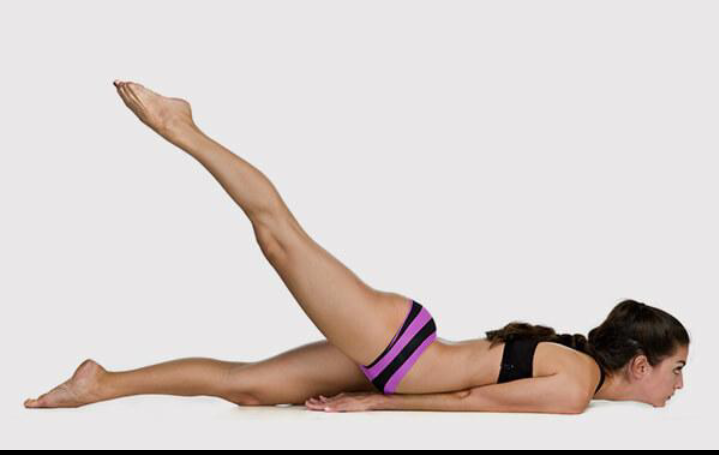
- Inhale slowly and lift one leg upward without bending the knee.
- Keep the pelvis and the other leg grounded.
- Lift only as high as you can without straining your lower back.
- Breathe normally and hold briefly.
- Exhale slowly and lower the leg.
- Repeat on the opposite side.
Start with a small, controlled movement rather than trying to lift the leg very high.
Potential Benefits
Regular, comfortable practice may:
- Strengthen the lower-back and posterior-chain muscles.
- Engage the glutes and hamstrings.
- Improve awareness of spinal and pelvic alignment.
- Support better posture.
- Improve controlled hip extension and body stability.
- Serve as a beginner-friendly preparation for the full Locust Pose.
Yoga poses should be viewed as part of an overall movement routine rather than as a cure for a particular disease.
Breathing
Coordinate the movement with slow, comfortable breathing. Avoid forceful breath-holding or straining. Inhale as you prepare and lift the leg, breathe steadily while holding, and exhale as you lower it.
Common Mistakes to Avoid
- Bending the raised knee.
- Lifting the leg too high and compressing the lower back.
- Twisting the pelvis while lifting one leg.
- Moving suddenly or using momentum.
- Holding the breath.
- Practising through sharp or radiating pain.
Think “lengthen first, then lift” to keep the movement controlled.
Precautions
People with a recent back or abdominal injury, hernia, significant spinal problems, or other relevant medical conditions should seek professional guidance before practising. Pregnancy is another situation where prone positions may need to be avoided or modified. Some traditional yoga guidance also advises caution or avoidance in people with cardiac disease or high blood pressure.
Stop immediately if you experience sharp, radiating, or worsening pain.
Best Time to Practise
Ardha Shalabhasana can be included in a gentle yoga session after a short warm-up. Practise on an empty or relatively light stomach and focus on slow, controlled movements.
Frequently Asked Questions
1. Is Ardha Shalabhasana suitable for beginners?
Yes. Because only one leg is lifted at a time, it is generally easier to learn than the full Locust Pose. Beginners should use a small range of motion and focus on technique.
2. How long should I hold the pose?
Beginners can start with a short hold of around 5–10 seconds on each side and gradually progress according to comfort and control.
3. Can it strengthen the lower back?
Yes. The pose engages muscles of the back, glutes and hamstrings, which can contribute to better support and posture when practised correctly.
4. Can Ardha Shalabhasana cure back pain?
It should not be considered a cure. It may be included in a suitable strengthening routine, but people with active or persistent back pain should obtain individualized professional advice.
5. Should I lift my leg as high as possible?
No. Height is less important than control. Lift only to a comfortable level while keeping the pelvis stable and avoiding lower-back strain.
6. Can I practise it every day?
If you are healthy and the practice is comfortable, it may be included regularly in a balanced yoga routine. Allow recovery if you experience significant muscle soreness or discomfort.
7. Who should avoid this pose?
People with certain back or abdominal conditions, recent injuries, hernia, pregnancy, or significant cardiovascular concerns should seek professional guidance before practising.
Conclusion
Ardha Shalabhasana (Half Locust Pose) is a simple yet effective yoga posture for developing controlled strength in the back, hips and legs. Practising it slowly with proper breathing and alignment can help build a foundation for more advanced back-strengthening poses. Remember that correct technique is more important than lifting the leg high. Practise within your comfortable range and seek professional guidance when medical conditions are present.