Introduction
Asana is one of the most well-known and practiced limbs of Ashtanga Yoga. The word Asana comes from the Sanskrit root “ās”, meaning to sit or to be steady. In yoga, Asana refers to physical postures designed to strengthen the body, improve flexibility, and prepare the mind for meditation.
Although modern yoga often focuses on physical fitness, the true purpose of Asana is to create balance between body, mind, and breath.
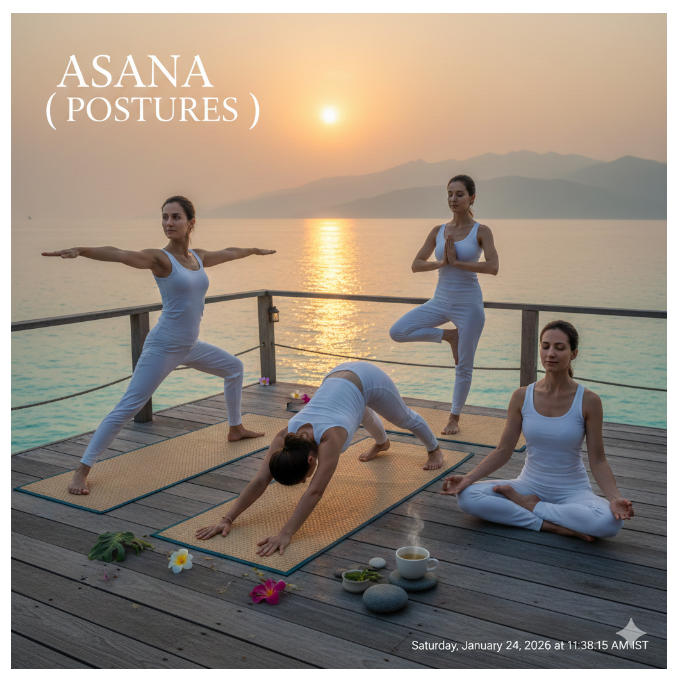
ASANA ( POSTURES )
Meaning of Asana
According to Patanjali’s Yoga Sutras,
“Sthira Sukham Asanam”
This means a posture should be steady and comfortable.
An Asana is not just an exercise; it is a posture practiced with awareness, stability, and ease, without strain.
Purpose of Practicing Asana
The main aims of Asana practice are:
- To keep the body healthy and strong
- To remove physical stiffness and fatigue
- To improve posture and alignment
- To prepare the body for long meditation
- To calm the nervous system
Types of Asanas
Asanas can be broadly classified into different groups:
1. Standing Asanas
Examples: Tadasana, Vrikshasana, Trikonasana
Benefits: Improve balance, strength, and posture.
2. Sitting Asanas
Examples: Padmasana, Sukhasana, Vajrasana
Benefits: Enhance concentration and are ideal for meditation and pranayama.
3. Supine Asanas
Examples: Bhujangasana, Setu Bandhasana
Benefits: Strengthen the spine and improve flexibility.
4. Prone Asanas
Examples: Shalabhasana, Dhanurasana
Benefits: Strengthen back muscles and abdominal organs.
5. Inverted Asanas
Examples: Sarvangasana, Shirshasana
Benefits: Improve blood circulation and endocrine function.
6. Relaxation Asanas
Example: Shavasana
Benefits: Reduce stress, fatigue, and mental tension.
Physical Benefits of Asana
- Improves flexibility and muscle tone
- Enhances joint mobility
- Strengthens the spine and muscles
- Improves digestion and metabolism
- Boosts immunity
Mental and Emotional Benefits
- Reduces stress, anxiety, and depression
- Improves focus and concentration
- Promotes emotional balance
- Creates a sense of inner calm and stability
Role of Asana in Daily Life
Regular practice of Asana helps people:
- Maintain a healthy lifestyle
- Prevent lifestyle diseases
- Improve work efficiency
- Develop discipline and self-awareness
Precautions While Practicing Asana
- Practice on an empty stomach
- Avoid forceful movements
- Learn from a qualified instructor, especially for advanced poses
- People with medical conditions should consult a doctor
- Maintain proper breathing
Frequently Asked Questions (FAQs)
Q1. What is Asana in yoga?
Asana is a yogic posture practiced to maintain physical health, mental stability, and spiritual growth.
Q2. Is Asana only physical exercise?
No. Asana is a holistic practice involving body, breath, and awareness, not just physical movement.
Q3. How long should Asanas be practiced daily?
Beginners can start with 20–30 minutes daily, gradually increasing with practice.
Q4. Can anyone practice Asanas?
Yes, people of all ages can practice Asanas, with modifications according to their ability and health condition.
Q5. What is the best time to practice Asana?
Early morning (Brahma Muhurta) is ideal, but evening practice is also beneficial if done on an empty stomach.
Q6. Is Shavasana important?
Yes. Shavasana is essential for complete relaxation and helps the body absorb the benefits of other Asanas.
Conclusion
Asana is a powerful tool for achieving physical health, mental peace, and inner balance. It is not about perfection of posture, but about awareness, comfort, and steadiness. When practiced regularly with discipline and mindfulness, Asanas transform the body into a healthy vessel and the mind into a calm, focused state.
In today’s fast-paced life, incorporating Asana into daily routine is not a luxury—it is a necessity for holistic well-being 🌸