🌿 Introduction
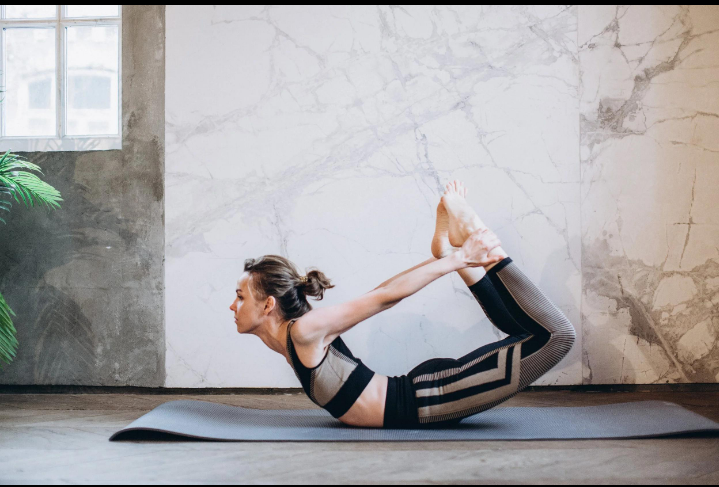
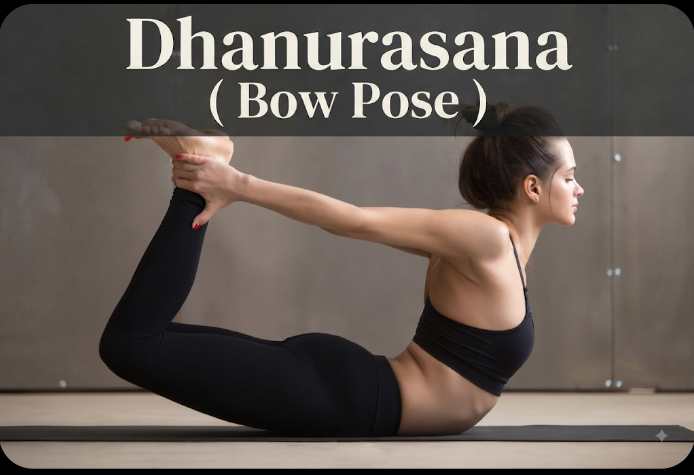
Dhanurasana, commonly known as Bow Pose, is a powerful prone yoga posture. The Sanskrit word Dhanu means “bow,” and the body resembles a stretched bow when the pose is performed correctly. It provides a deep stretch to the front of the body while strengthening the back and abdominal muscles.
🧘 How to Perform Dhanurasana

- Lie on your stomach with your legs comfortably apart and arms beside your body.
- Bend both knees and bring your heels toward your hips.
- Reach your arms backward and hold your ankles.
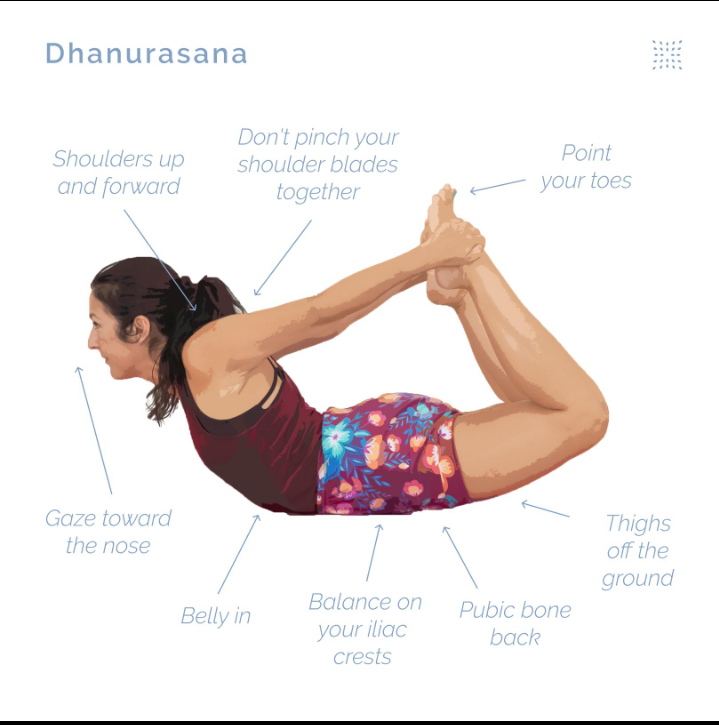
- Inhale and gently lift your chest and thighs away from the floor.
- Push your feet backward and upward while lifting your chest.
- Keep your gaze forward and breathe slowly and comfortably.
- Hold the position for about 15–20 seconds initially.
- Exhale and slowly lower your chest and legs. Release your ankles and relax.
Tip: Never force your back into a deeper bend. Move only within your comfortable range.
💪 Benefits of Dhanurasana
Regular and appropriate practice may:
- Strengthen the back and abdominal muscles
- Stretch the chest, shoulders and front of the body
- Improve flexibility of the spine
- Strengthen and tone the arms and legs
- Encourage better posture
- Provide a feeling of energy and reduce stress and fatigue
- Support healthy digestive function when practiced appropriately
⚠️ Precautions
Dhanurasana is a relatively demanding backbend and should be avoided or medically cleared if you have pregnancy, uncontrolled high or low blood pressure, hernia, neck injury, significant lower-back pain, migraine/headache problems, or recent abdominal surgery.
Beginners should preferably learn the pose from a qualified yoga instructor. Stop immediately if you experience sharp pain, dizziness, or unusual discomfort.
❓ Frequently Asked Questions
1. What is Dhanurasana?
Dhanurasana is a prone backbend in which the body forms the shape of a bow. It is also called Bow Pose.
2. How long should I hold Dhanurasana?
Beginners can start with around 15–20 seconds and gradually progress according to comfort and ability.
3. Can beginners do Dhanurasana?
Yes, but beginners should start gently and avoid forcing the backbend. Preparatory poses such as Bhujangasana and Shalabhasana can help prepare the body.
4. Can I practice Dhanurasana after eating?
It is generally recommended to practice it on an empty or relatively light stomach, rather than immediately after a meal. One yoga source recommends allowing several hours after a main meal.
5. What should I do if I cannot hold my ankles?
Don’t force yourself. A yoga strap can be used as an easier modification while you gradually improve flexibility.
6. Is Dhanurasana good for back flexibility?
Yes. It provides a significant backbend and can improve spinal flexibility when practiced safely and progressively.
7. Who should avoid Dhanurasana?
People with certain back or neck problems, hernia, blood-pressure problems, pregnancy, migraine/headache issues, or recent abdominal surgery should avoid it unless their healthcare professional advises otherwise.
🌸 Conclusion
Dhanurasana (Bow Pose) is an excellent yoga posture for developing strength, flexibility and body awareness. Practice it slowly, maintain steady breathing, and never force the spine. Consistent, mindful practice is more important than achieving a deep pose.
“Breathe deeply, move mindfully, and let your body grow stronger one pose at a time.” 🧘♀️🌿