🌺Dharana (Concentration) – The Art of One-Pointed Focus
🌺 Introduction
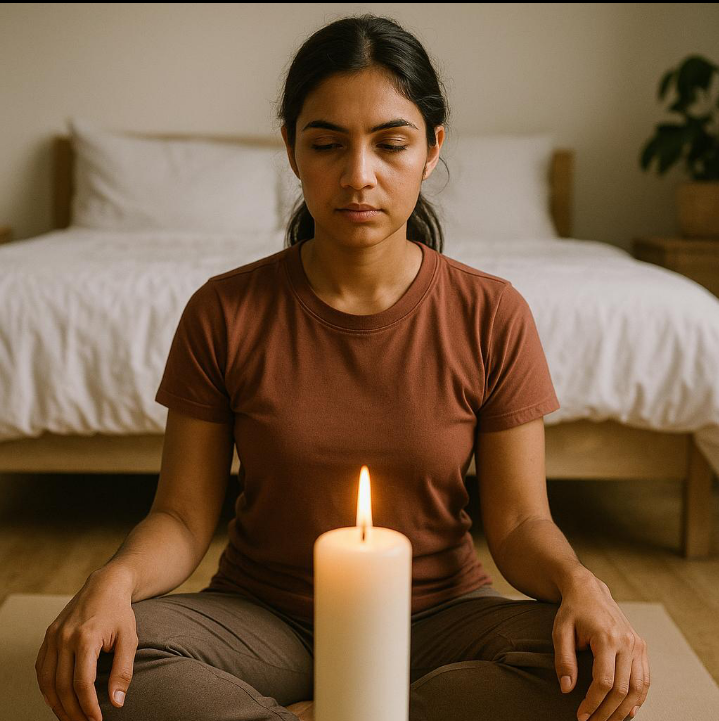
Dharana (धारणा), also known as Concentration, is the sixth limb of Maharishi Patanjali’s Ashtanga Yoga. It is the practice of directing the mind towards a single object, thought, sound or point and maintaining attention on it.
The human mind is naturally restless. It frequently moves between memories, worries, desires and thoughts. Dharana trains the mind to become steady, focused and disciplined.
It is an important step towards deeper meditation and spiritual awareness.
🌿 Meaning of Dharana
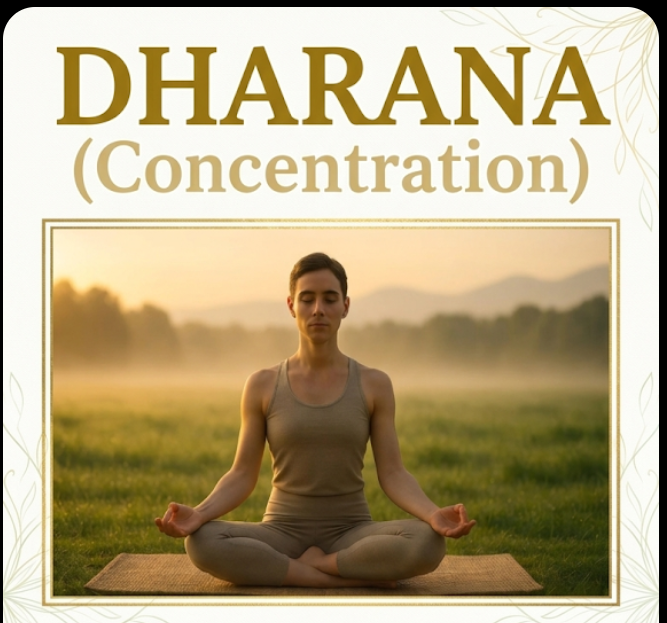
The Sanskrit word Dharana comes from the root Dhri, meaning to hold, maintain or support.
According to Patanjali Yoga Sutra 3.1:
देशबन्धश्चित्तस्य धारणा॥
Deśa-bandhaś cittasya dhāraṇā.
Meaning: Concentration is the binding of the mind to one particular place or object.
In simple words, Dharana means keeping your attention on one chosen object without allowing unnecessary distractions to disturb it. Wisdom Library +1
🌊. Dharana in the Eight Limbs of Yoga
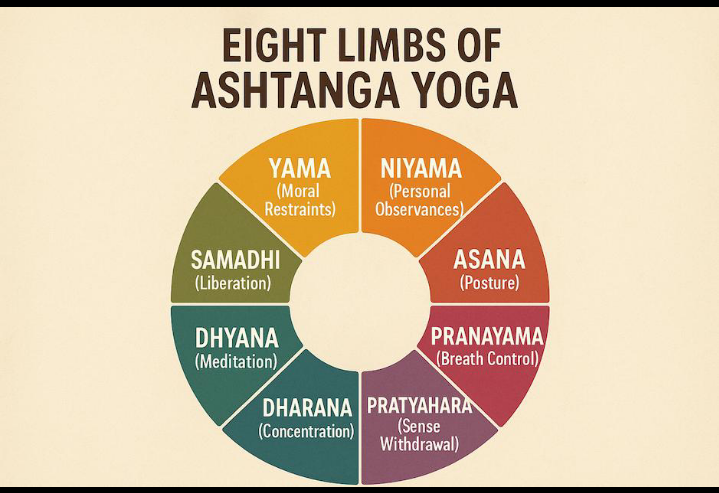
Dharana is the sixth limb of Ashtanga Yoga.
The eight limbs are:
* Yama – Ethical principles.
* Niyama – Personal discipline.
* Asana – Physical postures.
* Pranayama – Regulation of breath.
* Pratyahara – Withdrawal of senses.
* Dharana – Concentration.
* Dhyana – Meditation.
* Samadhi – Spiritual absorption.
Dharana connects Pratyahara with Dhyana. After withdrawing the senses from external distractions, the practitioner directs the mind towards one chosen point.
💐 Common Techniques of Practicing Dharana
1\. Breath Concentration (Shvasa Dharana)
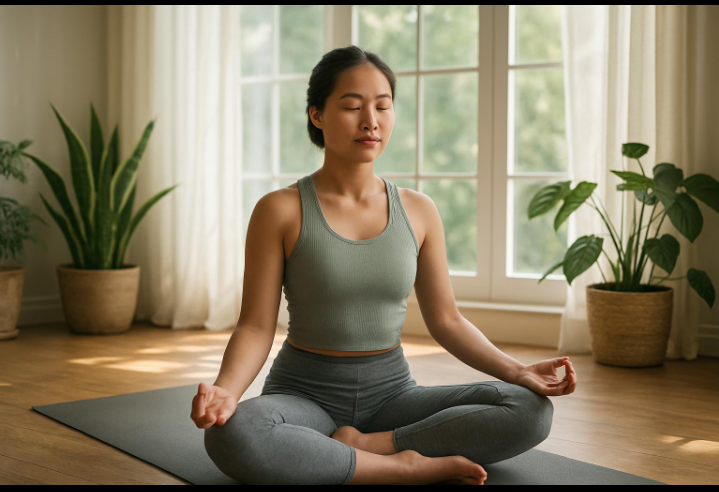
* Sit comfortably in a quiet place.
* Close your eyes gently.
* Observe the natural inhalation and exhalation.
* Keep your attention on the movement of your breath.
* Whenever the mind wanders, gently bring it back to breathing.
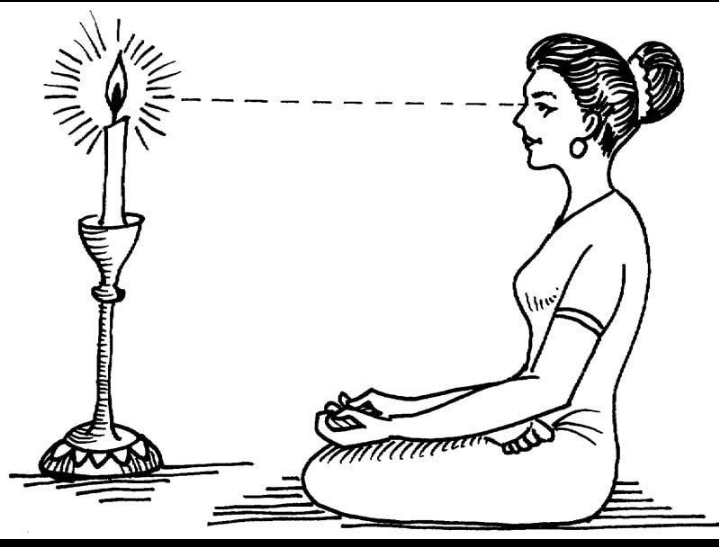
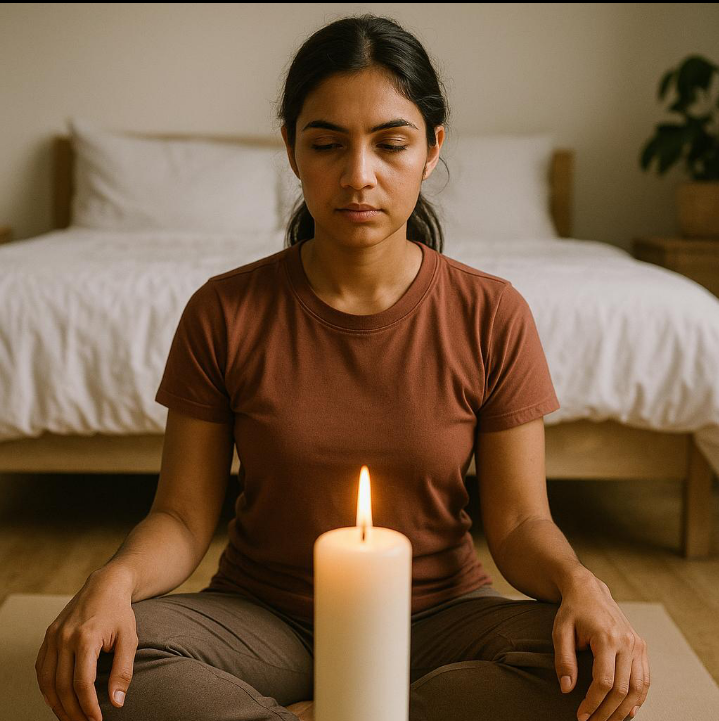
2\. Trataka (Candle Gazing)
* Sit comfortably in a quiet room.
* Place a candle at approximately eye level, at a comfortable distance.
* Gently gaze at the flame without straining your eyes.
* When your eyes feel uncomfortable, close them and relax.
* Observe the mental impression of the flame.
Note: Avoid staring forcefully or continuing through eye discomfort. People with eye conditions should seek appropriate professional advice before practising prolonged candle gazing.
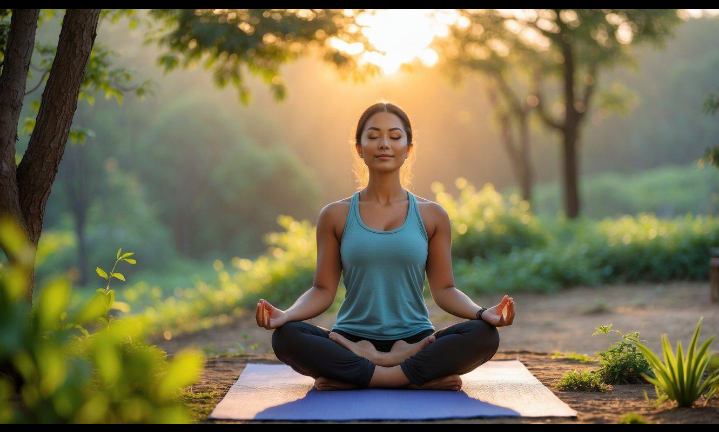
3\. Mantra Dharana
* Choose a mantra such as Om.
* Sit in a comfortable meditation posture.
* Repeat the mantra mentally or softly.
* Concentrate on its sound and vibration.
* Maintain awareness without rushing.
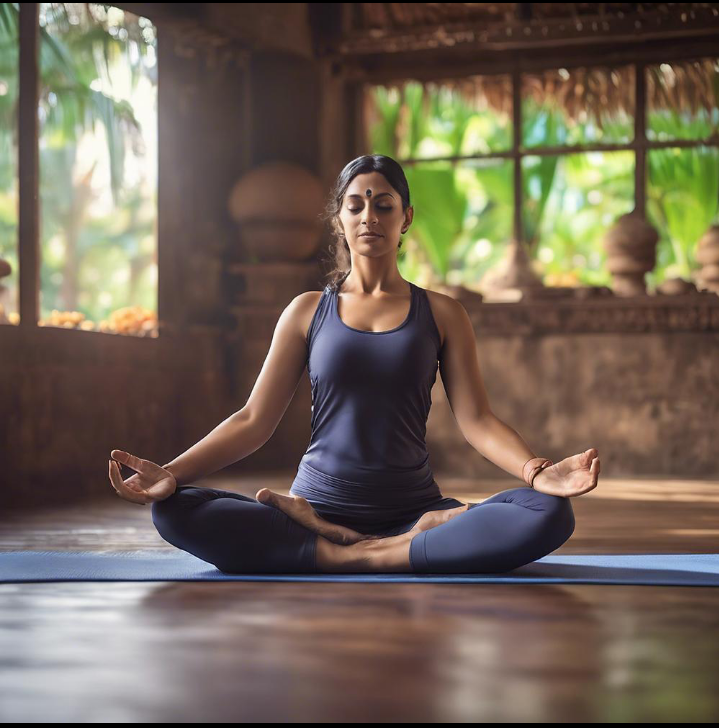
4\. Chakra Concentration
* Sit comfortably with your spine naturally upright.
* Choose a meditation focus, such as the heart centre.
* Direct your attention towards that area.
* Maintain gentle awareness.
* Avoid forcing sensations or breath.
5\. Visualisation Technique
* Close your eyes.
* Imagine a peaceful natural scene, flower or beautiful image.
* Observe its details mentally.
* Maintain attention on the same image.
* Gently return whenever your mind wanders.
💐. Benefits of Dharana
Regular practice of Dharana may help with:
* Improved concentration: Develops the ability to focus on one task.
* Mental calmness: Helps reduce mental restlessness.
* Better attention: Trains the mind to return to the present moment.
* Emotional balance: Encourages a thoughtful response rather than an impulsive reaction.
* Self-awareness: Develops awareness of thoughts and mental activities.
* Meditation preparation: Creates a foundation for deeper meditation.
* Productivity: May help improve attention during studying and everyday activities.
These benefits develop gradually with regular practice and may vary from person to person.
🌺. Daily Practice of Dharana for Beginner
You can begin with a simple 10-minute routine.
| Duration | Practice |
| ——— | ——————————- |
| 2 minutes | Sit comfortably and relax |
| 2 minutes | Observe natural breathing |
| 4 minutes | Concentrate on breath or Om |
| 1 minute | Observe your thoughts calmly |
| 1 minute | Slowly open your eyes and relax |
Important: Practise in a quiet, well-ventilated place. Keep your body comfortable and do not force your mind to stop thinking. The aim is to gently bring your attention back whenever it wanders.
💐 Difference Between Dharana, Dhyana and Samadhi
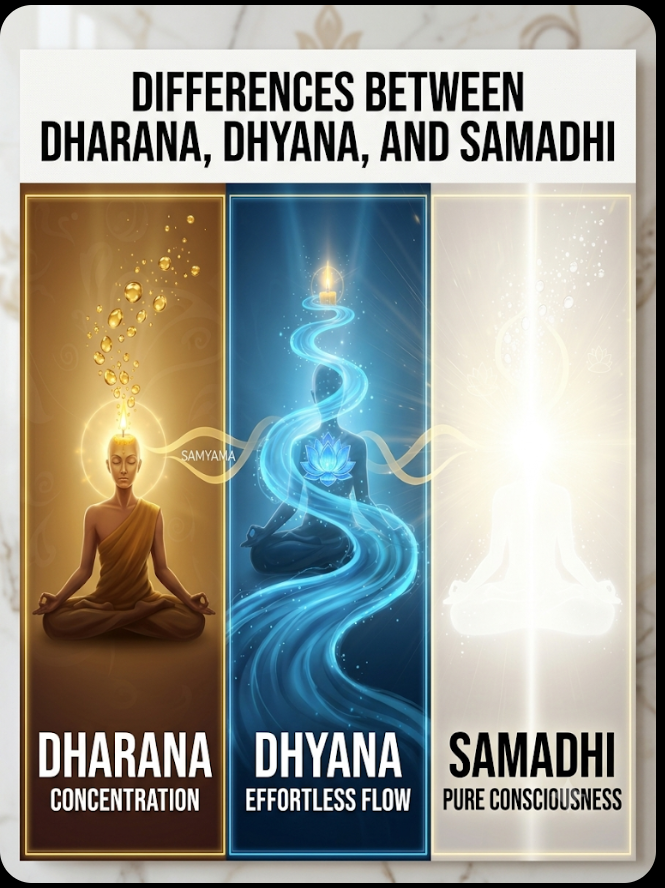
These three practices represent progressively deeper stages of mental concentration in Patanjali’s Yoga philosophy.
| Practice | Meaning | Main characteristic |
| ——– | ————- | ———————————————— |
| Dharana | Concentration | Fixing the mind on one object |
| Dhyana | Meditation | Continuous flow of attention towards that object |
| Samadhi | Absorption | Deep meditative absorption |
Dharana is the beginning of sustained concentration, Dhyana is its uninterrupted development, and Samadhi is deeper absorption. The Essential Way +1
💐 8\. Precautions While Practising Dharana
* Choose a peaceful and comfortable environment.
* Avoid practising immediately after a heavy meal.
* Do not force concentration.
* Avoid unnecessary physical tension.
* Start with a short duration and gradually increase it.
* If you experience headache, dizziness or discomfort, stop and relax.
* Keep your breathing natural; breath retention is not necessary for Dharana.
### 9\. Frequently Asked Questions (FAQ)
Q1. What is Dharana in Yoga?
Dharana is the sixth limb of Ashtanga Yoga. It means concentrating the mind on one particular object, thought or point.
Q2. What is the main purpose of Dharana?
Its main purpose is to develop one-pointed concentration, mental steadiness and awareness.
Q3. How long should beginners practise Dharana?
Beginners can start with 5–10 minutes daily and gradually increase the duration according to their comfort.
Q4. Is Dharana different from meditation?
Yes. Dharana involves deliberately focusing the mind on one object, whereas Dhyana is the uninterrupted flow of attention towards that object.
Q5. Can Dharana help improve memory?
Regular concentration practice may support attention and learning, which can indirectly help memory. However, it is not a treatment for memory disorders.
Q6. Can Dharana be practised without a yoga teacher?
Basic breath-awareness and mantra-concentration practices can be learnt independently. Beginners may benefit from guidance, particularly for advanced meditation techniques.
Q7. What is the best time to practise Dharana?
Early morning is a convenient time because the surroundings are often peaceful. However, it can be practised at any suitable time.
Q8. What is the relationship between Dharana and Pratyahara?
Pratyahara helps withdraw attention from external sensory distractions, while Dharana directs that attention towards a single chosen object.
### 10\. Conclusion – Focus Your Mind, Transform Your Life

Dharana is not simply an exercise in concentration; it is a journey towards understanding and mastering the mind.
Through regular practice, we learn to reduce distractions, develop mental discipline and cultivate inner peace. It prepares us for Dhyana (Meditation) and ultimately guides us towards Samadhi.
Remember:
“A focused mind is a powerful mind. When you learn to control your attention, you learn to direct your life.”
Suggested daily affirmation:
“I am calm, focused and mindful. My mind is steady, my thoughts are clear, and my attention is under my conscious direction.”
SHIVAM CLINIC – HEALTH, YOGA & WELLNESS
Practise regularly. Stay focused. Live mindfully. 🌿